
10 Best Flammable Liquid Cabinet Options for Global Buyers
Choosing the right Flammable Liquid Cabinet requires more than comparing prices and product photographs. Global buyers must examine construction quality, storage capacity, fire resistance, labeling, and supplier reliability. A cabinet may look strong online but feel unstable when its shelves carry several heavy containers. That detail matters.
This guide presents 10 best options for different workplaces, including laboratories, workshops, factories, maintenance rooms, and educational facilities. Each option should be assessed against practical needs, such as adjustable shelves, leak-containment sumps, secure locking systems, and durable powder-coated steel. Some models include self-closing doors, built-in leveling feet, or grounding points. These features can improve daily handling and reduce avoidable storage risks.
No cabinet is perfect. A large model may waste valuable floor space, while a compact cabinet may become crowded too quickly. Buyers should also confirm packaging quality, replacement-part availability, technical documentation, and after-sales support before ordering internationally. Regional safety expectations, shipping conditions, and workplace procedures can differ, so independent verification remains essential. Product claims should be supported by clear test records or recognized certifications, where applicable.
Our comparison focuses on practical performance rather than marketing language. It considers how each Flammable Liquid Cabinet may perform during routine inspections, frequent access, and long-term use. The final choice should reflect the liquids stored, container sizes, available room, and the buyer’s documented safety procedures. A careful decision today can prevent confusion later.
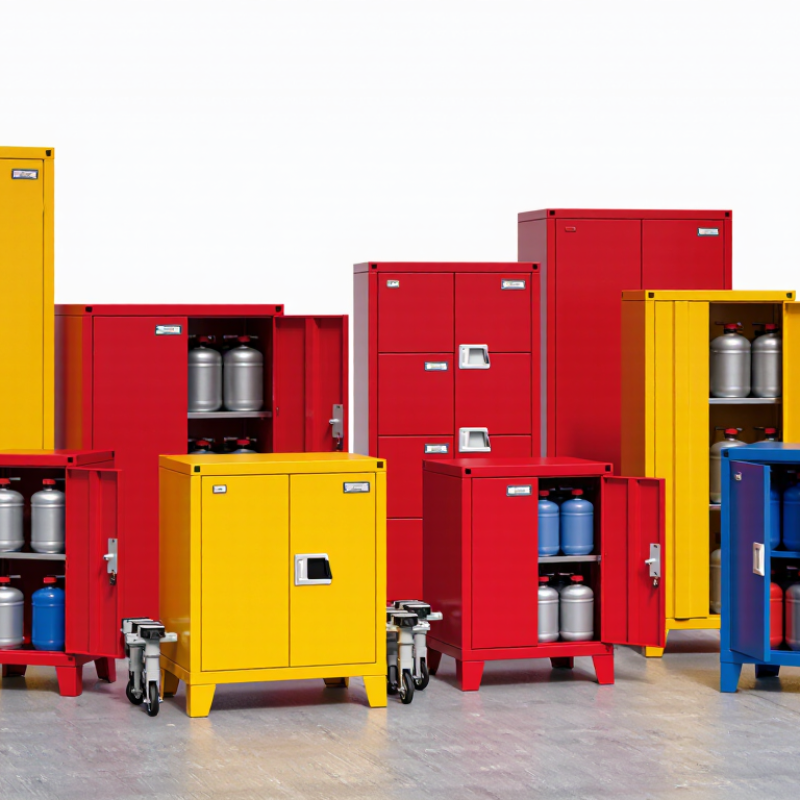
Flammable-Liquid Cabinet Basics: NFPA 30 and OSHA 1910.106 Limits
Cabinet selection starts with liquid classification, not color. Under OSHA 1910.106, one cabinet may store up to 60 gallons of Class I and/or Class II liquids. Class III liquids have a separate 120-gallon allowance. These limits are often misread. NFPA 30 uses a 120-gallon cabinet framework, with tighter restrictions for higher-hazard liquids. The exact requirement depends on the adopted edition and local authority having jurisdiction.
Construction details matter during a real inspection. OSHA describes approved cabinets using 18-gauge steel, double-wall construction, and a two-inch leakproof sill. A practical check should include door alignment, latch operation, shelf loading, and visible corrosion. A 20-liter container placed against the door can obstruct closure and weaken spill containment. It is a small detail, but it happens. Incompatible liquids also require separate storage decisions.
NFPA’s Fires in Industrial and Manufacturing Properties report estimated 37,910 structure fires annually from 2017 to 2021, with approximately 1.5 billion dollars in annual property damage. That data supports careful storage planning, though it does not prove every cabinet failure causes a fire. Ventilation, aisle clearance, spill control, grounding, and local permits remain important. Global buyers should compare the cabinet certificate with NFPA 30, OSHA 1910.106, and local fire-code requirements. A product photo is not enough evidence.
| Option | Typical Configuration | Nominal Capacity | Recommended Use | Key Construction Features | Typical Door Style | NFPA 30 / OSHA Considerations | Buyer Checklist |
|---|---|---|---|---|---|---|---|
| 1. Compact Under-Counter Cabinet | Low-profile cabinet for workstations, laboratories, and small production areas | 12–15 gal (45–57 L) | Small containers, solvents, cleaning liquids, and frequently accessed flammable liquids | Double-wall steel construction, adjustable shelf, raised leak-containment sump | Manual single door | Generally suitable Keep the stored quantity within the cabinet rating and local fire-code limits. |
Confirm clearance below the counter, shelf load rating, ventilation policy, and anchoring method. |
| 2. Narrow Vertical Cabinet | Space-saving cabinet for narrow aisles or small laboratories | 22–30 gal (83–114 L) | Moderate inventory where floor space is limited | 18-gauge or heavier steel body, spill-control shelves, corrosion-resistant finish | Manual single door | Generally suitable Do not treat a cabinet as a substitute for required segregation or quantity controls. |
Check door swing, aisle width, cabinet stability, and compatibility with the liquids stored. |
| 3. Standard 30-Gallon Safety Cabinet | General-purpose cabinet for routine industrial or laboratory storage | 30 gal (114 L) | Mixed small containers and day-to-day solvent storage | Double-wall steel, approximately 1.5-inch air space, leakproof sill, grounding provision | Manual or self-closing single door | Common general-purpose choice Verify the cabinet’s listing, labeling, and installation against the adopted code. |
Look for shelf adjustment, sump capacity, self-closing hardware, and clear hazard labeling. |
| 4. 45-Gallon Vertical Cabinet | Tall cabinet with increased shelf area for medium-volume storage | 45 gal (170 L) | Manufacturing areas, maintenance rooms, and larger laboratories | Reinforced shelves, double-wall steel, bottom containment sump, adjustable leveling feet | Manual or self-closing double doors | Use with quantity review OSHA 1910.106 permits limited quantities per cabinet; classification and local rules must be checked. |
Confirm total liquid volume, container sizes, shelf capacity, and whether multiple cabinets are permitted in the room. |
| 5. 60-Gallon Self-Closing Cabinet | High-capacity cabinet for controlled storage of larger working inventories | 60 gal (227 L) | Industrial solvent storage and higher-throughput work areas | Self-closing doors, fusible-link release mechanism, reinforced spill-control shelves | Self-closing double doors | Frequently specified Under OSHA 1910.106, a cabinet is limited to 60 gal of Class I or Class II liquids and 120 gal of Class III liquids; verify the applicable classification. |
Confirm door-closing performance, cabinet certification, fire rating documentation, and emergency access. |
| 6. 90-Gallon Double-Door Cabinet | Large cabinet for organized storage of multiple container sizes | 90 gal (341 L) | Centralized storage in industrial facilities with controlled access | Heavy-duty steel construction, multiple adjustable shelves, raised leak-retention base | Self-closing double doors | Review before purchase OSHA’s cabinet limits are based on liquid class, not simply the cabinet’s advertised capacity; do not assume all 90 gal can be Class I or Class II liquid. |
Obtain written approval from the site safety authority and verify the adopted edition of NFPA 30 and local fire regulations. |
| 7. 120-Gallon High-Capacity Cabinet | Maximum-size cabinet configuration commonly selected for larger facilities | 120 gal (454 L) | Large controlled inventories where a single cabinet is operationally necessary | Heavy-duty frame, self-closing doors, high-capacity sump, adjustable reinforced shelving | Self-closing double doors | Strict quantity review required OSHA 1910.106 limits one cabinet to 60 gal of Class I or Class II liquids, or 120 gal of Class III liquids. A 120-gal cabinet is not automatically approved for 120 gal of flammable liquid. |
Confirm liquid classifications, maximum allowable quantities, room occupancy, separation distances, and authority approval. |
| 8. Corrosion-Resistant Interior Cabinet | Cabinet with chemically resistant lining or coated interior surfaces | 30–60 gal (114–227 L) | Acidic, aggressive, or corrosive flammable liquids when compatible storage is required | Protective interior coating, steel outer shell, removable spill tray, compatible shelf surfaces | Manual or self-closing door | Material compatibility is essential Fire-safety construction does not guarantee compatibility with every chemical; consult the safety data sheet for each liquid. |
Check lining resistance, vapor exposure, shelf materials, temperature range, and cleaning procedures. |
| 9. Drum-Storage Safety Cabinet | Wide cabinet designed for larger pails, cans, or small drums | 60–120 gal (227–454 L) | Bulkier containers used in maintenance, production, and blending operations | Reinforced floor, low-level containment, wide access opening, heavy-duty shelving or drum supports | Wide self-closing double doors | Container and quantity review required Check whether the container size, liquid class, aggregate quantity, and handling method comply with OSHA and local fire-code requirements. |
Verify floor loading, drum clearance, spill capacity, forklift access, and bonding or grounding procedures where required. |
| 10. Mobile or Modular Safety Cabinet | Cabinet on casters or a configurable unit for changing work areas | 15–45 gal (57–170 L) | Maintenance teams, temporary work zones, and facilities requiring flexible layouts | Lockable casters, anti-tip design, double-wall steel, integral spill containment | Manual or self-closing door | Use under controlled conditions Mobility does not remove storage limits; secure the cabinet against unintended movement and follow site emergency procedures. |
Check caster brakes, ramp and threshold limits, stability, route clearance, and whether local rules allow mobile storage. |
- OSHA 29 CFR 1910.106(d)(3)(i) states that a storage cabinet may contain no more than 60 gallons of Class I or Class II liquids, or 120 gallons of Class III liquids. Confirm the classification system applicable to the product and jurisdiction.
- OSHA 1910.106 generally limits a storage area to no more than three such cabinets. Local fire codes, building codes, insurance requirements, and the adopted edition of NFPA 30 may impose additional or different requirements.
- NFPA 30 requirements depend on liquid category, container type, storage arrangement, occupancy, cabinet design, and quantity. The cabinet capacity shown above is a selection reference, not permission to exceed an applicable maximum allowable quantity.
- Always review the safety data sheet, verify chemical compatibility, maintain required labels, control ignition sources, and obtain approval from the responsible fire-safety or authority-having jurisdiction before installation.
Related Posts
-
China Top 10 Flammable Liquid Cabinet Suppliers?
-
China Top Flammable Liquid Cabinet Manufacturers
-
2026 Top Flammable Liquid Cabinet Which Type Is Best?
-
What is a Flammable Liquid Cabinet and Why is it Important?
-
What Is the Best Hazmat Locker for Global Buyers?
-
How to Choose the Right Chemical Cabinet?