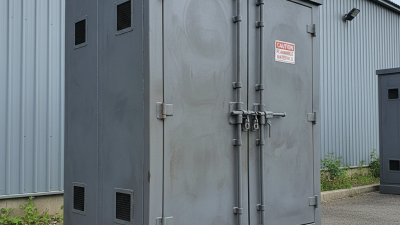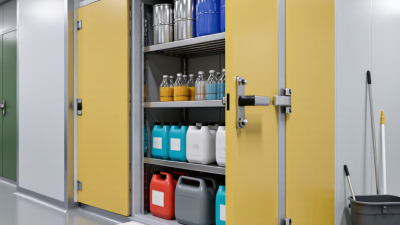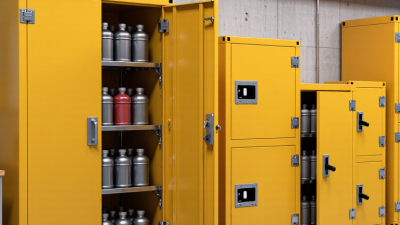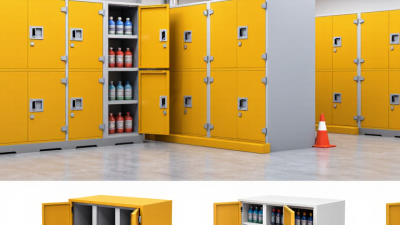
How to Choose the Right Chemical Cabinet?

Choosing a Chemical Cabinet is a practical risk decision, not a color or price comparison. The right model should match the chemicals, quantities, and work routines in your facility. NFPA’s report, Fires in Which Flammable or Combustible Liquids Were First Ignited, estimated about 37,000 such fires annually in the United States from 2014 to 2018. That figure covers many settings, not just storage cabinets, but it highlights why containment and fire protection deserve careful attention. A cabinet is one part of a broader safety plan.

Start with the chemical’s hazards and compatibility. Check the safety data sheet, then consider cabinet construction, capacity, shelving, spill containment, and required fire-resistance rating. Flammable liquids, corrosives, and pesticides may need different storage solutions. One cabinet rarely suits every substance. OSHA’s 29 CFR 1910.106 and NFPA 30 provide relevant guidance for flammable-liquid storage; confirm applicable requirements with your safety professional and local authority. Also review the manufacturer’s documentation rather than relying on a label alone. Small details matter: a leaking container on a crowded shelf can change the risk profile quickly. Even experienced teams can overlook how often doors are opened or how inventory grows. That deserves a second look. A careful selection process connects documented hazards with real daily use, while acknowledging that no cabinet removes every risk.

How to Choose the Right Chemical Cabinet?

Identify the Chemicals and Their Hazard Classes

Choosing a chemical cabinet starts with an accurate inventory, not a cabinet color. Record each product’s name, concentration, quantity, and hazard pictograms. Then check its Safety Data Sheet (SDS), especially Sections 2, 7, and 10, for hazards, storage guidance, and incompatibilities. OSHA’s Hazard Communication Standard specifies this SDS structure. A familiar product name is not enough; formulations can differ.

Classify chemicals by their actual risks. NFPA 30 defines Class I liquids as having flash points below 100°F (37.8°C), a useful threshold when assessing flammable-liquid storage. Corrosives, oxidizers, and substances that react with each other may need separate, compatible storage. A cabinet labeled for flammables does not automatically suit every chemical in it. Labels can also be hard to read after spills or routine handling, so verify the SDS rather than relying on memory.

Tips: Keep a current inventory beside the storage area. Group compatible chemicals, and flag anything with unclear hazards for review before storage. Small details matter. A misplaced oxidizer or an unreadable label can undermine an otherwise sound setup.

How to Choose the Right Chemical Cabinet? Identify the Chemicals and Their Hazard Classes

How to read this chart: Under OSHA 29 CFR 1910.106(d)(3)(i), a storage cabinet may hold up to 60 gallons of Category 1, 2, or 3 flammable liquids, or up to 120 gallons of Category 4 flammable liquids. Check each product’s Safety Data Sheet (especially Sections 2 and 7) to identify its hazards and storage incompatibilities. These limits apply to flammable liquids, not to every chemical hazard class; follow applicable local requirements and manufacturer guidance.

Match Cabinet Materials to Chemical Compatibility

How to Choose the Right Chemical Cabinet?

Match Cabinet Materials to Chemical Compatibility

A cabinet’s finish is not a safety guarantee. Choose the shell, liner, shelves, and sump for the exact chemical, concentration, and temperature. Coated steel is commonly selected for flammable-liquid storage; polyethylene or polypropylene may suit many corrosives. But solvent blends can attack plastics, and acids vary. Check compatibility charts and the product’s Safety Data Sheet (SDS), especially Sections 7 and 10. Verify, don’t assume.

OSHA’s 29 CFR 1910.106(d)(3)(i) limits a storage cabinet to 60 gallons of Category 1, 2, or 3 flammable liquids, or 120 gallons of Category 4 liquids. These are capacity ceilings, not proof that a cabinet material suits every container. NFPA 30 also addresses cabinet construction and flammable-liquid storage practices. For chemical reactivity information, consult NOAA’s CAMEO Chemicals database and the SDS. Separate incompatible chemicals when the hazard assessment calls for it.

Look at the details. A leaking bottle should land in a compatible sump, not on bare steel. Inspect seams, shelf edges, and hinge areas; corrosion can start where coatings are thin. Compatibility charts are useful, but imperfect. Recheck when concentration or temperature changes, and confirm with technical documentation. That extra check can feel tedious. Still, it is better than discovering a cabinet failure after a spill.

Choose the Cabinet Type and Storage Capacity

Choose cabinet type by chemical compatibility, not appearance. Check each product’s safety data sheet (SDS) and label for storage guidance before grouping containers. A flammable-liquid cabinet is designed for that storage category; it is not a universal solution. Corrosive products may need a cabinet with a compatible, corrosion-resistant lining and separate containment. Keep incompatible materials apart, even when their bottles fit neatly on one shelf. Measure twice.

Capacity should reflect the containers you actually store. Count them, then note their height and diameter before comparing cabinet interiors. A shelf that seems able to hold six one-liter bottles may fit fewer once spacing and secondary trays are considered. Check usable shelf space and load ratings, along with the cabinet’s footprint. It is easy to misjudge. Avoid filling every inch; clear access makes labels easier to read and containers safer to handle.

Compare the planned inventory with likely near-term use, rather than buying the largest cabinet by default. If several chemical groups are present, separate cabinets may be easier to manage than one crowded unit. Confirm ventilation needs against product guidance and the cabinet design; adding a fan or duct is not automatically appropriate. Reassess the fit when the inventory changes.

Evaluate Safety Features, Location, and Ventilation Needs

A chemical cabinet should suit the materials stored, not just the available space. Check that its construction and labeling match the hazards identified in each product’s safety data sheet. Look for secure doors, sturdy shelves, and spill containment that can hold leaks without letting them spread. Small details matter. A shelf that wobbles under a full container is not a minor flaw.

Choose a location away from heat sources, busy walkways, and areas where a leak could reach a drain. Keep the cabinet accessible for trained staff, but out of casual traffic. Leave enough room to open the doors fully and inspect containers. A crowded corner may seem convenient, yet it can make a spill harder to manage. That is easy to overlook during installation.

Ventilation needs depend on the chemicals and the cabinet’s design. Do not assume that adding a duct is always safer; altering a cabinet may affect its tested performance. Review safety data sheets and consult your site’s safety professional about exhaust requirements and applicable local codes. Check airflow after installation, too. The plan may look sound on paper, but real room conditions can differ.

Review Installation, Inspection, and Maintenance Requirements

Choosing the right chemical cabinet means planning beyond its capacity and finish. Installation, inspection, and maintenance determine how reliably it performs.

Before delivery, check the cabinet’s location, access route, floor condition, and clearance from heat sources. Keep exits and work aisles unobstructed. Match the cabinet type to the materials’ hazards, and confirm chemical compatibility using safety data sheets. Follow the cabinet instructions, OSHA requirements, and applicable fire codes. OSHA’s 29 CFR 1910.106 covers storage of flammable liquids; requirements can vary with the materials and quantities involved.

Inspect the doors, hinges, latch, shelves, and interior for damage, corrosion, or spills. Check labels and inventory, too. Small details matter. Set a documented inspection schedule based on site conditions and applicable rules; do not assume one interval suits every facility. BLS reported 2.6 million nonfatal workplace injuries and illnesses in private industry for 2023. This broad figure is not cabinet-specific, but it underscores the value of consistent workplace controls. Record repairs and investigate recurring issues. A checklist helps, but it can miss slow changes, like a latch that sticks only when the cabinet is fully loaded.

How to Choose the Right Chemical Cabinet? — Review Installation, Inspection, and Maintenance Requirements

Decision area What to check Selection or action guidance When to review
Chemical hazards and compatibility Review each product’s Safety Data Sheet (SDS), especially Sections 2, 7, and 10, for hazards, storage conditions, and incompatible materials. Choose a cabinet intended for the chemicals being stored. Segregate incompatible groups, such as acids and bases or oxidizers and flammable materials, using separate compatible storage where required. Before purchase; whenever a chemical, process, or inventory changes.
Flammable liquids Check the applicable fire code and occupational-safety requirements for the liquid, container sizes, quantities, and storage location. Use a cabinet approved or listed for flammable-liquid storage where required. Confirm its capacity and construction meet applicable local rules; requirements can vary by jurisdiction and use. Before installation and when stored quantities or applicable codes change.
Corrosives Check chemical compatibility with the cabinet body, shelf surfaces, liners, hinges, and hardware. Select corrosion-resistant construction appropriate to the specific acids or bases. Use compatible secondary containment where spills could escape the cabinet. Before purchase; inspect after leaks, spills, or visible corrosion.
Oxidizers and other reactive chemicals Identify oxidizing, water-reactive, pyrophoric, or otherwise reactive hazards from the SDS and site risk assessment. Do not assume one cabinet type is suitable for every hazard. Store incompatible materials separately and follow product-specific storage instructions and fire-code requirements. Before storage and whenever the chemical inventory changes.
Capacity and organization Estimate the volume and number of containers, including anticipated inventory, and check shelf load limits and cabinet dimensions. Keep containers within the manufacturer’s stated capacity and load limits. Store containers securely and avoid placing them where they can obstruct doors or be easily knocked over. Before purchase; review during inventory checks.
Location and installation Consider access, escape routes, ignition sources, ventilation needs, floor conditions, and proximity to incompatible operations. Install in a stable, accessible location in accordance with the cabinet instructions and applicable codes. Do not block exits or alter the cabinet, including adding vents, unless specifically permitted by the manufacturer and applicable requirements. At installation; after moving the cabinet or changing the room layout.
Labels and access control Check that hazard labels are legible and that users can identify the cabinet’s intended contents. Label the cabinet as required by local rules and site procedures. Keep it secured when necessary to control access, while ensuring authorized users can open it promptly. During routine checks and after labels or contents change.
Routine inspection Look for leaks, damaged or unsealed containers, corrosion, residue, blocked doors, and missing or damaged labels. Use a documented inspection checklist and a frequency set by the site’s risk assessment, applicable rules, and manufacturer instructions. Address leaks and spills promptly using the site’s response procedures. At the site-defined inspection interval; after a spill, impact, or other incident.
Maintenance and records Check doors, latches, hinges, shelves, and containment features for proper condition and function. Follow the manufacturer’s care instructions. Remove damaged equipment from service when it cannot safely contain the intended chemicals; document inspections, repairs, and corrective actions. During routine inspections; whenever a defect is found.

Important: Verify the cabinet’s suitability against the SDS, manufacturer instructions, applicable fire and building codes, and occupational-safety requirements. No single cabinet specification or inspection interval is appropriate for every chemical or location.


This website uses cookies. By continuing to browse this site you are agreeing to our use of cookies. Please review our Privacy Policy for more information.