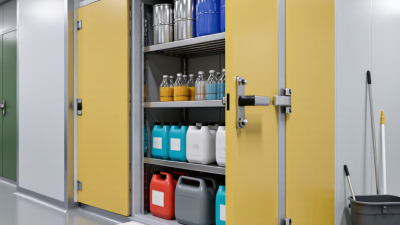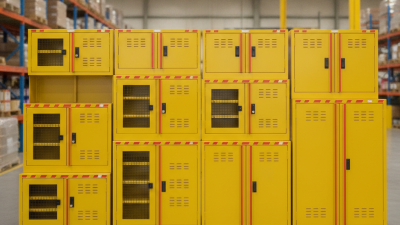
China Top 10 Flammable Liquid Cabinet Suppliers?

Choosing among China’s top 10 Flammable Liquid Cabinet suppliers requires more than comparing prices and product photographs. A reliable cabinet should support safer storage practices in laboratories, factories, workshops, and maintenance areas. Key details include steel thickness, fire-resistant insulation, adjustable shelves, spill containment, grounding options, door construction, ventilation design, and clearly visible warning labels.

Details matter.

This guide examines ten Chinese suppliers through practical and verifiable criteria. We consider manufacturing experience, product range, quality-control procedures, export capability, technical documentation, and customer support. Where available, supplier information is checked against factory profiles, product specifications, certifications, testing reports, and application examples. However, published claims can change, and not every online statement is equally dependable. Buyers should request current documents and confirm whether the cabinet matches their intended chemicals, capacity, and workplace conditions.

A useful supplier should explain how its cabinets are built, tested, packaged, and maintained. Close-up details can reveal much: reinforced hinges, smooth shelf edges, leak-resistant trays, powder-coated surfaces, and secure locking systems. We also consider response quality, because unclear answers before purchase may create larger problems after delivery. No ranking is perfect. Supplier performance may vary by model, batch, and project requirements. That gap matters. This overview is therefore a practical starting point, not a substitute for site-specific risk assessment or professional safety advice. It aims to help international buyers compare suppliers with greater confidence, clearer questions, and more realistic expectations.
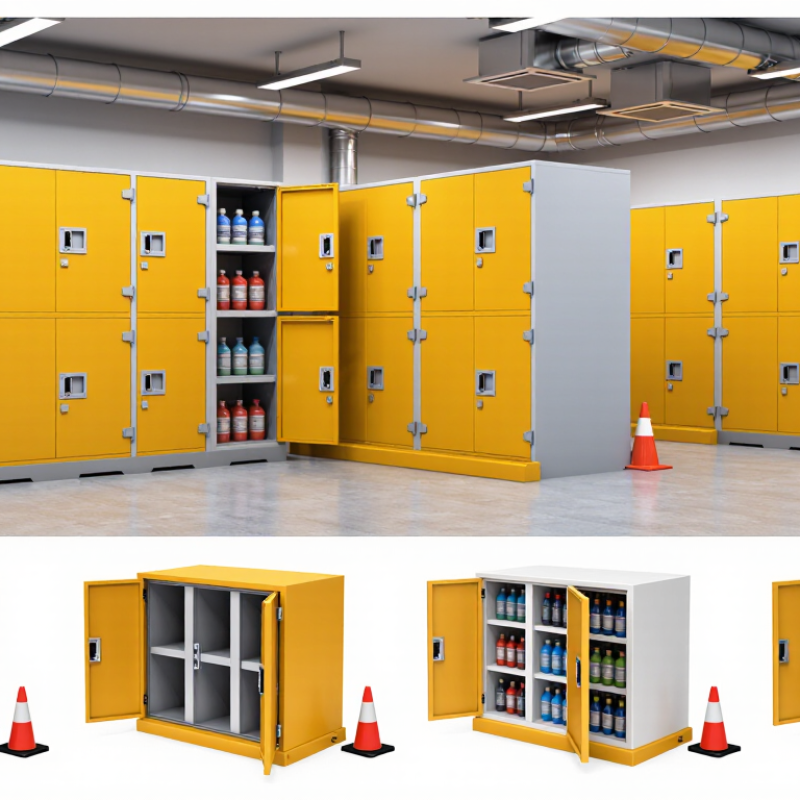
China Top 10 Flammable Liquid Cabinet Suppliers?

China’s Flammable-Liquid Cabinet Market: 60-Gallon and 120-Gallon Limits

China’s flammable-liquid cabinet market increasingly focuses on 60-gallon and 120-gallon capacities. Under OSHA 1910.106, one cabinet may hold up to 60 gallons of Category 1–3 liquids, or 120 gallons of Category 4 liquids. These limits are not interchangeable. Buyers should check the liquid classification, cabinet label, and test documentation before ordering.

NFPA 30, 2024 Edition emphasizes suitable construction, ventilation control, fire resistance, and separation from ignition sources.

The NFPA report Fire Loss in the United States During 2023 recorded about 1.5 million fires and 29.1 billion dollars in property damage. This data gives cabinet selection real operational weight.

In China, leading suppliers should provide steel thickness, coating details, door performance, leak containment volume, and inspection records. Product photos alone prove very little. A cabinet is not a warehouse.

Tips:

Confirm whether the stated capacity means usable liquid volume or total cabinet capacity. Ask for testing standards in writing. Measure doorway width before choosing a 120-gallon model. Keep incompatible liquids separated. Some catalog descriptions remain vague, and that deserves careful review. Experienced safety managers also inspect shelves, grounding points, and self-closing doors after installation, not only during purchasing.

NFPA 30 and OSHA 1910.106 Criteria for Ranking Chinese Suppliers

China Top 10 Flammable Liquid Cabinet Suppliers?

Ranking Chinese flammable liquid cabinet suppliers requires more than comparing prices or catalog photos. NFPA 30 and OSHA 1910.106 provide the technical reference points. A serious evaluation checks double-wall steel construction, fire-resistant insulation, self-closing doors, adjustable shelves, and leak-resistant sumps. Door latches should operate smoothly. They should not jam during an emergency.

Supplier evidence matters. Request material specifications, factory inspection records, fire-resistance test reports, and production traceability. Confirm whether testing matches the cabinet model, not merely a similar sample. OSHA 1910.106 also addresses approved storage practices, cabinet capacity, and safe handling of flammable liquids. Requirements may vary by liquid category and workplace design. Local authorities having jurisdiction may apply additional rules.

I would score suppliers on five practical areas: compliance documentation, manufacturing consistency, safety features, delivery reliability, and technical support. A cabinet should arrive without bent doors, damaged seals, or loose shelves. Small defects can become serious in daily use. Ask for photographs of welds and ventilation openings. Request clear instructions for grounding, placement, inspection, and maintenance.

A low price can hide weak evidence. That matters.

However, documents are not proof of every production batch. An on-site audit or independent inspection remains valuable. My ranking would therefore combine standards review, sample testing, customer feedback, and factory experience. It would not rely on marketing claims alone. Even experienced buyers can miss differences between a tested prototype and ordinary production.

EN 14470-1 Fire-Resistance Classes: 30, 60, and 90 Minutes

China Top 10 Flammable Liquid Cabinet Suppliers: Understanding EN 14470-1 Fire-Resistance Classes

When comparing Chinese suppliers, EN 14470-1 certification should guide the conversation. This European standard covers safety cabinets designed for storing flammable liquids. Its fire-resistance classes include 30, 60, and 90 minutes. These figures describe tested protection time during a defined external fire exposure. They do not guarantee unlimited safety.

A 30-minute cabinet may suit lower-risk work areas with short evacuation routes. A 60-minute model provides more time for emergency response and fire-control measures. A 90-minute cabinet is often considered for larger inventories, critical laboratories, or locations requiring stronger separation. The correct class depends on quantity, room design, emergency planning, and local requirements. Bigger is not always better.

Look for suppliers that provide complete test documentation, material specifications, and traceable production records. Inspect door closing, thermal insulation, adjustable shelves, spill containment, and ventilation connections. A cabinet should close smoothly, even after repeated daily use. Ask whether testing covered the complete cabinet, not only individual panels. That detail matters.

Experience shows that unclear certificates create expensive delays. Some product descriptions also use “fireproof” too loosely. This needs careful questioning. A supplier’s technical team should explain the test method without vague promises. Independent laboratory evidence is more dependable than attractive photographs. Still, documents can become outdated, and installation errors can reduce performance. Storage practices require regular review. A perfect cabinet cannot correct poor handling.

China Top 10 Flammable Liquid Cabinet Suppliers? — EN 14470-1 Fire-Resistance Classes: 30, 60, and 90 Minutes
Evaluation Dimension EN 14470-1 Type 30 EN 14470-1 Type 60 EN 14470-1 Type 90
Fire-resistance classification Type 30 cabinet with a nominal fire-resistance period of 30 minutes. Type 60 cabinet with a nominal fire-resistance period of 60 minutes. Type 90 cabinet with a nominal fire-resistance period of 90 minutes.
Applicable standard EN 14470-1, safety storage cabinets for flammable liquids. EN 14470-1, safety storage cabinets for flammable liquids. EN 14470-1, safety storage cabinets for flammable liquids.
Primary safety purpose Provides temporary protection for stored flammable liquids during a developing external fire. Provides a longer period of protection where higher fire-separation performance is required. Provides the longest listed protection period among the three specified classes.
Typical application environment Small laboratories, workshops, teaching areas, and low-volume storage points. Industrial laboratories, production support areas, and facilities with moderate storage demand. High-risk industrial, research, pharmaceutical, and chemical-processing environments.
Cabinet construction Fire-tested double-wall or multi-layer construction with an insulated cavity. Fire-tested insulated construction designed to maintain the Type 60 performance level. Fire-tested high-performance insulated construction designed to maintain the Type 90 level.
Door safety features Self-closing doors and fire-protection mechanisms are required as part of the tested cabinet design. Self-closing doors, thermal release features, and tested fire-protection components. Self-closing doors, thermal release features, and enhanced fire-protection construction.
Ventilation consideration Where ventilation is installed, the inlet and exhaust connections should be integrated into the tested design. Ventilation components should be compatible with the cabinet’s certified fire-performance configuration. Ventilation components and fire dampers should be included only when covered by the tested configuration.
Spill-containment requirement Base tray or leak-containment arrangement should be provided for accidental liquid release. Base tray or shelf-level containment should be sized for the intended container arrangement. Robust spill containment is recommended for larger inventories and higher-risk operations.
Selection priority Suitable when the risk assessment supports a 30-minute fire-resistance class and limited inventory. Suitable when additional evacuation, isolation, or emergency-response time is required. Suitable when the risk assessment requires the highest fire-resistance class among these options.
Verification documents to request Independent test report or certificate identifying EN 14470-1 and Type 30 performance. Independent test report or certificate identifying EN 14470-1 and Type 60 performance. Independent test report or certificate identifying EN 14470-1 and Type 90 performance.
Purchasing note: Fire-resistance class, cabinet capacity, dimensions, ventilation configuration, shelf load, chemical compatibility, and local installation requirements should be verified against the current certification and the applicable workplace fire-safety regulations. EN 14470-1 classification does not by itself identify a supplier, guarantee every cabinet configuration, or replace a site-specific risk assessment.

Top 10 Chinese Suppliers Compared by Capacity, Certification, and Export Data

China Top 10 Flammable Liquid Cabinet Suppliers?

A reliable top-10 comparison needs more than factory size. China Customs and UN Comtrade classify many cabinets under broad metal-furniture codes, including HS 940320. This limits export accuracy. I would cross-check customs records, audited production capacity, and shipment destinations. Capacity should mean tested cabinet output per year, not total workshop area. The strongest suppliers disclose monthly production, steel thickness, door construction, and fire-resistance test methods. Some report impressive figures. Their definitions are not always comparable.

Certification separates serious manufacturers from ordinary fabricators. Buyers should verify ISO 9001 systems, material traceability, and test evidence against EN 14470-1 or relevant national standards. OSHA 1910.106 can also guide storage-risk evaluation, although it is not a universal certification. SGS, TÜV, or equivalent laboratory reports deserve source verification and current validity dates. Export data adds another layer. A supplier shipping regularly to Europe, North America, and Southeast Asia shows logistical experience, but destination volume does not prove cabinet performance. UN Comtrade data can reveal trade direction and product value, yet it cannot confirm fire endurance. I would score the ten suppliers across capacity, valid certification, defect control, export history, and after-sales response. This model is practical, but imperfect. Supplier disclosures still require factory audits and sample testing.

How to Verify Cabinet Steel, Ventilation, Spill Control, and Factory Compliance

China Top 10 Flammable Liquid Cabinet Suppliers?

When comparing suppliers, verify the cabinet steel before judging its appearance. Request the steel grade, thickness, wall construction, and welding method. A strong cabinet usually has double-wall panels, reinforced doors, and a stable base. Inspect close-up weld photos, not only polished product images. Ask for material certificates and batch traceability. Thin steel may reduce cost, but it can deform during handling or heat exposure. It happens more often than buyers expect.

Ventilation needs practical verification. Confirm port locations, airflow design, and whether optional connections suit your facility. Vent openings should not weaken the cabinet or create unnecessary ignition risks. Ask for drawings, airflow test records, and installation instructions. Spill control also deserves measurement. Check the sump height, usable capacity, removable shelf design, and resistance to the intended liquid. Pouring water into a sample cabinet can reveal poor drainage, uneven floors, or hidden gaps.

Factory compliance requires evidence, not confident answers. Review quality-control procedures, inspection records, calibration certificates, and relevant third-party test reports. A factory audit should examine incoming steel, welding checks, coating thickness, door-closing tests, and final packing. Request a video inspection or independent pre-shipment inspection. Certifications alone are not enough. Their scope may not cover the actual cabinet model. One weakness remains: supplier documents can be incomplete or outdated. Record every promise in the purchase contract, including dimensions, steel thickness, ventilation parts, spill capacity, and corrective actions. Field verification still matters.


This website uses cookies. By continuing to browse this site you are agreeing to our use of cookies. Please review our Privacy Policy for more information.