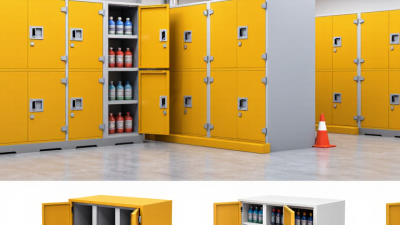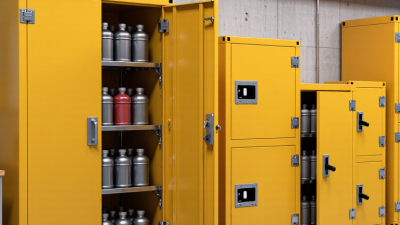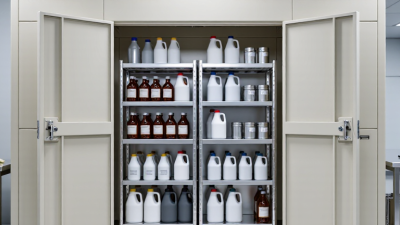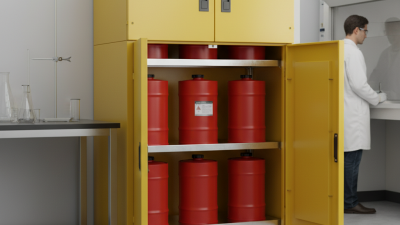
2026 Top Flammable Liquid Cabinet Which Type Is Best?

Choosing the best Flammable Liquid Cabinet in 2026 starts with the liquids, quantities, and work practices it must support. A cabinet beside a busy dispensing station faces different demands from one used for sealed containers in a small laboratory. Picture the daily routine: staff reach for a bottle, close the door, and return the container. Small details matter. Door style, shelf layout, capacity, labeling, and compatibility with the stored materials can shape safe, consistent use.

A cabinet is not a one-size-fits-all purchase. Compare available types against the manufacturer’s specifications, your workplace risk assessment, and applicable local requirements. Check whether the cabinet suits the liquid categories and container sizes involved. Consider where it will sit, who needs access, and whether doors can be closed without obstruction. A feature that looks useful in a catalog may be awkward in a crowded room. That deserves a second look.

As a proposed expert line for review by a qualified cabinet-safety professional: “The best cabinet is the one that fits the materials, the workflow, and the space—and is used as intended.” The quotation is editorial wording, not a verified statement from a named expert. This guide will compare common cabinet types and practical selection factors, while distinguishing documented product details from assumptions. No cabinet replaces sound handling practices or appropriate training. Some workplaces also discover that their first choice was too small. That is worth admitting—and planning around.
2026 Top Flammable Liquid Cabinet Which Type Is Best?

What Is a Flammable Liquid Cabinet and Why Is It Needed?

A flammable liquid cabinet is a fire-resistant enclosure for storing containers that can ignite easily. It limits vapor release, reduces ignition exposure, and helps organize emergency response. The best type depends on liquid category, container size, storage volume, and workplace layout.

U.S. OSHA 1910.106 permits storage cabinets to hold up to 60 gallons of Category 1, 2, or 3 liquids, or 120 gallons of Category 4 liquids. It also limits cabinet quantity in one storage area. NFPA 30, 2024 edition, provides further guidance on cabinet construction, separation, labeling, and storage practices. These figures matter. A cabinet that looks large may still exceed the permitted volume.

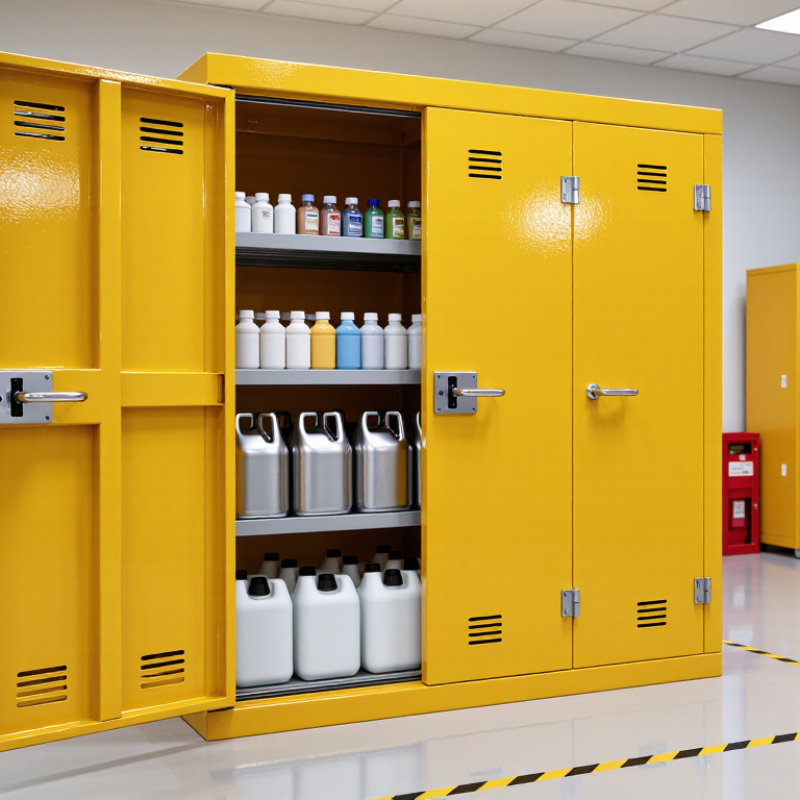
Steel cabinets are common because they resist impact and support controlled storage. Adjustable shelves help keep containers upright. A raised spill-control sill can contain leaks. Self-closing doors are useful, but they are not a complete safety system. Cabinet selection should also consider grounding needs, ventilation design, fire rating, and compatibility with the liquid.

The hard part is often overlooked. Storage discipline matters. Keep containers closed, labels readable, and incompatible chemicals separated. Never use the cabinet as a temporary waste bin. OSHA’s Hazard Communication requirements emphasize labels and accessible safety data sheets. In practice, workers may still place oily rags, aerosols, or unknown containers inside. That mistake deserves review. A cabinet protects best when its capacity, contents, and daily inspection routine remain controlled.

2026 Top Flammable Liquid Cabinet: Which Type Is Best?

A flammable liquid cabinet is a specially designed storage cabinet used to reduce fire risks when storing flammable and combustible liquids. Under U.S. OSHA requirements, one cabinet may hold up to 120 gallons of Class I, Class II, and Class III liquids combined, but no more than 60 gallons may be Class I or Class II liquids. The best cabinet type depends on the liquid classification, required capacity, workplace layout, and applicable local fire codes.

Regulatory reference: OSHA 29 CFR 1910.106(d)(3)(i). Values show maximum allowable storage volume per cabinet, not a recommendation for cabinet size.

Which Flammable Liquid Cabinet Types Are Available in 2026?

In 2026, flammable liquid cabinets are available in several practical formats.

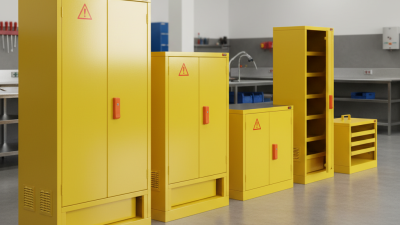
Vertical floor cabinets suit workshops storing many small containers. Undercounter cabinets save space near laboratory benches. Compact benchtop cabinets fit limited work areas, but they offer less capacity. Drum cabinets support larger containers and require careful floor loading checks.

Material choices also matter.

Steel cabinets provide strong impact resistance and common fire protection. Approved wood cabinets can work in controlled indoor environments.

Look for self-closing doors, adjustable shelves, leak-resistant sumps, and clear hazard labels. Some cabinets include ventilation ports, but connecting them incorrectly can create additional risks. The boundary is not obvious.

OSHA 29 CFR 1910.106 limits one cabinet to 60 gallons of Category 1–3 flammable liquids, or 120 gallons of Category 4 liquids.

NFPA 30, 2024 edition, provides related guidance on storage, separation, and container control. These figures help buyers compare cabinet sizes, not replace a site assessment. A cabinet placed beside a hot process may be unsuitable, even when its capacity looks correct.

Keep incompatible chemicals separated. Check local fire authority requirements before purchase. Small details matter.

How to Compare Cabinet Capacity, Construction, and Safety Features

2026 Top Flammable Liquid Cabinet: Which Type Is Best?

Choosing the best flammable liquid cabinet starts with capacity, not appearance. Count current containers, then allow room for realistic growth. Overcrowding makes retrieval difficult and can hide leaks. A compact cabinet may suit a laboratory, while a wider unit fits maintenance areas with frequent access. Adjustable shelves help, but shelf load ratings still matter. Measure the available floor space, door clearance, and emergency access route before ordering.

Construction deserves close inspection. Look for double-wall steel, strong welded seams, corrosion-resistant finishes, and a liquid-tight bottom sump. The air space between walls can improve fire resistance, but only tested construction supports a credible safety claim. Heavy doors alone prove little. A cabinet with flimsy hinges may deteriorate after repeated daily use. That detail is easy to overlook.

Safety features should match the work routine. Self-closing doors, secure latches, clear hazard labels, and stable shelves reduce common handling risks. A built-in spill tray can contain a small leak, but it cannot replace regular inspections. Vent connections should never be added casually; unsuitable ventilation may reduce protection. Check the manufacturer’s test documentation and local workplace requirements. Standards vary by location. A cabinet can meet one specification and still need changes for another facility. Inspect door alignment, corrosion, shelf damage, and container condition on a fixed schedule. Looks can deceive.

How to Choose the Best Cabinet for Your Workplace and Storage Needs

Choosing the best flammable liquid cabinet starts with your daily workflow, not its color or advertised capacity. A maintenance room may need a compact undercounter cabinet for small containers. A production area may require a taller model with adjustable shelves and separate storage zones. NFPA reports an average of 37,910 industrial and manufacturing fires annually from 2017 to 2021, with about $1.5 billion in direct property damage. Storage decisions deserve attention.

Match the cabinet to the liquid volume, container size, and handling frequency. A self-closing, fire-resistant cabinet can reduce exposure when a spill or ignition source appears nearby. Check its construction against recognized requirements, including OSHA 29 CFR 1910.106 and NFPA 30. Do not assume ventilation always improves safety. In many workplaces, unnecessary vent connections can create new hazards and should be reviewed by a qualified safety professional.

Walk the storage route before purchasing. Can workers open the doors while wearing gloves? Are shelves strong enough for glass containers? Is the cabinet away from exits, heat, electrical sparks, and vehicle traffic? OSHA emphasizes controlling ignition sources and limiting stored quantities. Yet real workplaces are imperfect. Labels fade, inventories change, and cabinets become overcrowded. A smaller cabinet with disciplined inspection may perform better than a large cabinet used carelessly. Review the inventory regularly, record damaged containers, and train every person who handles the liquids. Small details matter.

2026 Top Flammable Liquid Cabinet Which Type Is Best? - How to Choose the Best Cabinet for Your Workplace and Storage Needs

Cabinet Type Typical Capacity Range Typical Configuration Best Workplace Application Main Advantages Important Limitations Selection Guidance
Standard Upright Cabinet Commonly 30–60 gal of flammable liquids; some models are rated for up to 120 gal of combustible liquids. Freestanding cabinet with adjustable shelves, self-closing doors, and a raised leak-containment sill. General-purpose storage in laboratories, maintenance rooms, workshops, manufacturing areas, and educational facilities. Versatile Good visibility Efficient use of floor space Easy access Requires sufficient floor and overhead clearance. A fully loaded cabinet can be heavy and may need anchoring where required by the site risk assessment or local code. Best overall option when the workplace needs regular access and moderate-to-high storage capacity in one location.
Slim or Narrow Cabinet Commonly 12–30 gal of flammable liquids. Tall, narrow footprint with one or more adjustable shelves and a compact door design. Small laboratories, service corridors, workshops, and locations with limited wall or floor space. Space-saving Simple installation Suitable for point-of-use storage Lower capacity and a narrower internal shelf area. Storage of large containers or bulky waste cans may be impractical. Choose this type when footprint is the main constraint and the daily inventory is well below the cabinet's rated capacity.
Under-Counter Cabinet Commonly 4–20 gal of flammable liquids. Low-profile cabinet designed to fit below a workbench or laboratory counter. Laboratories, testing areas, dispensing stations, and work cells that need small quantities close to the task. Excellent point-of-use access Minimal footprint Keeps containers below work surfaces Limited capacity and internal height. It should not become a substitute for a larger central storage cabinet. Use for small working inventories only. Keep the cabinet away from heat sources, ignition sources, exits, and incompatible chemicals.
Double-Door Cabinet Commonly 45–60 gal of flammable liquids; combustible-liquid capacity may be higher where permitted. Wide cabinet with two self-closing doors and multiple adjustable shelves. Production areas, central chemical stores, maintenance departments, and facilities with frequent container handling. Wide access opening High practical capacity Good for mixed container sizes Needs more clearance in front of the cabinet and may be unsuitable for narrow aisles or crowded work areas. Select when several users need access or when containers are too wide or numerous for a single-door cabinet.
Drum or Bulk-Container Cabinet Designed for larger containers; capacity depends on the number and size of drums or approved bulk containers. Reinforced cabinet or enclosure with a larger internal footprint, spill containment, and access suitable for drum handling. Industrial maintenance, manufacturing, fleet service, and facilities using larger volumes of solvent or fuel. Accommodates large containers Improved spill control Useful for centralized storage Requires more floor space, careful loading, and suitable handling equipment. It may not be appropriate for ordinary small-container storage. Confirm the cabinet's rated container size, shelf or floor-load rating, ventilation provisions, and spill-containment volume before purchase.
Mobile Safety Cabinet Commonly 12–45 gal, depending on the design and load rating. Cabinet fitted with casters or wheels, usually with locking doors and a containment base. Controlled movement of small inventories between work areas, maintenance operations, and temporary production tasks. Flexible positioning Useful for changing workflows Reduces repeated manual carrying Must be stable during movement and parked securely. It should not obstruct emergency routes, fire equipment, or access aisles. Choose only when mobility is necessary and the workplace can control movement, parking, locking, and inspection procedures.
Outdoor or Weather-Resistant Cabinet Capacity varies widely; verify the product's approved storage volume and environmental rating. Enclosed, corrosion-resistant construction with weather protection and a secure locking system. Outdoor maintenance areas or sites where indoor storage is not practical and local regulations permit outdoor storage. Protects contents from weather Supports controlled outdoor storage Reduces indoor congestion Outdoor use does not remove requirements for separation distances, ignition-source control, temperature management, security, or emergency access. Use only after confirming local fire-code requirements, site drainage, grounding needs, temperature exposure, and security controls.
Corrosive-Compatible Cabinet Capacity depends on the construction materials and the chemicals stored; it is not automatically suitable for flammable liquids. Cabinet with corrosion-resistant lining or construction, often intended for acids or bases rather than solvents. Separate corrosive chemical storage areas where chemical compatibility is the primary concern. Improved corrosion resistance Useful for corrosive chemicals A corrosive-storage cabinet is not necessarily a flammable-liquid safety cabinet. Some construction materials may be unsuitable for solvents or ignition protection. Do not select this type for flammable liquids unless the cabinet is specifically rated and tested for flammable-liquid storage.

Important compliance note: Capacity, construction, fire resistance, ventilation, grounding, labeling, and door requirements vary by jurisdiction and product design. In the United States, OSHA 29 CFR 1910.106 generally limits a single storage cabinet to 60 gallons of Category 1, 2, or 3 flammable liquids, or 120 gallons of Category 4 flammable liquids, subject to the applicable requirements and exceptions. Always verify the current local fire code, occupational-safety rules, chemical compatibility, safety data sheets, and the cabinet manufacturer's certification before installation.

What Standards and Maintenance Practices Should Buyers Consider?

The best flammable liquid cabinet in 2026 depends on the liquids, storage volume, and workplace conditions. Buyers should verify the applicable requirements before comparing finishes or features. Common references include OSHA 1910.106, NFPA 30, and EN 14470-1, where adopted by local authorities. These standards address construction, fire resistance, labeling, shelving, and maximum storage limits. A suitable cabinet usually has double-wall steel construction, leak-resistant shelves, self-closing doors, and a raised spill sump. Do not assume every certified cabinet meets every regional requirement.

Maintenance matters as much as the initial purchase. Inspect doors, hinges, latches, shelf supports, and warning labels each month. Look for corrosion, chemical residue, damaged seals, or shelves that no longer sit level. Clean spills promptly with compatible materials. Never store incompatible liquids together without checking their safety data sheets. Keep containers closed and below the shelf load rating.

Ventilation needs careful judgment. Adding an unapproved fan or duct can weaken fire protection. Follow the cabinet instructions and local fire authority guidance. Grounding may also be required during liquid transfer, but it should be designed by a qualified professional. A simple checklist helps, but it can still miss changing chemical hazards. Review the inventory after process changes. Replace damaged cabinets instead of treating repairs as permanent solutions. Train users, record inspections, and keep access clear. Small oversights often become the expensive part.


This website uses cookies. By continuing to browse this site you are agreeing to our use of cookies. Please review our Privacy Policy for more information.