
How to Choose the Best Chemical Cabinet in 2026
Choosing the right Chemical Cabinet in 2026 is not just a matter of comparing prices or picking a color. The cabinet must suit the chemicals, containers, and daily routines of the space where it will stand. A bottle that fits on the shelf may still be incompatible with its lining or nearby materials. Small details matter. Chemical safety pioneer Paracelsus is credited with the reminder, “The dose makes the poison.” His words underline why careful storage and clear identification deserve attention.
This guide explains how to compare cabinet materials, capacity, shelf design, labeling, and access needs. It also considers practical details: the weight of full containers, the reach required to use each shelf, and whether doors can open without blocking a walkway. Start with the manufacturer’s compatibility guidance for the specific chemicals being stored. Then check relevant workplace requirements and consult a qualified safety professional when the application is unclear. A cabinet is only one part of a safe storage plan. It cannot correct poor inventory practices or replace staff training. That is easy to overlook. Before choosing, record what will be stored, how often it will be accessed, and where the cabinet will sit. These steps make comparisons more useful—and may reveal that the first cabinet you considered is not the right one.
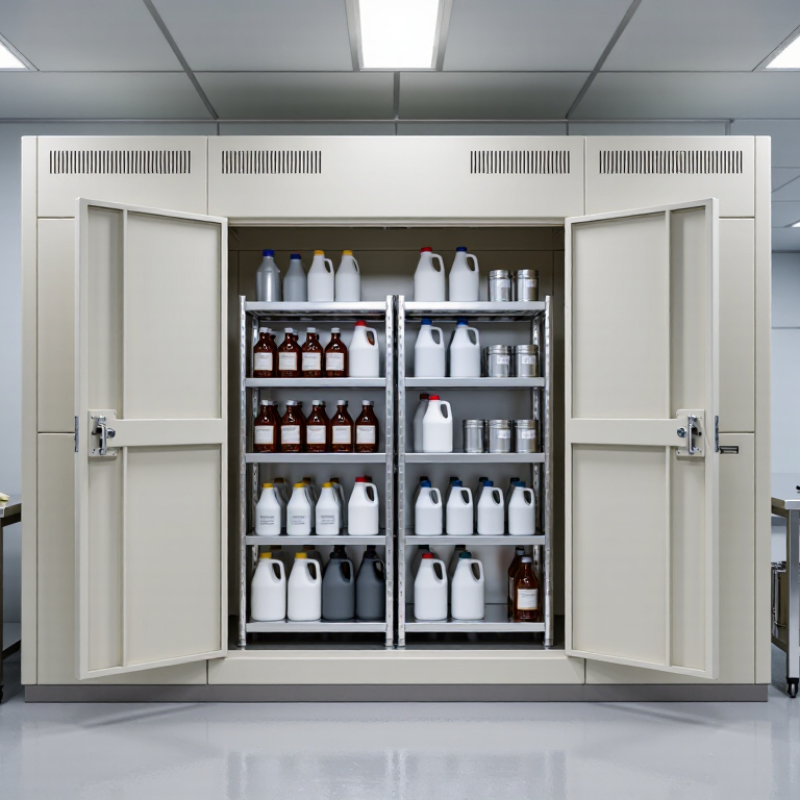
Identify the Chemicals and Hazards the Cabinet Must Contain
Before choosing a cabinet, list every chemical it will hold, including mixtures and small bottles. Check each safety data sheet for hazards, storage conditions, and incompatibilities. Chemical names alone are not enough. A clear liquid may still release harmful vapors or react dangerously with another product.
Group chemicals by hazard and compatibility. Flammable liquids, corrosives, oxidizers, and toxic substances may require different cabinet features or separate storage. Never assume one cabinet safely contains everything. Look for details such as corrosion-resistant lining, spill containment, suitable shelving, and secure doors. A bottle that leaks onto a metal shelf can create a problem long before anyone notices.
Think about the actual work area, too. Count containers, note their sizes, and leave room to retrieve them without awkward lifting. Check temperature limits and whether ventilation is needed; adding a vent without expert guidance may reduce protection. Small details matter. Inventories can be incomplete, especially when teams share a room. Review them with the people who use the chemicals, then revisit the cabinet choice whenever materials or procedures change.
| Chemical Group | Main Hazards to Assess | Cabinet Type and Features to Consider | Compatibility and Segregation | Selection Checks |
|---|---|---|---|---|
| Flammable liquids Examples: many solvents, alcohols, and petroleum products |
Fire and vapor ignition; possible health hazards vary by substance. | Use a cabinet designed and labeled for flammable-liquid storage. Check construction, door closure, spill containment, and applicable fire-code requirements. | Keep away from oxidizers and other incompatible materials. Do not assume every liquid in a flammable-liquid cabinet is compatible with every other liquid. | Check the safety data sheet (SDS), container sizes, total quantity, local fire code, and applicable workplace rules. Vent only when required and in accordance with the cabinet manufacturer’s instructions and local requirements. |
| Corrosive acids Examples: hydrochloric and sulfuric acid |
Skin and eye burns, corrosive vapors, and—in some cases—reactive or toxic releases. | Choose a corrosion-resistant cabinet with compatible shelves and a leak-containment tray. Confirm material compatibility for the specific acid and its concentration. | Segregate acids from bases and from incompatible substances such as cyanides or sulfides. Oxidizing acids, including nitric acid, may need separate storage from organic materials and other acids. | Check each SDS and cabinet-material compatibility guidance. Hydrofluoric acid requires special material-compatibility review; glass is not suitable for storing it. |
| Corrosive bases Examples: sodium hydroxide and potassium hydroxide solutions |
Severe skin and eye burns; heat or splashing may occur when some bases contact water or acids. | Use a corrosion-resistant cabinet and containment materials compatible with the specific base and concentration. | Store separately from acids and other incompatible chemicals. Keep containers stable and protected from damage. | Verify cabinet and liner compatibility using the SDS and manufacturer guidance; do not select a cabinet based only on the word “corrosive.” |
| Oxidizers Examples: some concentrated peroxide and nitrate products |
May intensify fires or react vigorously with combustible, reducing, or organic materials. | Use storage appropriate to the specific oxidizer and its concentration. A dedicated, clean, compatible cabinet or area may be needed; a flammable-liquid cabinet is not a substitute. | Keep separate from flammables, combustibles, organic materials, reducing agents, and other incompatible chemicals. Avoid contamination. | Consult the SDS and chemical-compatibility guidance. Confirm whether the product has additional hazards, such as corrosivity or temperature sensitivity. |
| Toxic or highly hazardous chemicals Examples vary widely by substance and form |
Potential harm from inhalation, skin contact, ingestion, or accidental release; hazard severity depends on the chemical and exposure route. | Choose a cabinet based on the chemical’s primary physical and chemical hazards, with secure access and suitable containment where needed. A “toxic” label alone does not define cabinet construction. | Segregate according to chemical compatibility, not toxicity alone. Keep incompatible chemicals apart and prevent unauthorized access where required. | Review the SDS, exposure-control plan, inventory, and applicable rules. Determine whether additional controls, such as ventilation or restricted access, are required. |
| Water-reactive chemicals Examples include certain reactive metals and hydrides |
May release heat, flammable gas, or hazardous products upon contact with water or moisture. | Use dry, tightly closed, chemically compatible storage. The appropriate cabinet or storage arrangement depends on the particular chemical and its packaging. | Keep away from water, damp locations, and incompatible materials. Segregate from substances that could trigger a dangerous reaction. | Follow the SDS and site-specific emergency procedures. Check storage conditions, packaging integrity, and any temperature or moisture-control requirements. |
| Compressed gas cylinders | High pressure; hazards may also include flammability, toxicity, oxidation, or asphyxiation. | Use a purpose-designed, secured cylinder storage arrangement suitable for the gas. A standard chemical cabinet is generally not intended to contain compressed-gas cylinders. | Separate incompatible gases as required and protect cylinders from heat, impact, and unauthorized movement. Secure cylinders against falling. | Check the gas supplier’s safety information, cylinder-storage rules, ventilation needs, and applicable fire and workplace requirements. |
Related Posts
-
How to Choose the Right Chemical Cabinet?
-

Top 10 Flammable Storage Cabinets for Safe Global Use?
-
China Top 10 Flammable Liquid Cabinet Suppliers?
-
How to Choose the Right Chemical Cabinet for Your Needs?
-
Top 10 Outdoor Flammable Storage Cabinet Features to Know?
-
What Is the Best Hazmat Locker for Chemical Storage?