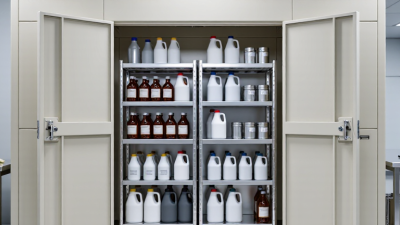
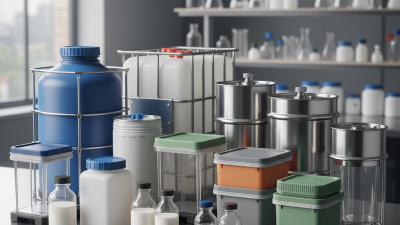
Choosing the right Chemical Storage Containers requires more than comparing prices, sizes, or delivery times. Buyers must match each container with the chemical’s properties, storage conditions, and handling routine. Acids, solvents, oxidizers, and corrosive liquids can react differently with the same material. A container that protects one product may fail with another.
Material selection matters. High-density polyethylene often suits many corrosive liquids and offers practical impact resistance. Polypropylene can perform well in warmer environments, while glass provides strong chemical visibility and purity. Stainless steel may support demanding industrial applications, but compatibility still requires verification. Check the closure, gasket, vent, wall thickness, and secondary containment system. Small details matter.
Real-world use reveals problems that product pages often miss. A drum may fit a pallet but remain difficult to move safely. A narrow opening can slow transfers and increase spill risks. Labels may peel in humid storage rooms. These details deserve attention before purchase. They can affect daily reliability.
Global buyers should also review supplier documentation, test records, traceability, and quality controls. Confirm whether containers meet applicable transport, workplace, and environmental requirements in the destination market. Requirements differ between countries and chemical categories. Professional advice may be necessary for higher-risk applications.
There is no universal best container. The most expensive option is not always the safest choice. A practical decision considers compatibility, durability, handling, storage temperature, and total operating cost. This guide compares common container types and explains where each option may perform well, where it may disappoint, and what buyers should verify before committing.
Chemical storage containers do more than hold liquid. They control contact, leakage, vapor release, and handling risk. In practice, the correct container begins with the chemical, not the shelf size. An experienced operator checks concentration, temperature, density, and expected storage time. Compatibility matters. Acids, solvents, oxidizers, and alkaline solutions can attack the wrong polymer or closure. Even a strong container may fail when its gasket swells. That detail is easy to miss.
Material selection should match the chemical’s properties and the working environment. High-density polyethylene suits many aqueous solutions, while polypropylene handles different heat conditions. Neither choice is universal. For aggressive chemicals, engineers may specify specialized linings or fluoropolymer components. Wall thickness should reflect stacking loads, impact exposure, and temperature changes. Wide mouths improve filling and cleaning, but they also need secure, chemically resistant closures. Venting may be necessary when pressure can build. Secondary containment adds a practical barrier beneath drums, carboys, or tanks.
Reliable storage depends on use, not design alone. I have seen well-rated containers fail after rough dragging across concrete. Routine inspections should look for whitening, cracks, distortion, brittle fittings, and loose caps. Labels must remain readable after moisture and chemical exposure. Store containers upright. Keep incompatible materials separated, and leave enough access for inspection. Small records help: fill date, chemical name, batch reference, and inspection findings. Buyers should verify technical data and applicable local requirements before ordering. I still question whether every facility reviews these records often enough.
Chemical hazards should determine container design, not purchase price. UNEP’s Global Chemicals Outlook II projects global chemical production will nearly double from 2017 to 2030. Storage decisions therefore need stronger material compatibility and inspection controls.
For flammable liquids, approved steel drums and safety cans reduce ignition risks. Use conductive containers where static control is required. Corrosive acids often suit high-density polyethylene or polypropylene containers, but compatibility must be verified for concentration and temperature. Oxidizers need clean, dedicated containers because organic residues can trigger dangerous reactions. Toxic chemicals require sealed packaging and a separate secondary-containment tray. Small volumes matter too. A minor leak can spread across a warehouse floor within minutes.
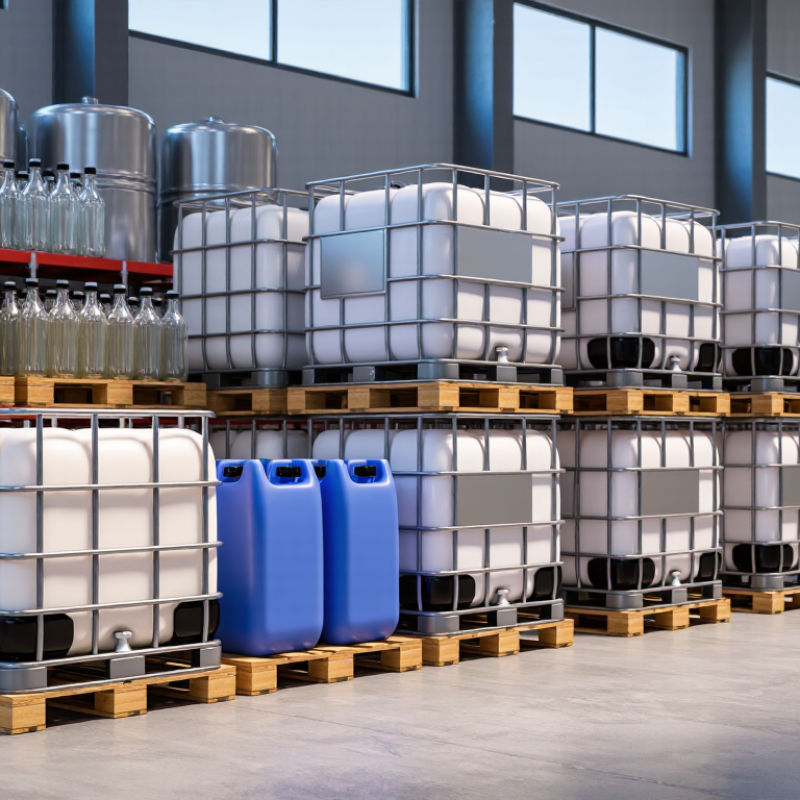
Intermediate bulk containers commonly hold about 1,000 litres, while standard drums often hold about 200 litres. Their size is useful, but larger capacity increases spill consequences. The UN Recommendations on the Transport of Dangerous Goods require tested packaging for many hazardous substances, yet transport approval does not automatically prove long-term storage suitability. Check SDS instructions, temperature limits, venting needs, and local fire codes. Industry guidance often looks precise; real sites are messier. Labels fade, caps loosen, and mixed inventories change. No universal container is perfect. Recheck compatibility after every formulation or storage-area change.
Top Chemical Storage Containers for Global Buyers
Material compatibility should guide every container decision. A strong plastic may resist one chemical yet weaken under another. Check the safety data sheet, compatibility charts, concentration, and storage temperature. Pay attention to seams, handles, and inner linings. A container can look perfect while becoming brittle after months of exposure. That failure is easy to overlook.
Capacity affects handling, not just storage volume. Choose a size that leaves practical headspace without creating unnecessary movement. Smaller units can reduce lifting strain and simplify inventory checks. Larger units may lower packaging costs, but they require suitable pallets, secondary containment, and safer dispensing equipment. Measure the storage area before ordering. Doorways and shelving often become the real limit.
Tips: Match the closure to the chemical and the workflow. Threaded caps suit repeated access, while tamper-evident closures support controlled distribution. Gaskets must remain compatible and flexible across the expected temperature range. For liquids that produce pressure, use a closure designed for that service. Never drill, modify, or loosely replace a cap. Confirm torque guidance, leak-testing procedures, labeling space, and local transport requirements with qualified technical personnel. An imperfect choice can still pass a visual inspection, so documented checks matter more than appearance.
| Container material | Typical capacity range | Common closure selection | Typical use |
|---|---|---|---|
| HDPE | 0.25–25 L | Screw cap or tamper-evident cap | Acids, bases, detergents, aqueous chemicals |
| Polypropylene | 0.05–5 L | Screw cap or flip-top closure | Laboratory chemicals and warm liquids |
| Fluoropolymer | 0.05–4 L | Fluoropolymer-lined screw cap | Aggressive acids, solvents, high-purity chemicals |
| Glass | 0.05–20 L | Screw cap with chemically resistant liner | Solvents, analytical reagents, high-purity liquids |
| 316 stainless steel | 20–200 L | Tri-sure-style plug or sanitary clamp closure | Bulk solvents, oils, and industrial liquids |
The chart uses an indicative compatibility index from 1 to 5, where 5 represents generally strong resistance for the listed chemical family under typical storage conditions. Actual suitability depends on concentration, temperature, exposure time, permeation, and closure-liner materials. Confirm every selection against the chemical Safety Data Sheet, transport regulations, and container test data before purchase.
Chemical containers must match the substance, concentration, temperature, and storage period. High-density polyethylene suits many corrosive liquids, while certain solvents require compatible metal or specialized fluoropolymer linings. Compatibility charts are useful, but they are not enough. A small sample test can reveal swelling, brittleness, or seal failure before shipment. Keep secondary containment beneath every container. A few centimeters of leaked liquid can spread quickly across a warehouse floor.
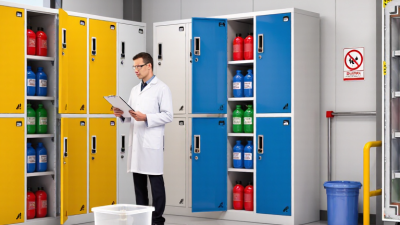
Labeling is a control, not decoration. Under the Globally Harmonized System, labels should show the product identifier, signal word, hazard pictograms, hazard statements, precautionary statements, and supplier details. ECHA’s 2023 enforcement report found non-compliance in roughly one of five inspected products. That figure deserves attention. Check labels after repacking, relabeling, or exposure to condensation. A clean-looking label may still carry outdated hazard information. Use durable, chemically resistant labels, and keep the Safety Data Sheet accessible in the buyer’s working language.
Transport containers need more than a strong wall. The UN Recommendations on the Transport of Dangerous Goods require approved packaging to meet performance tests, including drop, leakproofness, pressure, and stacking tests. Select the correct UN packaging code and packing group. Confirm closure torque, orientation arrows, overpack marks, and segregation requirements before loading. Inspectors also expect accurate shipping documents and emergency contact details. Do not rely on habit. Regulations differ across sea, road, rail, and air routes, and a container accepted at origin may need different controls at destination.
Choosing top chemical storage containers requires more than comparing catalog prices. Global buyers should examine material compatibility, wall thickness, closure design, and temperature resistance. A container suitable for mild liquids may fail with corrosive substances. Request test reports, dimensional drawings, and documented quality procedures from each supplier.
Supplier evaluation should include production capacity, inspection methods, export experience, and response speed. Ask how the supplier handles batch identification and damaged deliveries. Clear answers matter. A factory visit or independent inspection can reveal details that product photos hide. I have seen buyers trust a polished quotation and overlook weak packaging. That mistake becomes expensive.
Total cost includes more than the unit price. Calculate tooling, sampling, certification, inland transport, ocean freight, insurance, customs charges, storage, and possible product loss. Compare quotations using the same container size and delivery terms. Check minimum order quantities and payment schedules carefully. A cheaper container may require thicker outer packaging or frequent replacement. That is not a saving. Currency changes and port delays also deserve a risk allowance. Still, estimates remain imperfect. Real freight costs can shift after approval, so buyers should review assumptions before signing contracts. Reliable suppliers explain uncertainty instead of hiding it.
| Container Type | Typical Working Capacity | Common Chemical Applications | Typical Empty-Unit Price Range1 | Transport & Storage Advantages | Main Limitations and Risks | Key Compliance Checks | Typical Reuse Profile | Best-Fit Buyer Profile |
|---|---|---|---|---|---|---|---|---|
| Container Comparison for International Procurement | ||||||||
| High-density polyethylene (HDPE) drum | 60–220 L | Acids, alkalis, detergents, water-treatment chemicals, solvents compatible with polyethylene. | US$25–70 per drum | Low weight, corrosion resistance, easy handling, and broad availability in industrial supply chains. | Permeation, swelling, stress cracking, UV degradation, and temperature limitations. Not suitable for every solvent or oxidizer. | Confirm resin grade, closure type, gasket material, chemical compatibility, and UN performance marking where dangerous-goods transport applies. Common marking families include 1H1 and 1H2. | Usually single-trip to limited reuse, depending on cleaning validation and regulatory requirements. | Buyers shipping moderate volumes of compatible liquids with a strong focus on low tare weight and corrosion resistance. |
| Carbon-steel drum | 60–220 L | Oils, coatings, flammable liquids, solvents, powders, and products requiring high mechanical strength. | US$35–95 per drum | High puncture resistance, established global logistics infrastructure, and good stacking performance. | Internal corrosion, external rust, denting, and possible product contamination if lining selection is incorrect. Heavier than plastic. | Check UN marking, steel gauge, internal lining, closure system, grounding requirements, and compatibility with the product’s flash point and corrosion profile. Common marking families include 1A1 and 1A2. | Often reusable when inspected, cleaned, and reconditioned under an approved process. | Buyers handling flammable liquids, heavy products, or applications where mechanical protection is more important than minimum tare weight. |
| Composite intermediate bulk container (IBC) | 500–1,250 L; 1,000 L is common | Liquid raw materials, water-treatment chemicals, agricultural chemicals, detergents, and industrial additives. | US$120–300 new; US$60–180 reconditioned | High volume per footprint, palletized handling, forklift access, and lower packaging cost per litre than drums. | Valve and cage damage, contamination after reuse, UV exposure, liner permeation, and difficult return logistics for empty units. | Verify the complete IBC assembly, not only the bottle: UN performance marking, cage, pallet, valve, gasket, filling level, and inspection status. A common marking family is 31HA1. | Reusable models may support multiple cycles; reconditioned units require documented cleaning and inspection. | Global buyers seeking efficient movement of high-volume liquids without investing in fixed tanks. |
| Fiberglass-reinforced plastic (FRP) tank | 1,000–50,000 L+ | Water-treatment chemicals, dilute acids, dilute alkalis, brines, and corrosive liquids selected for the resin system. | US$500–12,000+, depending on size and design | Excellent corrosion resistance for suitable chemicals, low maintenance, and lower weight than many metal tanks. | Resin compatibility is highly specific; impact damage, laminate defects, permeation, and temperature limitations can cause failure. | Require resin, liner, laminate, temperature, pressure/vacuum, nozzle, and structural design data. Do not assume an FRP tank is approved for dangerous-goods transport; many are intended for stationary storage only. | Long service life is possible with inspection, but repair quality and chemical exposure history are important. | Industrial sites needing stationary bulk storage for compatible corrosive chemicals and lower lifecycle corrosion costs. |
| Stainless-steel tank | 500–50,000 L+ | High-purity chemicals, solvents, process liquids, specialty chemicals, and products requiring cleanability. | US$2,000–30,000+, depending on grade and fabrication | High durability, cleanability, strong mechanical performance, and suitability for repeated service when correctly specified. | High acquisition cost; chloride, acid, caustic, or high-temperature service may require a specific alloy, lining, or weld treatment. | Confirm steel grade, weld quality, surface finish, pressure/vacuum rating, grounding, relief devices, inspection records, and applicable transport approval. | Designed for repeated use and long service life, subject to inspection and maintenance. | Buyers prioritizing product purity, repeated use, long asset life, and controlled industrial operations. |
| Supplier Evaluation Criteria | ||||||||
| Material compatibility evidence | The supplier should provide a compatibility statement based on chemical concentration, temperature, exposure time, specific gravity, and storage conditions. | Required evidence: resin or steel grade, liner specification, gasket material, permeation data where relevant, and technical approval limits. | A general statement such as “chemical resistant” is not sufficient for procurement approval. | |||||
| Regulatory and transport documentation | For dangerous goods, confirm applicable requirements under the destination and transit routes, such as ADR, IMDG Code, or 49 CFR. | Required evidence: valid UN performance certificate, packaging instruction, marking and labelling guidance, and test or inspection records. | Transport approval does not automatically authorize stationary storage, pressure service, or compatibility with every chemical. | |||||
| Quality consistency | Evaluate dimensional tolerances, wall thickness, closure torque, valve leakage, weld quality, surface finish, and batch traceability. | Supplier questions: What is the sampling plan? Are certificates issued by batch? How are nonconforming units isolated? | Request pre-shipment photographs, inspection reports, and a documented corrective-action process for recurring defects. | |||||
| Production capacity and lead time | Compare standard-stock availability with made-to-order production and seasonal capacity constraints. | Measure: quoted lead time, confirmed production slot, monthly capacity, minimum order quantity, and historical on-time delivery. | A lower unit price may be uneconomical if delayed containers interrupt production or require emergency air freight. | |||||
| Export packaging and loading efficiency | Check container utilization, pallet configuration, nesting or stackability, moisture protection, and loading photographs. | Commercial impact: packaging dimensions determine ocean freight, port handling, warehouse space, and damage exposure. | Ask for gross shipment weight, cubic volume, units per pallet, pallets per 20-foot or 40-foot container, and maximum safe stack height. | |||||
| Total Cost of Ownership and Landed-Cost Framework | ||||||||
| Purchase cost | Quoted container price multiplied by the required quantity. | Formula: Unit price × quantity | Include closures, valves, gaskets, pallets, liners, fittings, labels, and required testing rather than comparing the base vessel only. | |||||
| International logistics cost | Ocean or road freight, origin charges, destination charges, customs brokerage, duties, taxes, insurance, and inland delivery. | Formula: Freight + handling + customs + duties/taxes + insurance + final delivery | Use the supplier’s packed dimensions and gross weight. Empty containers can be freight-inefficient when they cannot nest or collapse. | |||||
| Packaging cost per litre | A useful comparison for drums and IBCs with different capacities. | Formula: Total delivered packaging cost ÷ usable product litres | Use actual safe fill volume, not nominal capacity, especially for products requiring expansion space or temperature control. | |||||
| Handling and storage cost | Forklift time, pallet positions, warehouse rent, secondary containment, inspection, and safety equipment. | Formula: Labour + storage space + handling equipment + containment + inspections | IBC and bulk tanks can reduce handling events, while heavy drums may increase labour and equipment requirements. | |||||
| Loss, leakage, and contamination allowance | Expected cost of damaged packaging, product loss, cleanup, rejected batches, and customer claims. | Formula: Expected incident rate × average financial impact | Use internal historical data where available. For new suppliers, start with a conservative allowance and revise it after receiving inspection data. | |||||
| Return, cleaning, and disposal cost | Applicable to reusable, returnable, contaminated, or regulated packaging. | Formula: Collection + reverse freight + cleaning + inspection + treatment or disposal | A reusable container is not automatically lower-cost if return distances are long or cleaning requires hazardous-waste controls. | |||||
| Estimated total cost of ownership | The cost comparison should cover the full purchasing cycle rather than the quoted unit price alone. | Formula: Purchase + landed logistics + handling/storage + expected loss + compliance + return/disposal − residual value | Compare suppliers using the same destination, Incoterm, quantity, chemical, fill level, service life, and regulatory assumptions. | |||||
| Recommended Global-Buyer Decision Checklist | ||||||||
| Before requesting quotations | Prepare the chemical name, concentration, temperature range, specific gravity, vapour pressure, flash point where applicable, fill volume, storage duration, transport mode, destination country, required certification, annual volume, and expected reuse cycles. | |||||||
| When comparing quotations | Normalize Incoterms, currency, taxes, freight assumptions, tooling charges, minimum order quantity, included accessories, certification costs, lead time, warranty, payment terms, and validity period. | |||||||
| Before approval | Complete a document review, chemical compatibility review, sample or pilot inspection, packaging-drop or leakage verification where appropriate, supplier audit, and a landed-cost calculation for the actual destination. | |||||||
| Commercial scorecard weighting example | Safety and compliance: 30% | Technical suitability: 25% | Total landed cost: 20% | Quality consistency: 10% | Lead time and capacity: 10% | Service and communication: 5%. | |||||||

| Notes: 1 Price ranges are indicative planning ranges for empty industrial containers and vary substantially by region, material grade, certification, quantity, accessories, freight terms, and customization. They are not supplier quotations. All chemical compatibility, dangerous-goods, pressure, fire-safety, and environmental requirements must be verified for the specific product, container design, route, and jurisdiction before purchase. | ||||||||
This website uses cookies. By continuing to browse this site you are agreeing to our use of cookies. Please review our Privacy Policy for more information.