China Top Lithium Battery Storage Manufacturers
China has become a major production base for Lithium Battery Storage systems, serving homes, factories, utilities, and renewable-energy projects worldwide. Its manufacturers compete through cell capacity, system integration, pricing, and increasingly strict safety controls. However, choosing a supplier requires more than comparing quoted kilowatt-hours.
This guide examines leading Chinese manufacturers through practical criteria. These include battery chemistry, thermal management, inverter compatibility, manufacturing experience, certifications, warranty terms, and after-sales support. A strong supplier should provide traceable test data, clear degradation assumptions, and realistic installation guidance. Field performance matters more than polished brochures. Sometimes, the cheapest offer hides replacement costs, weaker monitoring, or limited technical service.
Dr. M. Stanley Whittingham, a pioneer of lithium-ion battery technology, stated, “The big challenge is to make a battery that is cheap, safe, and lasts a long time.” That principle remains useful when evaluating Lithium Battery Storage manufacturers today. Safety is not a decorative feature. It involves cell consistency, battery-management software, fire protection, enclosure design, and emergency procedures.
China’s market is broad. Some companies focus on residential systems, while others build containerized solutions for grid-scale projects. Their strengths are not identical. A manufacturer with impressive export volume may still lack local service in a specific region. Buyers should verify independent certifications and inspect operating references where possible.
This comparison is not perfect. Market rankings change. Product specifications can also evolve quickly. Yet a careful review can reveal which manufacturers offer dependable technology, transparent communication, and stronger long-term value.
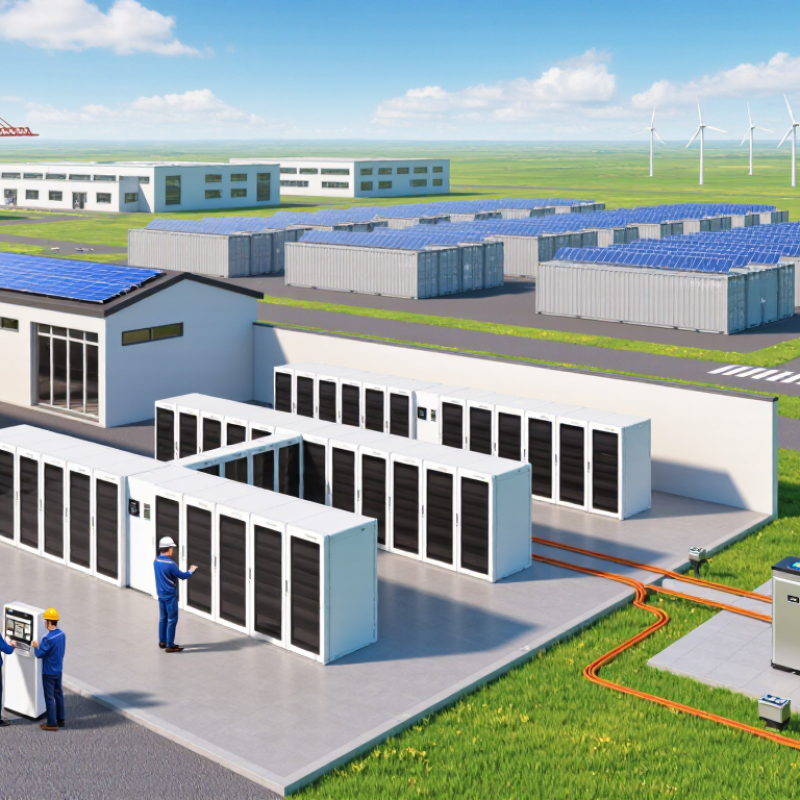
Lithium Battery Storage Manufacturing in China
China’s lithium battery storage manufacturing industry covers cell assembly, module integration, battery racks, and energy management systems. Many factories operate dedicated lines for welding, insulation, wiring, and software testing. Experienced manufacturers monitor temperature, voltage balance, and charging behavior at several stages. They also use traceable batch records for key components. This supports consistent quality during production and maintenance. However, factory capability can vary greatly. A polished showroom does not always prove strong engineering. Buyers should inspect production areas, test procedures, and after-sales response before making decisions.
Tips: Ask for cell specifications, cycle-life data, and protection settings. Request sample test reports. Check whether workers inspect weld points and cable connections manually. Confirm the battery system suits local temperature and grid conditions. Small details matter.
Reliable manufacturing requires more than high capacity figures. A responsible supplier should explain thermal management, enclosure protection, emergency shutdown, and software access clearly. Independent testing can verify safety and performance claims. Documentation should include wiring diagrams, installation guidance, inspection records, and warranty terms. During factory audits, look for clean workstations, labeled materials, calibrated equipment, and trained technicians. These details reflect daily discipline. Some manufacturers may still rely on manual steps, which can create inconsistency if supervision is weak. That risk deserves open discussion, not optimistic wording. Clear communication, controlled testing, and realistic specifications help build a safer lithium battery storage project.
Key Technologies Used by Chinese Battery Storage Manufacturers
China’s battery storage manufacturers are investing heavily in safer, denser, and more responsive systems. Lithium iron phosphate cells remain widely used because they provide strong thermal stability and long cycle life. The International Energy Agency reported that global battery storage capacity reached about 85 GW in 2023. It also estimates that battery capacity must expand substantially by 2030 to support renewable power growth.
Thermal management is now a practical differentiator. Many Chinese systems use liquid cooling, temperature sensors, and independent controls for each battery cluster. These features help reduce temperature differences between cells during heavy charging. Battery management systems monitor voltage, current, insulation, and state of charge in real time. Some platforms also use predictive algorithms to identify abnormal heat patterns before they become serious faults. Small details matter.
Power conversion systems provide another key technology. They regulate the flow between battery racks, solar equipment, and the electricity grid. Modern systems can respond within milliseconds, supporting frequency control and peak shifting. The China Energy Storage Alliance has reported rapid growth in China’s new energy storage installations, driven largely by lithium-based projects. However, performance figures can vary under local weather, grid conditions, and maintenance practices. A claimed cycle life is not a guarantee. Field testing remains essential. The 2024 BloombergNEF battery price survey also shows continuing cost pressure, encouraging manufacturers to improve materials, manufacturing consistency, and system-level efficiency.
Leading Chinese Lithium Battery Storage Manufacturers
Leading Chinese lithium battery storage manufacturers are shaping a fast-growing global market. The International Energy Agency reported 42 GW of new battery storage capacity worldwide in 2023. China Energy Storage Alliance recorded 21.5 GW of new energy storage installations in China during the same year, excluding pumped hydro. These figures show strong manufacturing depth, especially for lithium iron phosphate systems used in grid and commercial projects.
Experienced buyers look beyond cell capacity. They examine cycle life, round-trip efficiency, thermal management, and battery management software. A reliable factory should provide production traceability, abuse testing, and clear warranty conditions. It should also explain performance at 0°C, 25°C, and high ambient temperatures. In a real container, dust, humidity, and uneven cooling can affect results. Laboratory numbers alone are not enough.
Chinese manufacturers increasingly integrate cells, racks, inverters, and fire-control equipment within one system. This can shorten installation time and simplify maintenance. However, integration quality varies. The 2024 IEA report emphasizes that safety, supply-chain resilience, and grid compatibility remain critical for storage expansion. Buyers should request independent test records and site references, not only polished brochures. Some project data still looks incomplete. That weakness deserves honest review before large-scale deployment.
How to Evaluate Chinese Battery Storage Suppliers
Evaluating Chinese battery storage suppliers requires more than comparing quoted prices. A reliable review begins with traceable evidence, not polished sales presentations. Ask for the factory address, production capacity, cell origin, and recent quality records. Request a live video walkthrough or conduct an independent site audit. Look closely at incoming inspection, humidity control, assembly lines, and finished-pack testing. Small details matter. Missing records can signal weak process control.
Technical capability should match your project. Check the battery chemistry, usable capacity, cycle-life test conditions, thermal management, and battery-management-system protections. Do not accept “long life” without test temperature, depth of discharge, and pass-fail criteria. Review protection against overcharge, short circuit, abnormal temperature, and communication failure. Ask for sample data from several production batches. One sample proves little. Confirm whether firmware updates, replacement parts, and remote diagnostics remain available after installation.
Reliability also depends on documentation and communication. Verify applicable safety certifications through issuing bodies, then compare certificate models with the proposed product. Examine warranty exclusions, response times, shipping responsibilities, and dispute procedures. A supplier should explain degradation assumptions clearly. I would score answers, not promises, using a written checklist. Still, no audit is perfect; financial stability and subcontracting can change quickly. Recheck critical evidence before each major order.
Applications and Market Trends of Lithium Battery Storage Systems
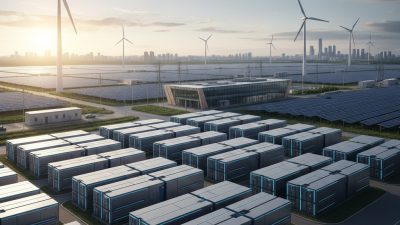
China’s lithium battery storage manufacturers are responding to rising demand from homes, factories, and renewable energy projects. These systems store surplus solar power during daylight hours. They release electricity after sunset or during peak-price periods. A typical commercial installation may support lighting, refrigeration, production equipment, and backup controls.
In factories, storage systems reduce demand charges and protect sensitive machinery from short interruptions. In remote areas, battery cabinets can support microgrids alongside solar panels and small wind turbines. Residential users often choose compact wall-mounted units for evening consumption and emergency backup. Reliable systems require battery management software, thermal monitoring, fire protection, and clear maintenance procedures.
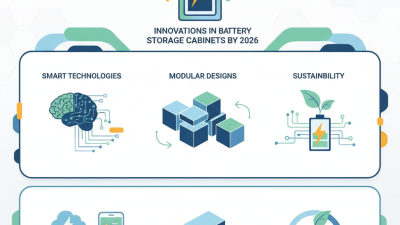
Market growth is moving toward safer chemistries, modular designs, and smarter energy management. Many buyers now request remote diagnostics, cell-level monitoring, and longer warranty support. China’s large manufacturing base helps improve production efficiency and system integration. Still, lower prices do not always mean better value. Poor ventilation, inaccurate capacity claims, or weak after-sales service can create expensive problems. Forecasts also remain imperfect because electricity policies, raw material costs, and grid conditions change quickly. Practical buyers should examine round-trip efficiency, operating temperature, usable capacity, and tested safety records before installation. Field experience matters. A system that performs well in a factory may need different controls in a rural microgrid.
China Top Lithium Battery Storage Manufacturers - Applications and Market Trends of Lithium Battery Storage Systems
| Application Segment |
Typical System Scale |
Common Battery Chemistry |
Typical Discharge Duration |
Primary Value Proposition |
Market Trend |
| Residential Energy Storage |
Approximately 5–30 kWh per household |
Lithium iron phosphate (LFP) |
Usually 2–6 hours |
Solar self-consumption, backup power, and time-of-use bill management |
Growing integration with rooftop solar, smart energy management, and virtual power plant programs |
| Commercial and Industrial Storage |
Approximately 100 kWh–10 MWh per site |
LFP is widely preferred for stationary applications |
Typically 1–4 hours |
Peak shaving, demand-charge reduction, backup power, and renewable integration |
Increasing demand for modular cabinets, liquid cooling, remote monitoring, and energy-management software |
| Utility-Scale Battery Energy Storage |
Generally 10 MWh to multi-gigawatt-hour project portfolios |
LFP dominates many new stationary lithium-ion projects |
Commonly 1–4 hours, with longer-duration projects expanding |
Frequency regulation, capacity support, renewable firming, and energy shifting |
Large-scale deployment is accelerating alongside solar and wind generation; grid-forming capability is receiving greater attention |
| Renewable Energy Integration |
From hundreds of kWh to multi-MWh systems |
LFP for most stationary lithium-ion installations |
Approximately 2–8 hours, depending on resource variability |
Reduces curtailment and improves the dispatchability of solar and wind power |
Hybrid renewable-plus-storage projects are becoming more common in markets with high renewable penetration |
| Microgrids and Remote Power Systems |
Approximately 50 kWh–10 MWh |
LFP; other lithium-ion variants may be selected for specific operating conditions |
Approximately 2–12 hours |
Power resilience, diesel-fuel reduction, and improved energy access |
More systems combine battery storage with solar photovoltaics, backup generators, and advanced microgrid controls |
| Telecom and Critical Infrastructure Backup |
Approximately 5–500 kWh per site |
LFP is increasingly used because of its thermal stability and cycle-life characteristics |
Usually 1–8 hours, depending on the load and backup design |
Reliable backup during grid outages and reduced maintenance compared with some legacy battery systems |
Remote diagnostics, outdoor-rated enclosures, and low-maintenance operation are becoming standard requirements |
| Electric Vehicle Charging Support |
Approximately 100 kWh–5 MWh |
LFP is commonly selected for stationary charging-buffer systems |
Approximately 1–4 hours |
Reduces grid upgrade requirements and supports high-power fast charging |
Battery-buffered charging stations are being considered where grid capacity is limited or connection costs are high |
Key Market and Technology Trends
| Trend Dimension |
Current Industry Direction |
Practical Impact on System Selection |
| Battery Chemistry |
LFP has become a leading chemistry for stationary lithium-ion storage because of its safety profile, cycle-life potential, and reduced reliance on nickel and cobalt. |
Project owners increasingly evaluate safety, usable energy, warranty conditions, and total cost of ownership together rather than relying only on energy density. |
| System Integration |
Containerized and modular systems increasingly combine battery racks, battery-management systems, power-conversion systems, thermal management, and fire protection. |
Integrated designs can shorten installation time and simplify commissioning, although compatibility and serviceability remain important evaluation criteria. |
| Thermal Management |
Air cooling remains suitable for some smaller systems, while liquid cooling is increasingly used for high-capacity systems and demanding operating profiles. |
Cooling design affects efficiency, usable capacity, noise, maintenance, and system lifetime. |
| Safety and Compliance |
Fire detection, thermal-runaway mitigation, emergency response planning, and system-level testing are receiving greater regulatory and insurance attention. |
Procurement increasingly requires documented compliance with applicable standards and local permitting requirements, including IEC 62619, UL 9540, UL 9540A, and NFPA 855 where relevant. |
| Digital Energy Management |
Cloud monitoring, predictive maintenance, state-of-charge estimation, and automated dispatch are becoming standard features in commercial and utility projects. |
Software quality, cybersecurity, communication protocols, and data ownership can materially affect long-term operating performance. |
| Lifecycle Sustainability |
Attention is increasing on battery traceability, responsible material sourcing, second-life assessment, recycling, and end-of-life treatment. |
Lifecycle documentation and recovery plans are increasingly considered during financing, permitting, and large-scale procurement. |
Note: System sizes and discharge durations are indicative industry ranges. Actual specifications vary according to load profile, grid conditions, climate, operating strategy, safety requirements, and applicable local standards.