China Top 10 Lithium Polymer Battery Manufacturers?

China’s lithium battery sector combines large-scale production with rapid engineering changes. This makes “China Top 10 Lithium Polymer Battery Manufacturers?” a practical, but difficult, question to answer. A factory may advertise impressive capacity, yet capacity alone proves little. Buyers should examine cell chemistry, pouch design, separator quality, cycle-life data, and safety controls.

Nobel Prize-winning battery scientist John B. Goodenough once said, “The battery is the key to the future of electric vehicles.” His words also apply to today’s Lithium Polymer Battery market. Performance depends on more than energy density. It also depends on stable charging, thermal management, quality inspection, and consistent production.

This overview evaluates ten Chinese manufacturers through clearer business criteria. These include manufacturing experience, certification records, research investment, product customization, export capability, and after-sales support. A reliable supplier should explain its test methods. It should also provide realistic figures for capacity retention, operating temperature, and charging limits.

Details matter.

For example, a compact drone battery may require high discharge power, while a wearable device may prioritize thinness and flexibility. Electric bicycles need different protection systems again. No ranking is completely permanent. Public company data can be incomplete, and product quality may vary between factories. That limitation deserves attention.

Readers should treat this list as a starting point, not a final purchasing decision. Sample testing remains essential. Independent verification, traceable documentation, and responsible battery recycling practices can reveal differences that marketing materials hide.

China Top 10 Lithium Polymer Battery Manufacturers?

How China’s Lithium Polymer Battery Industry Is Organized

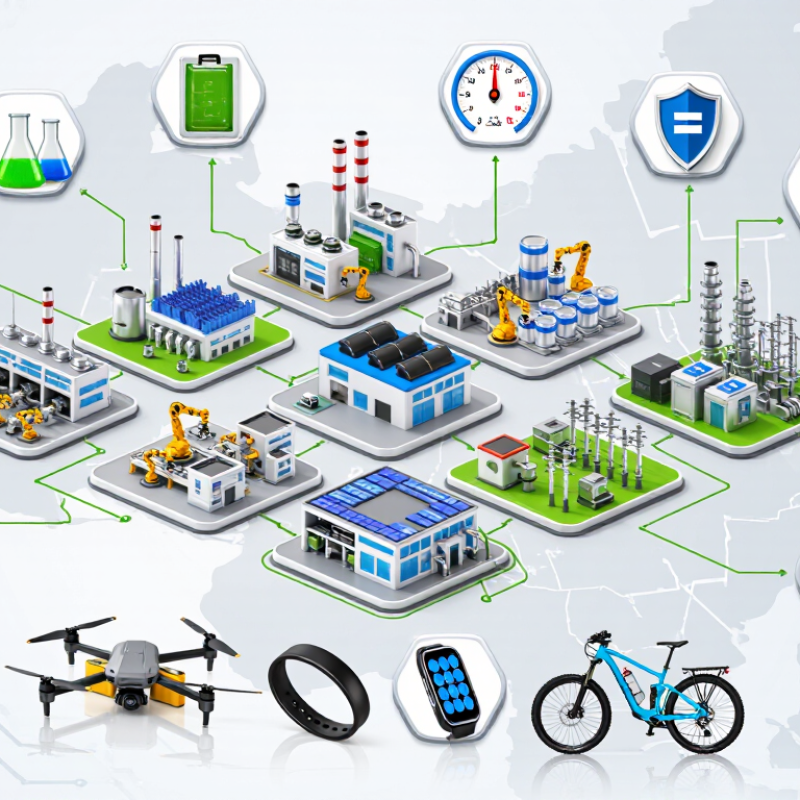
China’s lithium polymer battery industry is organized as a layered manufacturing network, not a simple list of ten companies. Cell makers develop electrode materials, separators, pouch films, and electrolyte systems. Pack assemblers then combine cells with protection circuits, connectors, sensors, and custom housings. Equipment suppliers support coating, winding, sealing, aging, and inspection processes.

The strongest manufacturers usually specialize. Some focus on thin batteries for wearable devices. Others produce high-capacity packs for tablets, medical equipment, or industrial tools. Behind them are testing laboratories, material vendors, mold factories, and contract manufacturers. This structure helps buyers compare capabilities instead of judging factories by marketing claims. During supplier reviews, check production records, sample consistency, traceability, and failure analysis. A polished showroom proves little. It can even distract from weak process control.

Tips: Ask for recent test reports, not old certificates. Confirm capacity at the stated discharge rate. Inspect pouch seals under magnification. Review thermal, overcharge, short-circuit, and cycle-life procedures. Also, request a small pilot batch before signing a large order. That step costs time. It may prevent expensive surprises. Specifications are sometimes misunderstood, especially when “typical capacity” is treated as guaranteed capacity. Reliable sourcing requires technical questions, documented answers, and occasional skepticism.

China Top 10 Lithium Polymer Battery Manufacturers? - How China’s Lithium Polymer Battery Industry Is Organized

An anonymized overview of the major manufacturing roles, technologies, and supply-chain functions in China’s lithium polymer battery industry

No. Industry Organization Role Primary Products or Services Typical Battery Formats Key Manufacturing Activities Main Quality and Safety Controls Typical Downstream Customers
1 Cell Material Integration Cathode, anode, electrolyte, separator, and current-collector combinations Pouch cells, cylindrical cells, and prismatic cells Material qualification, formulation control, moisture management, and supplier validation Chemical consistency, moisture limits, contamination prevention, and traceability Cell manufacturers and battery-pack integrators
2 Electrode Manufacturing Coated cathode and anode electrode sheets Mainly pouch and prismatic cells; also cylindrical cells Slurry mixing, coating, drying, calendaring, slitting, and vacuum drying Coating uniformity, electrode density, adhesion, thickness, and residual moisture Lithium-ion cell assembly plants
3 Pouch Cell Assembly Soft-pack lithium polymer cells with customized tabs and dimensions Flat pouch cells and ultra-thin customized cells Stacking or winding, tab welding, aluminum-plastic film forming, electrolyte filling, and sealing Leak testing, internal resistance, thickness, capacity, swelling, and insulation testing Consumer electronics, wearables, medical devices, and industrial equipment
4 High-Rate and High-Power Cell Production Cells designed for high discharge current and rapid charging Pouch and cylindrical formats Low-resistance electrode design, current-path optimization, thermal management, and formation testing Pulse-discharge performance, cycle life, temperature rise, and abuse testing Drones, power tools, robotics, model aircraft, and portable equipment
5 Customized Battery Pack Integration Finished battery packs, battery modules, connectors, and protective housings Single-cell packs and multi-cell series or parallel packs Cell matching, wiring, welding, enclosure design, connector assembly, and firmware integration Pack insulation, short-circuit protection, thermal performance, drop testing, and functional testing OEMs, equipment manufacturers, product-design companies, and contract manufacturers
6 Battery Management System Integration Protection circuits, battery-management systems, fuel-gauge functions, and communication interfaces Single-cell and multi-cell lithium polymer packs Overcharge and over-discharge protection, balancing, temperature sensing, and state estimation Protection thresholds, balancing accuracy, sensor response, software validation, and EMC checks Portable electronics, mobility products, energy-storage systems, and industrial devices
7 Consumer Electronics Battery Supply Thin, lightweight, high-energy-density batteries for compact devices Custom-shaped pouch cells Tight dimensional control, precision tab placement, automated inspection, and fast customization Capacity consistency, swelling control, cycle life, safety certification, and batch traceability Mobile devices, wearable products, handheld terminals, and smart hardware
8 Industrial and Mobility Battery Supply Ruggedized cells, modules, and packs for equipment and light mobility Pouch, cylindrical, and prismatic configurations Mechanical reinforcement, thermal design, vibration resistance, and module assembly Vibration, shock, temperature cycling, ingress protection, and long-term cycling tests E-bikes, scooters, robotics, warehouse equipment, and backup-power systems
9 Testing, Certification, and Compliance Services Safety testing, performance verification, documentation, and shipment compliance Cells, modules, and complete battery packs Electrical, mechanical, thermal, environmental, transport, and abuse testing UN 38.3 transport testing, IEC-related evaluations, regional market requirements, and quality audits Manufacturers, exporters, importers, laboratories, and product-certification teams
10 Export, Logistics, and After-Sales Support International fulfillment, packaging, technical documentation, warranty support, and replacement services Cells, battery packs, modules, and spare batteries Dangerous-goods packaging, state-of-charge management, batch documentation, and inventory control Shipping labels, transport records, product traceability, warranty analysis, and return handling Global distributors, OEMs, system integrators, retailers, and service centers
Industry Note: China’s lithium polymer battery sector is generally organized as an integrated supply chain covering materials, electrode production, cell assembly, battery-pack integration, electronics, testing, export logistics, and after-sales support. Actual specifications vary according to chemistry, cell format, application, and customer requirements.

Criteria for Identifying China’s Top Lithium Polymer Battery Manufacturers

Identifying China’s top lithium polymer battery manufacturers requires more than comparing price lists. A reliable supplier should show consistent cell capacity, stable discharge performance, and controlled pouch dimensions. Ask for recent test reports, not old presentation slides. Independent laboratory results are more useful than marketing claims.

Production experience also matters. Review factory audits, quality-control procedures, traceability records, and worker training. Strong manufacturers can explain how they manage swelling, heat, overcharging, and repeated cycling. Check whether each batch receives capacity, insulation, and safety testing. Certifications help, but they do not replace factory evidence. A supplier with clear technical documents and responsive engineers usually reduces development risks. Still, no factory is perfect. Samples may perform well while later batches vary, so ongoing inspections remain necessary.

Tips: Request three sample batches, then compare capacity after repeated charging cycles. Confirm warranty terms, minimum order quantities, lead times, and failure-handling procedures in writing. Examine packaging closely; crushed corners or loose connectors can reveal weak shipping controls. Visit the facility when possible, or use an independent auditor. Do not choose a manufacturer only because it offers the lowest quotation. A cheaper cell may require stronger protection circuits, more testing, or earlier replacement. Judge the complete supply process, including communication after delivery.

Profiles of the Top 10 Chinese Lithium Polymer Battery Manufacturers

China’s leading lithium polymer battery manufacturers differ in scale, testing depth, and application focus. Manufacturer One operates large automated lines for mobile devices, with pouch cells measured for thickness, swelling, and cycle life. Manufacturer Two specializes in compact batteries for wearable electronics, where flexible shapes and low weight matter more than peak capacity. Manufacturer Three supplies customized packs for medical equipment, emphasizing traceability, insulation, and stable discharge. Small details matter.

Manufacturer Four focuses on drones and robotics, developing high-rate cells with reinforced tabs and carefully controlled thermal behavior. Manufacturer Five serves consumer electronics and offers rapid sampling for unusual dimensions. Manufacturer Six builds battery packs for smart devices, combining protection circuits, temperature sensors, and ultrasonic sealing. Manufacturer Seven has stronger experience in energy storage modules, using larger pouch formats and stricter balancing procedures. Its delivery records still require independent checking.

Manufacturer Eight supports industrial instruments, where long shelf life and predictable voltage are essential. Manufacturer Nine develops batteries for lighting and portable tools, often balancing cost against cycle performance. Manufacturer Ten emphasizes export documentation, factory audits, and compliance testing across different markets. Buyers should inspect current certifications, production samples, safety reports, and warranty terms rather than trusting rankings alone. Published capacity figures can age quickly. Even experienced suppliers may show variation between prototype and mass production. A factory visit, sample teardown, and repeated charge-discharge testing reveal more than polished brochures.

How the Top Manufacturers Compare in Technology and Production Capacity

China Top 10 Lithium Polymer Battery Manufacturers?

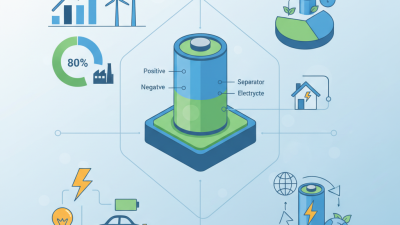
China’s leading lithium polymer battery manufacturers compete through cell design, safety, yield, and production scale. The International Energy Agency reported that China held about 80% of global battery cell production capacity in 2023. That advantage supports faster material testing and larger automated lines. However, capacity figures are not perfectly comparable. Some companies report planned factories, while others disclose only operational output.

Technology remains the sharper dividing line. Advanced pouch cells increasingly use high-nickel or lithium-iron-phosphate chemistries, depending on cost and safety targets. The IEA notes that lithium-iron-phosphate batteries generally cost less, while high-nickel cells can provide higher energy density. Manufacturers also compete through thinner separators, improved electrolyte control, and stronger heat-management systems. Small details matter. A poorly sealed pouch can swell after repeated charging.

Production capacity shows another gap. Industry research groups estimate that China controls most global cathode and anode processing, creating a dense local supply chain. BloombergNEF reported that average lithium-ion battery pack prices fell to about 115 dollars per kilowatt-hour in 2024. That pressure rewards factories with high automation and stable material contracts. Yet the top-ten ranking remains imperfect. Announced gigawatt-hours do not always equal shipped cells, and quality data is rarely public. Buyers should examine verified yield, cycle testing, warranty records, and audit results rather than headline capacity alone.

Key Factors for Choosing a Chinese Lithium Polymer Battery Supplier

China Top 10 Lithium Polymer Battery Manufacturers?

Choosing a Chinese lithium polymer battery supplier requires more than comparing prices. The International Energy Agency reported that global battery demand reached about 750 GWh in 2023. EV applications represented most of this demand. This growth makes production discipline essential, especially for pouch cells used in drones, wearables, medical devices, and compact electronics.

Ask for measurable evidence. A reliable supplier should provide capacity tolerance, cycle-life results, impedance data, and shipment inspection records. Check whether testing follows IEC 62133-2 and whether cells have completed UN 38.3 transport testing. ISO 9001 certification helps, but it does not replace factory audits. Inspect electrode storage, dry-room controls, sealing equipment, and sample traceability. Small details matter.

Request three production samples, not one. Compare their dimensions, voltage curves, swelling, and performance after storage. A cheaper quote may hide higher rejection rates. It happens. Suppliers should also explain raw-material sources, warranty limits, minimum order quantities, and tooling ownership in writing. The BloombergNEF Battery Price Survey 2023 recorded a global average lithium-ion pack price of 139 dollars per kWh, but lithium polymer pricing varies with materials, geometry, and testing requirements. Do not treat that figure as a direct purchasing benchmark. A supplier may pass an audit and still miss your real operating conditions. Test cells under actual temperature, load, and charging patterns before approving mass production.

China Top 10 Lithium Polymer Battery Manufacturers: Key Supplier Selection Factors

This chart presents a practical 100-point evaluation framework for comparing lithium polymer battery suppliers in China. Product safety and certification receive the highest weighting, followed by cell performance, manufacturing quality, customization capability, production capacity, and total cost. Buyers should verify test reports, traceability records, sample performance, and audit results before making a final supplier decision.


This website uses cookies. By continuing to browse this site you are agreeing to our use of cookies. Please review our Privacy Policy for more information.