Why Choose Lithium Battery Storage for Your Energy Needs?
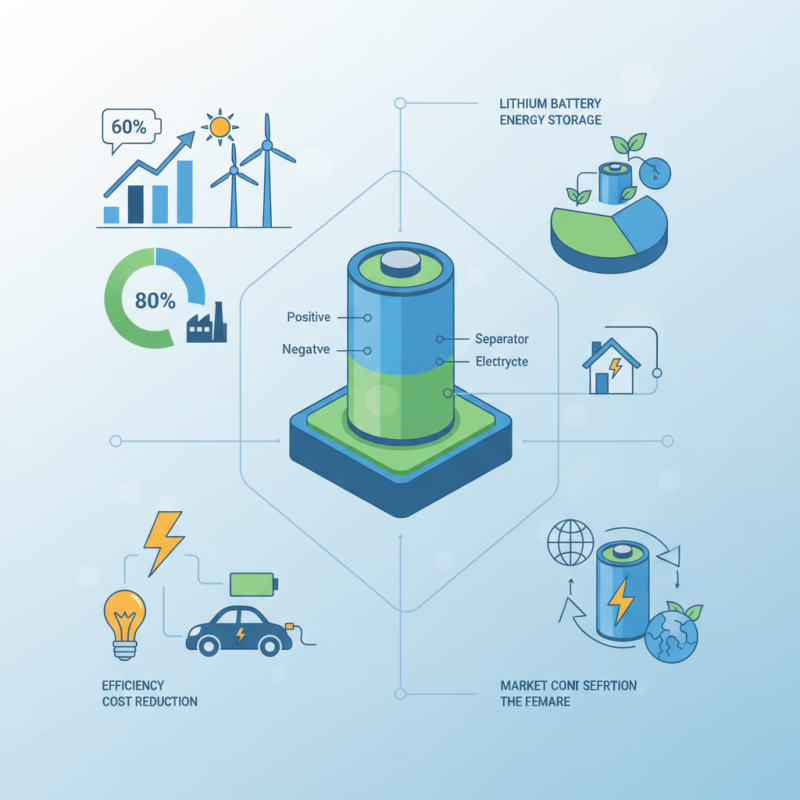
The demand for efficient energy storage solutions is rapidly growing. According to a report by the International Renewable Energy Agency (IRENA), lithium battery storage capacity is projected to increase by 60% by 2030. This highlights the crucial role of Lithium Battery Storage in transitioning to sustainable energy sources.
Lithium Battery Storage offers impressive energy density and longevity. Businesses and homeowners rely on these batteries to store renewable energy from solar and wind sources. The U.S. Energy Information Administration (EIA) reported that lithium-ion batteries have become the preferred choice for energy storage, representing over 80% of global market share. Such data underscores their reliability and effectiveness in reducing energy costs.
However, challenges remain. The production of lithium batteries raises environmental concerns, including resource extraction impacts. Users should consider the lifecycle of these batteries as they weigh their options. Despite these issues, the benefits of Lithium Battery Storage in enhancing energy efficiency are undeniable. With ongoing advancements in technology, these systems hold promise for a more sustainable energy future.
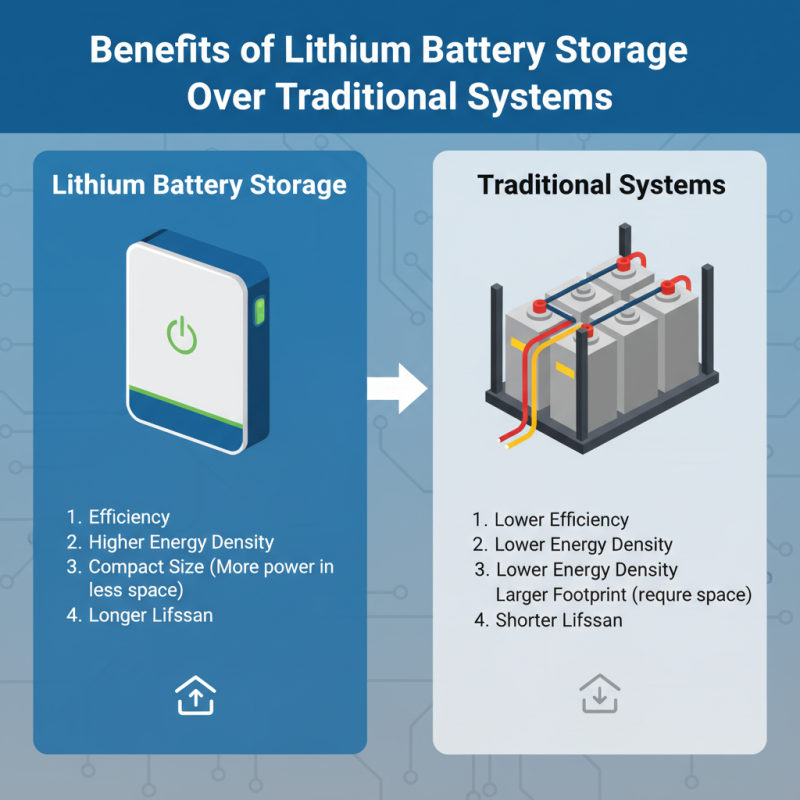
Benefits of Lithium Battery Storage Over Traditional Systems
Lithium battery storage has gained popularity for several compelling reasons. One major advantage over traditional systems is efficiency. Lithium batteries have a higher energy density, meaning they store more energy in a smaller space. This is crucial, especially for households with limited room. In contrast, older battery technologies require more space and often provide less power output.
Another benefit is the longevity of lithium batteries. They typically last much longer than traditional lead-acid batteries. A well-maintained lithium system can provide power for over a decade. This durability translates to lower replacement costs over time. You save money and contribute less to landfill waste.
Tips: When considering a battery system, think about installation needs. Ensure you have enough space for ventilation. Proper setup can enhance battery life significantly. Another point to consider is the charging speed. Lithium batteries charge faster, which means you can rely on them sooner during outages. However, keep in mind that they may degrade more quickly if frequently cycled completely. It’s crucial to find a balance in usage to maximize lifespan.
Key Factors Driving the Adoption of Lithium Battery Technology
Lithium battery technology has gained significant traction in recent years. Its rise is driven by several key factors. One primary reason is efficiency. Lithium batteries offer high energy density, meaning they store more power in a smaller space. This is vital for both residential and commercial applications where space is often limited.
Another factor is longevity. Lithium batteries have a longer lifespan compared to traditional lead-acid batteries. They can endure more charge and discharge cycles, reducing the need for frequent replacements. This longevity translates into cost savings over time, though the initial investment can be higher.
Additionally, environmental considerations play a role. Lithium extraction and battery production have improved, leading to cleaner practices. However, the recycling of lithium batteries remains a challenge. Despite advancements, the industry must still address these concerns. Users must stay informed about these evolving dynamics as they consider adopting lithium battery solutions for their energy needs.
Adoption of Lithium Battery Technology Over Years
This bar chart illustrates the annual growth rate of the global lithium battery market from 2018 to 2023. The consistent increase highlights the rising adoption of lithium battery technology for energy storage solutions, driven by factors such as efficiency, sustainability, and technological advancements.
Comparative Analysis: Energy Density and Cycle Life of Lithium Batteries
Lithium batteries have become a popular choice for energy storage due to their impressive energy density and long cycle life. Energy density refers to the amount of energy stored per unit weight. Lithium batteries typically offer a higher energy density compared to other types, making them lightweight and efficient. This is particularly important in applications like electric vehicles and portable devices, where weight matters.
Cycle life is another critical aspect of lithium batteries. It measures how many charge and discharge cycles a battery can undergo before its capacity significantly diminishes. Lithium batteries often outperform lead-acid and nickel-based batteries in this category. A longer cycle life translates to lower replacement costs and less waste. However, it’s important to consider factors like temperature and charge rates, which can affect longevity.
**Tip:** Regularly monitor battery health to ensure optimal performance. Keeping your battery in a moderate temperature range can help extend its life. Additionally, avoid letting it discharge completely before recharging. Rethink your charging habits for better longevity.
Lithium batteries are not flawless. They can be sensitive to overcharging and extreme temperatures. This sensitivity might lead to safety concerns if not managed well. It's vital to stay informed about the best charging practices. Understanding your battery's limitations can lead to more efficient usage.
Cost Considerations: Upfront and Long-Term Savings with Lithium Storage
Lithium battery storage offers significant cost advantages. Upfront investments may seem high, but long-term savings are considerable. A lithium battery system can last up to 15 years, reducing the need for frequent replacements. This longevity translates into fewer financial burdens over time.
The efficiency of lithium batteries also plays a crucial role in savings. They can store more energy than traditional options. This means lower electricity bills, especially during peak hours. Installing a solar system paired with lithium storage can maximize efficiency. However, the installation process can be complex. Costs may vary based on your specific setup and energy needs.
While the benefits are clear, there are considerations to reflect on. Initial costs can deter some homeowners. Maintenance and monitoring are also necessary to ensure peak performance. Understanding the total cost of ownership is essential for informed decision-making. It involves assessing both immediate expenses and long-term benefits. Proper analysis can lead to wiser choices in energy management.
Why Choose Lithium Battery Storage for Your Energy Needs? - Cost Considerations: Upfront and Long-Term Savings with Lithium Storage
| Cost Dimension |
Lithium Battery Storage |
Lead-Acid Battery Storage |
| Upfront Cost (per kWh) |
$400 |
$200 |
| Lifespan (years) |
10-15 |
3-5 |
| Number of Charge Cycles |
3000-5000 |
500-1000 |
| Efficiency Rate (%) |
90-95 |
80-85 |
| Total Cost of Ownership (5 years) |
$3,000 |
$2,000 |
| Maintenance Cost (5 years) |
$150 |
$500 |
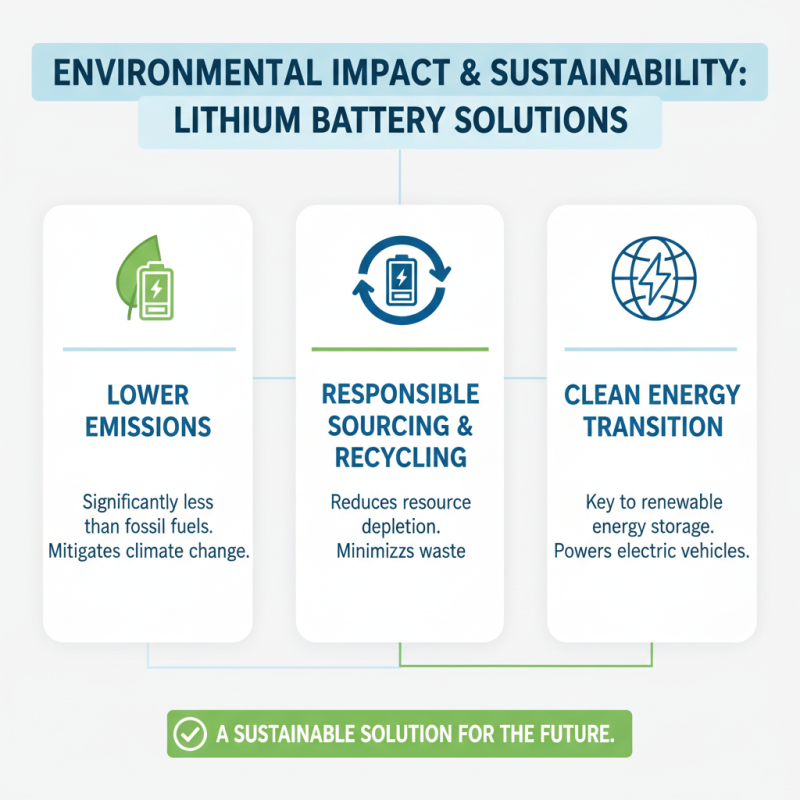
Environmental Impact and Sustainability of Lithium Battery Solutions
Lithium batteries are becoming increasingly popular for energy storage. Their environmental impact is an important consideration. Compared to traditional fossil fuels, lithium batteries produce significantly lower emissions. This transition can help mitigate climate change effects. When responsibly sourced and recycled, lithium offers a sustainable solution.
However, the mining process for lithium can raise concerns. It often affects local water sources and ecosystems. Sustainable practices are essential to minimize these impacts. Investing in proper mining techniques can lead to better outcomes for the environment.
The recycling of lithium batteries is another critical factor. It reduces waste and decreases the need for new materials. Developing efficient recycling methods can enhance the sustainability of lithium batteries. As demand grows, it is vital to address these challenges. Community discussions and regulatory frameworks can help ensure responsible practices. Balancing energy needs with environmental responsibility is a complex issue, requiring ongoing reflection and innovation.