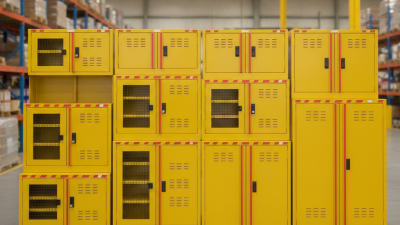
How to Choose the Best Chemical Locker for Safe Storage

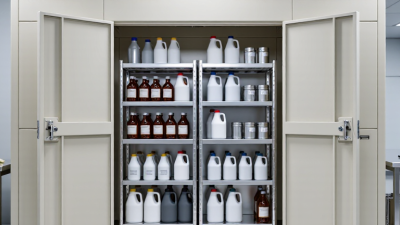
Choosing the best Chemical Locker is not a cosmetic decision. It affects ignition control, spill containment, worker exposure, and emergency response. A cabinet may look secure yet remain poorly matched to the chemicals inside.

OSHA 29 CFR 1910.106 limits storage quantities for many flammable liquids. It also addresses cabinet construction, ventilation, and separation practices. NFPA 30, the Flammable and Combustible Liquids Code, provides widely used guidance for cabinet placement and liquid classification. These requirements are not interchangeable in every country. Local regulations still require verification.

The U.S. Chemical Safety and Hazard Investigation Board’s investigation reports repeatedly show how small storage failures can escalate. Unlabeled containers, incompatible materials, and blocked access often create avoidable hazards. FM Global Property Loss Prevention Data Sheets also emphasize ignition control, housekeeping, and reliable spill protection in chemical storage areas. Small details matter.

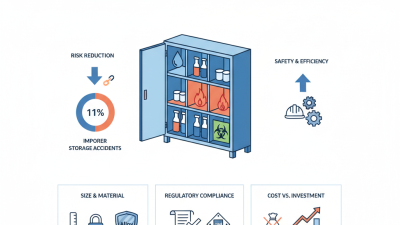
This guide explains how to compare cabinet construction, fire resistance, shelving capacity, ventilation options, lock quality, and compatibility markings. It also considers daily realities, such as a technician lifting a heavy solvent bottle beside a crowded workbench. Practical design matters.

There is no perfect cabinet. A stronger model may still fail when overloaded, incorrectly grounded, or used for incompatible chemicals. That choice matters. Readers should confirm Safety Data Sheets, manufacturer instructions, and applicable authority requirements before purchase. This approach supports safer decisions through documented evidence, professional judgment, and careful workplace experience.
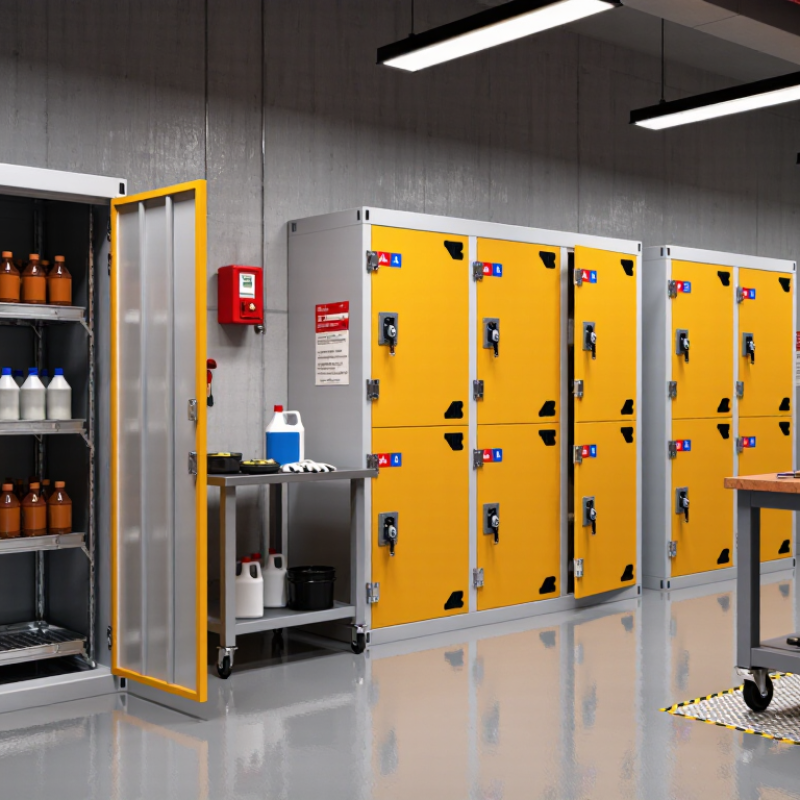
How to Choose the Best Chemical Locker for Safe Storage

Define Chemical Storage Requirements and Hazard Categories

Choosing a chemical locker begins with defining storage requirements, not comparing cabinet appearances. List every chemical, its quantity, container size, and storage temperature. Read each Safety Data Sheet carefully. The storage section often identifies incompatibilities, ventilation needs, and emergency measures. A small bottle still requires correct segregation.

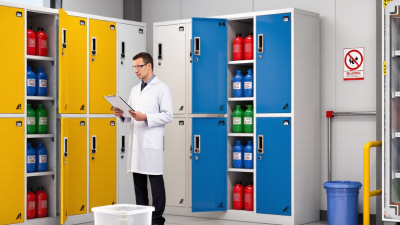
Group chemicals by hazard category. Flammable liquids need a suitable fire-resistant locker away from ignition sources. Corrosive acids and bases should remain separated, preferably in compatible compartments or different lockers. Oxidizers require distance from fuels, solvents, and organic materials. Toxic substances need restricted access, clear labels, and controlled handling procedures. Never rely on color codes alone. Labels can fade.

Consider daily workflow, too. In a busy laboratory, staff may open the locker dozens of times. Doors should close securely, shelves should support the expected load, and spill trays should contain leaks. Check whether the locker material resists the stored chemicals. A metal surface is not automatically suitable for every corrosive substance. That assumption can fail.

During inspections, record damaged containers, expired labels, and overcrowded shelves. Keep incompatible groups physically separated, not merely listed on a sign. Ventilation requirements deserve careful review, because ventilation is not always a substitute for proper containment. Local workplace rules and professional safety guidance should inform the final choice. When information is incomplete, pause the purchase and ask a qualified safety professional to review the inventory. Convenience is useful, but it should never decide compatibility.

Compare Locker Materials, Construction, and Chemical Resistance

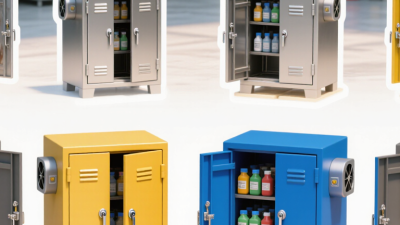
Choosing a chemical locker starts with compatibility, not appearance. Steel offers strength and fire performance, while polyethylene resists many acids, bases, and salts. However, plastic can soften, crack, or deform near heat. Always verify the manufacturer’s chemical-resistance chart for concentration, temperature, and exposure time.

Construction details matter during daily use. Look for welded seams, adjustable corrosion-resistant shelves, spill-retaining lips, and doors that close without binding. A damaged gasket is not a minor issue. It can allow vapors or leaks to escape. OSHA 29 CFR 1910.106 limits storage in one cabinet to 60 gallons of flammable liquids or 120 gallons of combustible liquids. NFPA 30 also emphasizes approved construction, separation, and controlled storage practices.

Do not store incompatible chemicals together. Separate acids from bases, oxidizers from organics, and water-reactive materials from moisture sources. A ventilated locker may reduce vapor accumulation, but ventilation does not replace compatibility controls. In practical inspections, labels often fail before the cabinet does. That is easy to overlook. Review shelf loading, corrosion, door alignment, and inventory records at least monthly. The National Fire Protection Association and FM Global guidance both stress maintaining listed equipment and controlling ignition sources. A perfect locker does not exist; the right choice depends on the chemicals, quantities, room conditions, and realistic maintenance discipline.

How to Choose the Best Chemical Locker for Safe Storage — Compare Locker Materials, Construction, and Chemical Resistance
Selection Criterion Powder-Coated Steel Stainless Steel High-Density Polyethylene (HDPE) Polypropylene (PP) Recommended Evaluation
Typical Construction Welded or mechanically assembled steel panels with a chemically resistant powder coating. Welded or formed corrosion-resistant steel panels; surface finish quality is important. Rotomolded or fabricated solid plastic panels with corrosion-resistant hardware. Fabricated or molded solid plastic panels; seams and joints require careful inspection. Choose a construction method that minimizes open seams, exposed fasteners, and liquid-trapping areas.
Mechanical Strength Excellent
High rigidity and good impact resistance for industrial environments.
Excellent
High strength and rigidity; generally suitable for demanding service.
Good
Good impact resistance, although panels may flex more than metal.
Good
Strong and impact-resistant, but rigidity depends on panel thickness and design.
For heavy containers or high-traffic areas, prioritize reinforced frames, stable bases, and load-rated shelves.
Resistance to Dilute Acids Limited
Coating damage or scratches can expose steel to corrosion.
Conditional
Performance varies by acid type, concentration, temperature, and stainless grade.
Excellent
Generally suitable for many dilute, non-oxidizing acids.
Excellent
Generally suitable for many acids, subject to concentration and temperature.
For routine acid storage, plastic construction is often preferred; verify the exact chemical and concentration.
Resistance to Strong Bases Conditional
Coating systems may resist some bases, but exposed steel can corrode.
Good
Often suitable for many alkaline solutions, with exceptions at elevated temperatures.
Excellent
Generally highly resistant to many aqueous alkalis.
Excellent
Typically performs very well with many strong alkaline solutions.
Check compatibility with concentrated caustics, heat, and any additives before selection.
Resistance to Solvents Conditional
Depends primarily on the coating chemistry and solvent exposure.
Good
Metal is broadly resistant, but specific solvents may affect seals, liners, or coatings.
Conditional
Good with many solvents, but aromatic and halogenated solvents may cause swelling or permeation.
Conditional
Compatible with selected solvents; some hydrocarbons and chlorinated solvents can attack it.
For flammable solvents, also evaluate fire-rated construction, ventilation, grounding, and local code requirements.
Resistance to Oxidizers Conditional
Strong oxidizers can attack coatings and exposed metal.
Conditional
Some oxidizing acids and halides can cause rapid or localized corrosion.
Limited
Strong oxidizers may degrade or embrittle the polymer.
Conditional
May resist some oxidizers, but compatibility is highly chemical-specific.
Do not group all oxidizers together; review the SDS and a chemical-resistance chart for each product.
Resistance to Moisture and Salt Spray Conditional
Good while the coating remains intact; scratches and cut edges may rust.
Good
Generally strong, although chloride-rich environments may cause pitting or crevice corrosion.
Excellent
Does not rust and performs well in wet environments.
Excellent
Does not rust and generally tolerates humid, wet conditions.
For wash-down areas or coastal environments, inspect seams, hinges, fasteners, and drainage details.
Typical Continuous Service Temperature Broad Range
Suitable for many ambient industrial conditions; coating limits still apply.
Broad Range
Maintains structural performance across a wide temperature range.
Moderate
Commonly used around ambient temperature; prolonged heat can reduce stiffness.
Moderate to High
Usually tolerates more heat than HDPE, but the exact limit depends on design.
Confirm the manufacturer’s temperature rating when storing heated liquids, cold materials, or chemicals that generate heat.
Corrosion or Chemical Failure Mode Rust beneath damaged coating, blistering, under-film corrosion, and corrosion at seams or fasteners. Pitting, crevice corrosion, stress corrosion cracking, or surface attack in unsuitable chemical environments. Swelling, softening, permeation, stress cracking, or embrittlement from incompatible chemicals. Stress cracking, softening, swelling, oxidation, or embrittlement depending on exposure conditions. Inspect regularly for discoloration, cracking, deformation, brittle areas, corrosion, or chemical residue.
Spill Containment Design-Dependent
Requires a compatible liner, sump, or removable containment tray.
Good
Metal sumps can provide durable containment when seams are properly sealed.
Excellent
Integral plastic sumps are commonly resistant to many corrosive liquids.
Excellent
Integral containment can provide strong resistance to many acids and bases.
Use a sump with enough capacity for the stored containers and comply with applicable spill-control rules.
Fire Performance Good
Steel is non-combustible, but coatings, contents, and cabinet design still matter.
Good
Non-combustible metal construction; not automatically a fire-rated cabinet.
Limited
Polymer can soften, melt, or burn when exposed to fire.
Limited
Polymer can soften, melt, or burn when exposed to fire.
For flammable liquids, select a cabinet tested and approved for the intended fire-safety application.
Maintenance Requirements Repair coating damage promptly; keep surfaces dry and inspect welds, hinges, shelves, and fasteners. Clean deposits regularly and inspect for pitting, crevices, and chloride contamination. Clean with a compatible detergent; inspect for swelling, cracks, deformation, and stress whitening. Clean with a compatible detergent; inspect joints, hinges, and areas exposed to heat or solvents. Maintain an inspection schedule based on chemical hazard, storage volume, temperature, and frequency of use.
Best General Use Case General laboratory or industrial storage where mechanical durability and moderate chemical exposure are priorities. Wet, hygienic, or corrosive environments where higher mechanical strength and cleanability are important. Acids, bases, salts, and aqueous corrosives where rust-free construction and impact resistance are needed. Highly corrosive acids or bases where broad polymer resistance and higher temperature capability are useful. Base the final choice on the chemical inventory, container types, temperature, ventilation, fire risk, and applicable regulations.
Important: Chemical resistance ratings are general guidance for common industrial conditions, not a guarantee of compatibility. Always check the current Safety Data Sheet, chemical concentration, temperature, exposure duration, container condition, and the locker manufacturer’s compatibility data before storing chemicals.

Evaluate Ventilation, Fire Protection, and Spill Containment

Choosing a chemical locker starts with the hazards, not its color or price. Review each chemical’s safety data sheet and record vapor, flammability, corrosion, and incompatibility risks. A competent safety professional should confirm the assessment.

Ventilation needs careful judgment. A locker for volatile chemicals may require controlled extraction, but ducting every cabinet can create unwanted airflow or spread vapors. Check whether the design supports mechanical ventilation, passive vents, or no connection. Air should move away from occupied areas, ignition sources, and incompatible storage. Keep doors closed when not in use. Test airflow regularly with documented readings, not guesswork. This is where many sites become overconfident.

Fire protection depends on the stored hazard and local requirements. Look for tested construction, self-closing doors, secure shelving, and clear separation between flammables and oxidizers. Do not treat a fire-rated locker as fireproof. It delays heat exposure; it does not remove the risk. Spill containment also deserves close attention. A deep, corrosion-resistant sump can catch leaks before they reach drains, but only if its capacity matches the stored volume and site rules. Inspect the sump for cracks, residue, and incompatible liquids. Keep absorbents nearby, but never use them as a substitute for containment. One practical lesson is uncomfortable: a well-designed locker still fails when shelves are overloaded, labels fade, or inspections become routine paperwork.

How to Choose the Best Chemical Locker for Safe Storage

Evaluate ventilation, fire protection, and spill containment using U.S. OSHA flammable-liquid storage limits.

Under OSHA 29 CFR 1910.106, a storage cabinet may hold up to 60 gallons of Category 1, 2, or 3 flammable liquids, or up to 120 gallons of Category 4 flammable liquids. Ventilation should be selected according to the Safety Data Sheet, local fire code, and whether vapors require mechanical extraction; OSHA does not specify one universal air-change rate for every cabinet. For spill containment, choose a cabinet with a liquid-tight bottom or sump and verify that the bottom shelf is raised at least 2 inches above the cabinet bottom.

Source: U.S. OSHA, 29 CFR 1910.106(d), Flammable Liquids.

Check Capacity, Security Features, and Workplace Compatibility

How to Choose the Best Chemical Locker for Safe Storage

Capacity should reflect real workflow, not only today’s inventory. OSHA’s Hazard Communication Standard requires accessible chemical information and proper labeling. A crowded locker can hide labels, block ventilation, and slow emergency access. Measure each container, including secondary containment trays. Leave usable clearance between shelves. More space is safer.

Security features must match the hazard and workplace risk. NFPA 30 guidance emphasizes suitable storage for flammable liquids, including control of ignition sources and container quantity. Look for adjustable shelves, leak-resistant sumps, grounded components where required, and self-closing doors. A lock may prevent unauthorized access, but it cannot replace inspection. Check hinges, seals, labels, and corrosion weekly. Small details matter.

Workplace compatibility often decides whether a locker performs well. Confirm door clearance, floor loading, ventilation needs, and access for spill response. The U.S. Bureau of Labor Statistics reported 5,283 fatal workplace injuries in 2023, showing why ordinary storage decisions deserve serious attention. That figure does not measure chemical-locker failures, but it challenges casual assumptions about workplace safety. In practice, teams sometimes buy oversized units and create new aisle problems. Recheck the layout with the people who use it daily. Their feedback may expose risks that a specification sheet misses.

Verify Safety Standards, Placement, and Maintenance Needs

Choosing a chemical locker requires more than checking its size or color. Verify the applicable safety standard first. For flammable liquids, OSHA 29 CFR 1910.106 limits one storage cabinet to 60 gallons of Class I, II, and III liquids, with no more than three cabinets in one storage area. Depending on location, confirm testing against standards such as EN 14470-1 or UL 1275. A certificate helps, but it does not replace a site risk assessment.

Placement deserves equal attention. Keep the locker away from ignition sources, direct sunlight, heat-producing equipment, exits, corridors, and stairways. Leave enough clearance to open both doors fully. Read each Safety Data Sheet before storage, because acids, bases, oxidizers, and solvents may require separate cabinets. I have seen tidy rooms fail this simple check. Good housekeeping can hide poor chemical compatibility.

Maintenance should be scheduled, not assumed. A monthly inspection can identify damaged seals, stiff hinges, corrosion, leaking containers, missing labels, and overloaded shelves. Check that doors close automatically and that shelves remain stable under real container weights. Replace damaged parts through an approved service route. Do not drill extra holes or add electrical equipment without technical approval. NFPA 30 guidance and local fire codes may differ, so record the inspection date, findings, and corrective action. A passed inspection is only a snapshot. Conditions change.


This website uses cookies. By continuing to browse this site you are agreeing to our use of cookies. Please review our Privacy Policy for more information.