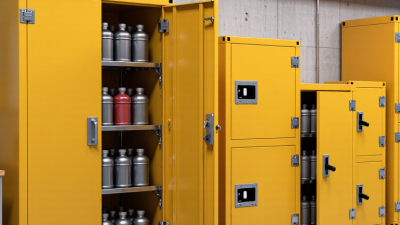
Big Batteries are large-scale battery energy storage systems designed to capture electricity and release it when the grid needs support. They are not power plants. They are flexible reservoirs. Most current projects use lithium-ion cells, arranged into racks, containers, and carefully monitored modules. A battery management system tracks voltage, temperature, and state of charge. An inverter then converts stored direct current into alternating current for homes, businesses, or transmission networks.
The scale is changing quickly. The International Energy Agency reported in Batteries and Secure Energy Transitions that global battery storage capacity in the power sector reached about 42 gigawatts in 2023. This represented a sharp increase from the previous year. BloombergNEF also identified continued cost reductions for lithium-ion battery systems, although project prices vary by location, duration, financing, and connection costs. These figures show strong momentum, but they do not remove practical challenges.
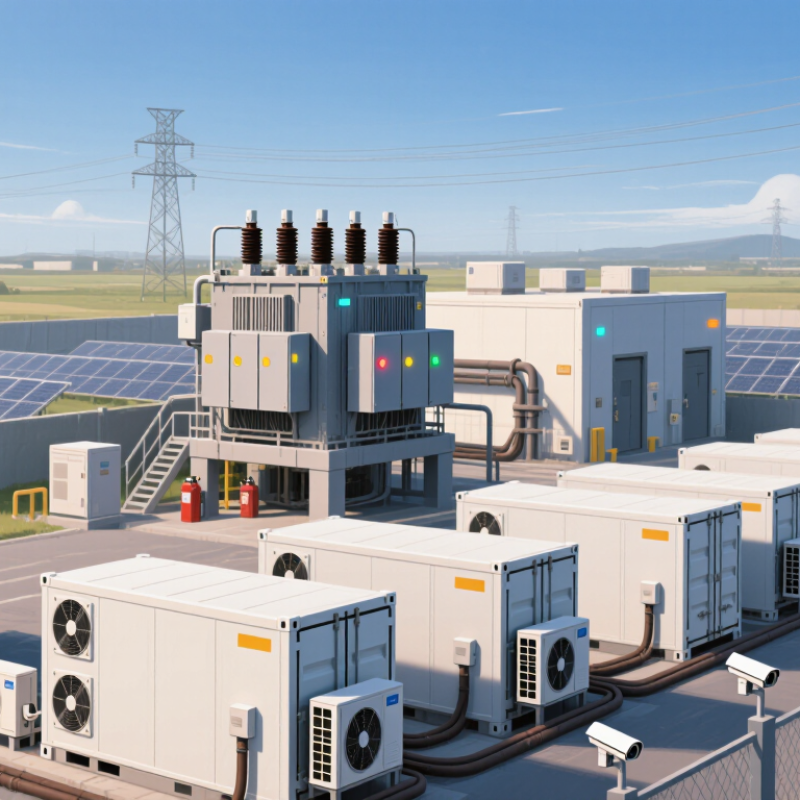
Big Batteries can absorb excess solar power at midday and discharge during the evening peak. They can also respond within milliseconds to frequency changes, helping stabilize the grid. A typical container may include battery racks, cooling equipment, fire detection, and power conversion hardware. The Energy Institute and the U.S. Department of Energy emphasize that safety depends on engineering controls, monitoring, maintenance, and emergency planning.
The picture is not perfect. Battery degradation reduces available capacity over time. Mining, recycling, and long-duration storage remain difficult questions. Even so, the basic principle is clear: store electricity when it is plentiful, then deliver it when timing matters. That distinction matters.
What Are Big Batteries and How Do They Work?
What Defines a Big Battery?
A big battery is an energy storage system built for buildings, factories, renewable projects, or electric grids. Its size is not defined by weight alone. Engineers usually assess three measures: energy capacity, power output, and discharge duration. Capacity, measured in megawatt-hours, shows how much electricity the system stores. Power, measured in megawatts, shows how quickly it can deliver that electricity. A 100-megawatt battery may discharge for one hour or several hours, depending on its capacity.
These systems contain many battery modules, cooling equipment, sensors, inverters, and safety controls. During periods of strong solar or wind production, the battery stores excess electricity. Later, it can release that energy when demand rises or generation falls. The process sounds simple. It is not always simple. Temperature, aging, maintenance, and charging limits affect real performance. The term “big battery” also lacks one universal legal definition. A system considered large for a commercial building may seem small beside a regional grid project.
Tips: Check both megawatts and megawatt-hours before comparing systems. Ask how long the battery can provide its rated output. Review temperature controls, fire protection, warranty limits, and testing records. Independent performance data is more useful than impressive capacity claims. Even careful specifications can change after years of cycling.
Big batteries are large energy storage systems built from many smaller cells. Each cell stores energy through controlled chemical reactions. During charging, electricity moves ions inside the cell and holds energy in chemical form. The battery does not create electricity. It saves electricity produced earlier, often from solar panels, wind turbines, or the power grid.
When demand rises, the stored energy changes back into electrical power. An inverter converts the battery’s direct current into alternating current for homes, factories, or grid equipment. A battery management system monitors temperature, voltage, and charge levels. It can reduce power when conditions become unsafe. The process sounds simple, but real systems lose some energy as heat. They also become less effective after many charge cycles. That gap deserves attention.
Tips: Check the battery’s usable capacity, not only its advertised capacity. Ask how quickly it can charge and discharge. Good ventilation and temperature control matter. Maintenance records can reveal problems that a display may hide. Operators should also plan for cloudy days, sudden demand, and unexpected equipment faults. Storage is powerful, but it is not magic.
What Are Big Batteries and How Do They Work?
The Main Parts Inside a Big Battery
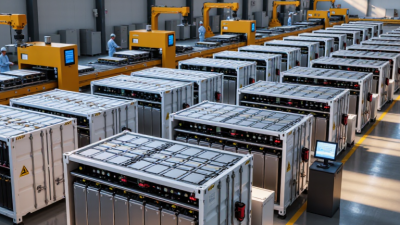
A big battery is an energy storage system built from many smaller battery cells. These cells sit inside modules, which connect into larger racks. The racks are arranged in strong cabinets or shipping-sized containers. Each cell stores energy through chemical reactions. When electricity is needed, those reactions release power through metal contacts and cables.
A battery management system watches every cell. It checks voltage, temperature, and charging speed. If one cell becomes too hot, the system can reduce power or disconnect the rack. Power conversion equipment changes stored direct current into alternating current for buildings or the electric grid. Cooling units move heat away with fans, liquid loops, or both. Fire detection and ventilation systems provide another safety layer. The transformer then adjusts voltage for grid connection.
Tips: Look for clear safety testing, temperature controls, and maintenance records. Ask how workers inspect damaged modules. Small details matter.
From practical inspections, cable layout and sensor quality often reveal more than appearance. Clean compartments are useful, but they do not prove perfect performance. Humidity, dust, and repeated fast charging can slowly affect components. No system is flawless. Engineers still balance cost, space, cooling, and safety. That balance can be difficult. Good monitoring helps operators notice unusual heat or declining capacity before a minor issue grows.
Big batteries are utility-scale energy storage systems built to balance electricity supply and demand. They usually contain many battery cells, thermal controls, inverters, and monitoring equipment. The inverter changes stored direct current into alternating current for the grid. During a sunny afternoon, the battery can absorb surplus solar power. At 7 p.m., it can release that energy when households switch on lights and appliances. This timing matters.
Grid operators also use batteries to stabilize frequency and voltage. A battery can respond within seconds, often faster than a traditional power plant. It can reduce sudden pressure on transmission lines and support electricity during short disruptions. During a local outage, stored power may keep essential services running if the system is properly connected and protected. Operators monitor temperature, charge levels, weather, and nearby demand continuously. Small errors can become expensive.
Storage has limits. Long heat waves can empty a battery before evening demand falls. Its capacity also declines as charging cycles accumulate. Forecasts can be wrong, especially when clouds move quickly across a solar region. Engineers therefore combine batteries with other resources and maintain clear operating limits. Fire protection, physical security, ventilation, and routine inspections are equally important. A large battery is not a magic reservoir; it is a carefully managed grid tool with imperfect predictions and finite energy.
Grid-scale batteries store electricity when supply is plentiful and release it when the grid needs support. The typical discharge duration depends on the service: frequency regulation requires rapid, short bursts, while peak shifting and renewable-energy firming generally require several hours of stored energy.
Values shown are representative engineering durations for common grid-battery applications; actual systems vary by design and operating requirements.
Big batteries are large energy-storage systems connected to power networks. They charge when electricity is plentiful and discharge when demand rises. Many use lithium-based cells, while others use flow batteries or different chemistries. Their controls continuously measure voltage, temperature, power demand, and grid frequency.
Their most visible role is balancing renewable energy. A battery can store midday solar power and release it after sunset. It can also respond within seconds when a generator suddenly fails. In a control room, this response appears as a quiet change in power flow rather than a dramatic event. Batteries support hospitals, factories, remote communities, and transmission networks. Some systems help avoid building new power lines by supplying electricity during short demand peaks.
The limits are less simple. A battery’s power rating shows how quickly it works, but its energy rating shows how long it lasts. A system rated at 100 megawatts may run for only two hours. Longer storage usually requires more cells, space, cooling equipment, and investment. Cells also degrade through repeated cycling and extreme temperatures. Safety systems must detect faults early and contain overheating. Recycling remains technically possible, but collection and processing are not yet equally available everywhere.
Batteries are not a complete replacement for every power source. Several cloudy, windless days can exceed their practical duration. Local rules, land availability, connection queues, and mineral supply can slow projects. Even careful forecasts can miss unusual weather. That uncertainty deserves more attention.
| Data Dimension | Typical Data or Range | How It Works or What It Means | Main Limitation or Consideration |
|---|---|---|---|
| Definition | Grid-scale energy storage system | A big battery is a stationary system that stores electrical energy and returns it to the grid or a local facility when needed. It normally includes battery modules, power-conversion equipment, controls, cooling, fire protection, and monitoring systems. | It is not a single oversized cell; performance depends on the complete system and its operating controls. |
| Power rating | Measured in MW | Power rating describes how quickly the system can charge or discharge. For example, a 100 MW system can theoretically deliver up to 100 megawatts of power under suitable operating conditions. | Maximum power may be limited by temperature, state of charge, grid connection, inverter capability, and battery age. |
| Energy capacity | Measured in MWh or GWh | Energy capacity indicates how much electricity can be stored. A 100 MW system with 400 MWh of usable capacity could theoretically discharge at full power for about four hours. | Usable capacity is lower than the nameplate capacity because systems usually retain a reserve to reduce degradation and maintain reliability. |
| Discharge duration | Commonly 1–4 hours; longer systems also exist | Duration is calculated by dividing usable energy capacity by power output. Short-duration systems are suited to fast balancing, while longer-duration systems can shift renewable electricity across several hours. | Increasing duration generally requires more cells, space, cooling capacity, capital, and safety infrastructure. |
| Basic operating cycle | Charge → store → discharge | During charging, an inverter converts grid alternating current to direct current for the battery. During discharge, the process reverses and the inverter sends alternating current back to the grid or facility. | Energy is lost during conversion, cooling, auxiliary loads, and internal resistance. |
| Round-trip efficiency | Often approximately 80%–95% | Round-trip efficiency is the percentage of charging energy that can be recovered during discharge. It includes battery, inverter, transformer, control, and thermal-management losses. | Efficiency varies with power level, temperature, battery chemistry, age, and operating strategy. |
| Response time | Milliseconds to seconds | Power electronics allow many battery systems to respond rapidly to changes in grid frequency, demand, or renewable generation. | Fast response does not necessarily mean the system can sustain high output for a long period. |
| Common battery chemistry | Lithium-ion, including lithium iron phosphate and nickel-manganese-cobalt variants | Lithium-ion systems are widely used because they offer high energy density, fast response, good efficiency, and modular installation. | They require careful thermal management, monitoring, and protection against electrical faults and thermal runaway. |
| Alternative storage technologies | Flow batteries, sodium-based batteries, lead-acid batteries, and other emerging systems | Different technologies can provide advantages in duration, material availability, safety characteristics, operating temperature, or cycle life. | No technology is optimal for every application; alternatives may have lower energy density, higher cost, less deployment experience, or more complex equipment. |
| Frequency regulation | Seconds to minutes | Batteries can rapidly increase or decrease power to help keep grid frequency near its target when generation and demand change. | Frequent small movements can increase cycling and contribute to degradation if not managed properly. |
| Renewable energy shifting | Usually several hours | Stored solar or wind electricity can be discharged later, such as after sunset or during periods of low wind and high demand. | Storage can shift energy over time but cannot produce net energy; prolonged periods of low renewable output require other resources or longer-duration storage. |
| Peak-demand management | Minutes to several hours | A battery can discharge during high-demand periods to reduce electricity drawn from the grid or lower a facility’s demand charge. | The battery must retain enough energy and power for the entire peak period, which may be difficult when peaks are long or unpredictable. |
| Backup power | From minutes to multiple hours | Batteries can provide uninterrupted or near-uninterrupted power for critical facilities when the grid fails, especially when combined with local generation. | Backup duration depends on stored energy, facility load, weather, fuel availability for supporting generators, and recharge access. |
| Transmission and distribution support | Location-specific | Placing storage near a constrained network area can reduce congestion, support voltage, and defer some grid upgrades. | Storage cannot replace every transmission or distribution investment, particularly when long-term network capacity is required. |
| State of charge | Usually managed within a protected operating window | State of charge describes the energy remaining in the battery. Control systems maintain upper and lower limits to preserve performance and keep reserve capacity available. | Operating only within a limited range reduces immediately available capacity, while deep or extreme cycling may accelerate wear. |
| Cycle life | Varies widely; commonly thousands of equivalent full cycles for modern systems | One equivalent full cycle represents cumulative discharge equal to the battery’s full usable capacity, even if the energy is delivered through several partial cycles. | Cycle life depends on depth of discharge, temperature, charging rate, rest periods, chemistry, and maintenance. |
| Calendar aging | Occurs even when the battery is not actively cycling | Battery capacity and power capability can decline over time because of chemical reactions, operating temperature, and time spent at high or low states of charge. | A system may lose usable capacity with age even when its annual number of cycles is relatively low. |
| Thermal management | Air cooling, liquid cooling, heating, and ventilation may be used | Thermal systems keep cells within an appropriate temperature range to improve efficiency, reliability, and safety. | Cooling equipment consumes energy, adds complexity, and may become more demanding in hot climates or during intensive operation. |
| Safety systems | Sensors, battery-management systems, isolation devices, ventilation, suppression, and monitoring | Protection systems detect abnormal voltage, current, temperature, gas, smoke, or fire conditions and can isolate affected sections. | Safety depends on design, installation, maintenance, emergency planning, and compliance with applicable codes and standards. |
| Site footprint | Depends on capacity, technology, layout, and safety clearances | Large installations may use outdoor enclosures or containers connected to transformers and switchgear. Higher energy density can reduce land requirements. | Land availability, noise, access roads, fire separation, visual impact, and distance from homes or sensitive facilities can affect siting. |
| Grid connection | Requires inverters, transformers, protection, and interconnection studies | The battery must be electrically connected and controlled so that it can exchange power safely and meet grid voltage, frequency, and protection requirements. | Interconnection queues, network constraints, permitting, and required upgrades can delay projects and increase costs. |
| Material and supply considerations | Minerals, cells, power electronics, cooling equipment, and structural materials | Manufacturing requires raw materials, processed battery components, electronics, and specialized equipment. Material choices affect cost, performance, and environmental impact. | Supply concentration, price volatility, mining impacts, manufacturing capacity, and transportation can create project risks. |
| Recycling and end-of-life | Reuse, refurbishment, recycling, or controlled disposal | Retired batteries may be repurposed for less demanding applications, dismantled for material recovery, or processed through specialized recycling systems. | Recycling infrastructure, transportation safety, changing regulations, and economic recovery of materials remain important challenges. |
| Overall limitations | Cost, degradation, duration, safety, siting, and resource requirements | Big batteries are highly flexible but are best suited to applications that match their power, duration, response speed, and cycling capability. | They cannot economically cover every form of seasonal storage, replace all firm generation, or eliminate the need for transmission, demand management, and other grid resources. |

This website uses cookies. By continuing to browse this site you are agreeing to our use of cookies. Please review our Privacy Policy for more information.