2026 Top Chemical Storage Solutions for Global Buyers?
Global buyers are rethinking Chemical Storage as supply chains become more complex, regulated, and climate-sensitive. The United Nations Environment Programme’s Global Chemicals Outlook II projects global chemical production could double between 2017 and 2030. That growth increases pressure on warehouses, ports, manufacturers, and distributors. It also raises a practical question. Which storage solution remains safe after months of heat, vibration, delays, and human error?
The answer is rarely a single cabinet or container. A reliable 2026 strategy should connect segregation, secondary containment, fire protection, ventilation, temperature monitoring, and accurate Safety Data Sheets. Buyers should compare corrosion-resistant materials, spill capacity, sensor integration, inspection access, and maintenance support. The World Bank’s Logistics Performance Index 2023 shows that logistics reliability varies widely between markets. Storage systems therefore need local service capability, not only attractive specifications. NFPA 30 and regional chemical-safety guidance can support technical reviews, but requirements must be checked for each facility.
Process-safety pioneer Trevor Kletz wrote, “If you think safety is expensive, try ignorance.” His warning still fits Chemical Storage decisions. A cheaper unit may create higher costs through corrosion, damaged packaging, or delayed emergency response. Small details matter. Think of a leaking drum, a blocked aisle, or a sensor with a flat battery. This guide will examine leading solutions for global buyers, including modular rooms, compliant cabinets, bulk tanks, and smart monitoring. It will not pretend that one design suits every site. That would be convenient, but wrong. Some recommendations may need revision as climate risks, chemical volumes, and regional standards change.
Chemical Storage Solutions: Definition, Purpose, and Core Categories
Chemical storage solutions are organized systems for protecting chemicals, workers, facilities, and nearby environments. They include storage cabinets, tanks, drums, intermediate bulk containers, cylinder racks, and spill-control equipment. Their purpose is more than keeping containers off the floor. Good storage reduces leaks, fire exposure, harmful reactions, and handling mistakes. In a working warehouse, clear labels, stable shelving, and visible inspection records support safer daily decisions. Small errors matter.
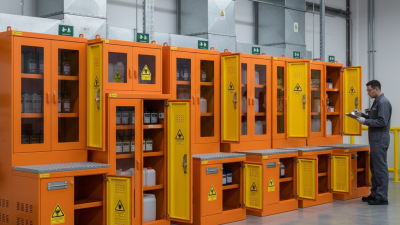
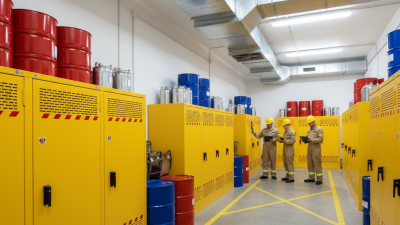
Core categories depend on chemical properties and storage volume. Flammable-liquid cabinets help control ignition risks and separate incompatible materials. Corrosive cabinets resist damage from acids and alkalis. Dedicated oxidizer storage prevents contact with combustible substances. Gas-cylinder cages secure upright cylinders and protect valve areas. Outdoor tanks and bunded enclosures suit larger inventories, while temperature-controlled rooms support sensitive materials. Secondary containment adds a practical barrier when a container fails.
A reliable design starts with safety data sheets, compatibility checks, ventilation needs, and local requirements. Buyers should also examine door access, loading equipment, drainage protection, emergency response, and maintenance intervals. In my experience, a neat layout is not always a safe layout; hidden congestion can delay inspection or evacuation. Digital tracking improves traceability, but it cannot replace a physical check. No layout is perfect. Review it after new chemicals, seasonal temperature changes, or near-miss events.
How to Select Chemical Storage Tanks, Cabinets, and Containment Systems
2026 Top Chemical Storage Solutions for Global Buyers
How to Select Chemical Storage Tanks, Cabinets, and Containment Systems
Selecting chemical storage equipment begins with compatibility, not appearance. Review each chemical’s safety data sheet, concentration, temperature range, and reaction risks. Polyethylene, steel, and stainless steel perform differently under exposure. A material that handles one solvent may fail with another. Small details matter.
Storage tanks suit larger volumes, but capacity should include expansion space and safe transfer access. Check wall thickness, fittings, vents, level indicators, and cleaning requirements. For smaller containers, chemical cabinets should provide stable shelving, clear labeling, and suitable ventilation. Flammable liquids require specially designed cabinets and controlled ignition sources. Keep incompatible chemicals separated. Never rely on color coding alone.
Secondary containment is often overlooked. Select trays, pallets, or bunded areas that can hold the required volume without blocking emergency routes. Inspect seams, valves, doors, and floor surfaces on a fixed schedule. I have seen well-organized rooms fail because one drain fitting was incompatible. That mistake is easy to miss. It is also expensive.
Site conditions can change the correct choice. Outdoor tanks may need UV protection, weather covers, grounding, or temperature control. Indoor systems need access clearance and practical spill response space. Local regulations, fire rules, worker training, and waste procedures must be checked before installation. No selection method is perfect. Revisit the design after actual use, because operators often notice problems that drawings do not show.
2026 Top Chemical Storage Solutions for Global Buyers
Secondary containment planning benchmark for chemical storage tanks, cabinets, and containment systems
The chart applies a 110% containment benchmark to the capacity of the largest stored container. For example, a 1,000 L tank requires a planning capacity of 1,100 L. Actual requirements vary by country, chemical compatibility, storage location, fire code, spill-control regulations, and site risk assessment. Always verify the final design with qualified local professionals.
Global Purchasing Criteria: Compliance, Cost, Quality, and Supplier Evaluation
Global buyers need more than a low storage price. UNEP’s Global Chemicals Outlook II projects chemical sales could nearly double between 2017 and 2030. That growth increases pressure on storage capacity, safety controls, and documentation. A compliant solution should match the product’s hazard classification, temperature range, compatibility limits, and local fire requirements. It should also include current safety data sheets, clear labels, secondary containment, and inspection records. Small details matter.
Compliance evidence deserves careful review. The European Chemicals Agency reported non-compliance in about one quarter of products inspected during its 2023 enforcement project. Buyers should therefore request material certificates, weld inspection records, pressure tests, coating specifications, and corrective-action reports. A supplier’s quality certificate is useful, but not sufficient. Ask how often audits occur. Check whether records remain traceable by serial number and production batch. Supplier answers can sound polished. Evidence is harder to fake.
Cost evaluation should include freight, installation, maintenance, replacement parts, insurance, and disposal. The cheapest quote may become expensive after one damaged valve or delayed shipment. Compare delivery performance, engineering support, warranty terms, and emergency response capacity. Review independent test results where possible. A practical site audit can expose weak ventilation or awkward access that drawings hide. No evaluation method is perfect. Buyers should document assumptions and revisit them after installation.