
Why Choose Steel Structure for Your Next Project?
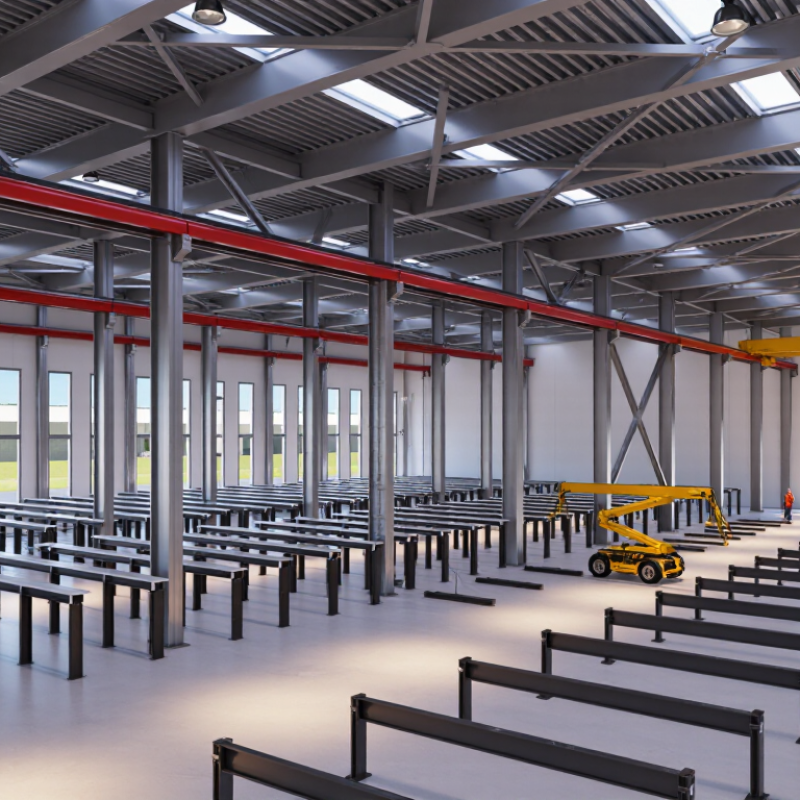
Choosing a steel structure can shape a project long before construction begins. It affects the span, schedule, budget, and future adaptability of the building. Steel offers high strength with relatively low weight. This allows designers to create wide, open interiors without excessive columns. Picture a warehouse floor with clear sightlines, fewer obstacles, and flexible storage zones. That flexibility can support changing business needs.
Steel components can also be fabricated under controlled factory conditions. Workers cut, drill, and assemble members with measured accuracy before delivery. On-site installation may then move quickly, especially when connections are planned carefully. Structural engineer Bill Baker, known for his work on the Burj Khalifa, has said, “The structure is the architecture.” His observation reflects an important reality. A steel structure is not merely a hidden frame. It influences the building’s appearance, performance, and long-term value.
Still, steel is not automatically the best choice. It requires protection against corrosion, fire, and sometimes harsh coastal conditions. Transportation distances can increase embodied emissions. Poor detailing may create avoidable maintenance problems. These limitations deserve honest attention. Engineers should compare steel with concrete, timber, and hybrid systems using local codes, site conditions, labor skills, and lifecycle costs. A small connection detail can affect years of performance. So can an overlooked coating specification.
The strongest decision comes from evidence, not fashion. With experienced engineers, qualified fabricators, and independent inspections, steel structure systems can deliver speed, strength, and useful design freedom. But the right answer depends on the project. That is worth remembering.
What Steel Structures Are and How They Work
Why Choose Steel Structure for Your Next Project?
What Steel Structures Are and How They Work
A steel structure is an engineered skeleton that transfers building loads safely to the ground. Columns carry vertical forces, while beams support floors, roofs, and equipment. Bracing resists wind and seismic movement. Connections matter just as much. Bolts, welds, and plates must work together through a clear load path.
In practice, engineers begin with site conditions, occupancy, span requirements, and local design standards. They then select steel sections using strength, buckling, vibration, and fire calculations. A factory-cut beam may arrive ready for assembly, reducing on-site measuring and rework. The process feels precise, but small errors still matter. A misaligned base plate can delay an entire frame.
The World Steel Association reported approximately 1.89 billion tonnes of crude steel production in 2023, showing the material’s extensive industrial scale. Its 2024 industry data also notes that steel can be recycled repeatedly while retaining its properties. That does not make every steel building environmentally efficient. The Global Status Report for Buildings and Construction 2024 states that buildings consumed 32% of global energy and produced 34% of energy-related carbon emissions in 2022. Designers must therefore reduce unnecessary tonnage, specify recycled content, and protect steel from corrosion. A lighter frame is not automatically a better frame. Its performance depends on detailing, fabrication quality, maintenance, and the project’s full life cycle.
Why Choose Steel Structure for Your Next Project? - What Steel Structures Are and How They Work
| Design Dimension | Typical Data or Characteristic | How It Works in a Steel Structure | Project Benefit |
|---|---|---|---|
| Primary Material | Structural steel is an engineered iron-based alloy designed to carry tension, compression, bending, and shear forces. | Beams, columns, braces, and frames transfer building loads through connected members to the foundations. | Creates a predictable and highly adaptable structural system. |
| Density | Approximately 7,850 kg/m³ for carbon structural steel. | Although steel is dense, its high strength allows efficient members with relatively small cross-sections. | Can reduce structural member size and preserve usable floor area. |
| Elastic Modulus | Approximately 200 GPa for structural steel. | The high stiffness limits elastic deformation under service loads when members are properly sized. | Supports efficient control of deflection and vibration. |
| Yield Strength | Common structural grades provide yield strengths around 235–355 MPa, depending on grade, product form, and thickness. | Designers select a grade that provides the required resistance with appropriate safety factors. | Offers a wide range of strength options for different building requirements. |
| Strength-to-Weight Ratio | High compared with many conventional structural materials. | Load-carrying capacity is achieved through efficient sections such as I-beams, hollow sections, and built-up members. | Helps support long spans, taller buildings, and lighter structural layouts. |
| Structural System Types | Moment frames, braced frames, trusses, space frames, portal frames, and composite systems. | Different arrangements resist gravity loads, wind loads, seismic actions, or combinations of these forces. | Allows the structural concept to match the building’s use, geometry, and loading conditions. |
| Connections | Common connections use high-strength bolts, welding, or a combination of both. | Connections transfer axial force, shear, bending moment, or combinations of these actions between members. | Provides flexible assembly, repair, strengthening, and future modification options. |
| Prefabrication | Members can be cut, drilled, welded, and coated in a controlled fabrication facility before delivery. | Factory production follows drawings, specifications, and quality-control procedures. | Can improve dimensional accuracy and reduce the amount of site work. |
| Construction Speed | Many components can be fabricated while foundations and other site activities are in progress. | Prepared members are delivered and erected in a planned sequence using bolted or welded connections. | May shorten the structural erection phase and improve schedule coordination. |
| Long-Span Capability | Steel trusses, girders, and space frames can be designed for large column-free areas. | Loads are distributed through deeper or triangulated members, improving structural efficiency over longer distances. | Useful for warehouses, industrial buildings, halls, and open-plan spaces. |
| Fire Performance | Steel is non-combustible, but its strength and stiffness decrease as temperature rises. | Fire protection may include spray-applied protection, board systems, intumescent coatings, or encasement. | Fire resistance can be designed to meet the required building code rating. |
| Corrosion Protection | Unprotected steel can corrode in the presence of moisture, oxygen, and aggressive environmental conditions. | Protection may use paint systems, galvanizing, weathering steel, drainage detailing, and planned inspections. | Proper detailing and maintenance can extend service life and preserve structural capacity. |
| Seismic Behavior | Steel can provide ductility when the frame, members, and connections are designed for inelastic behavior. | Moment-resisting frames and braced systems dissipate energy through carefully detailed structural components. | Supports resilient structural design in earthquake-prone regions when code requirements are followed. |
| Adaptability | Steel frames can often accommodate openings, extensions, strengthening, and changes in internal layout. | Bolted connections and accessible members simplify many types of modification, subject to engineering review. | Provides flexibility for future expansion or changes in building use. |
| Reuse and Recycling | Steel can be reused as a component or recycled into new steel products without losing its basic material properties. | Design for disassembly, accessible bolted connections, and material traceability can support circular use. | Can reduce demand for virgin raw materials at the end of a structure’s service life. |