
What Are the Top Types of Laser Cut Parts?

Laser Cut Parts range from simple flat blanks to precision components that must fit into demanding assemblies. A laser-cut bracket may have two mounting holes and a sharp bend line; an equipment enclosure may need dozens of openings for connectors, vents, and fasteners. The process suits many shapes, but the “top” part depends on material, thickness, tolerance, and production volume. Small details matter.

The market is expanding alongside wider industrial use. Grand View Research estimated the global laser cutting machines market at USD 5.26 billion in 2023 and projected a 6.7% compound annual growth rate from 2024 to 2030. This figure describes equipment, not parts demand directly. Still, it signals growing investment in the process. Dr. Reinhart Poprawe, former director of Fraunhofer ILT, has described laser technology as “a key technology of the 21st century.” That perspective helps explain its reach, though it does not mean every component benefits from laser cutting.

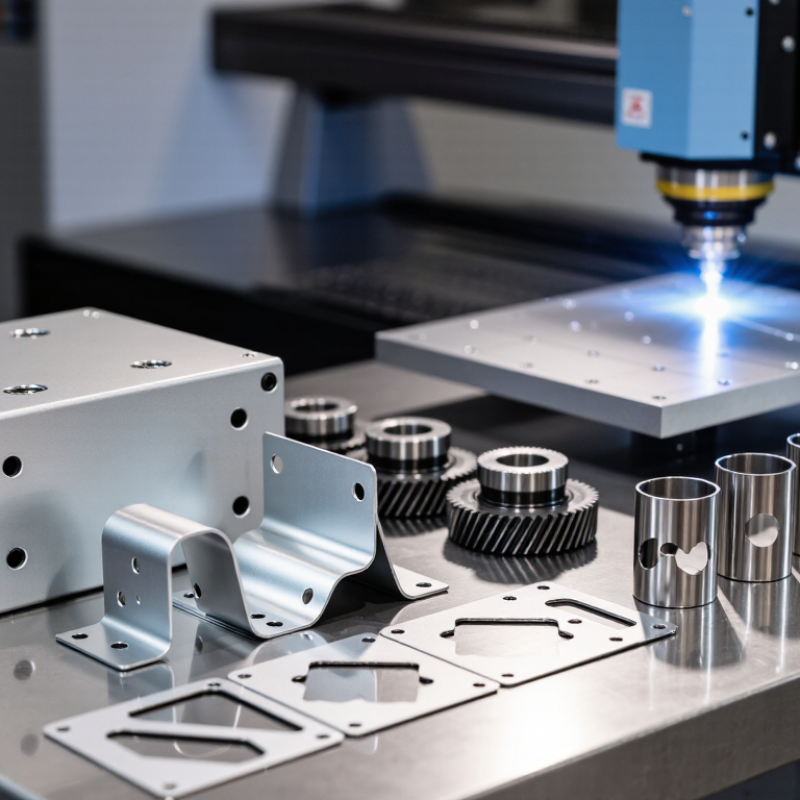
This guide explores common types, including sheet-metal brackets, panels, enclosures, gears, stencils, and tube-cut components. It also considers where each type is used and which design choices affect accuracy, edge quality, and cost. A tidy drawing can still produce a poor fit if kerf width or material variation is overlooked. That distinction is easy to blur. The most useful overview is not a ranking alone, but a practical comparison of what each part does, how it is made, and where the process has limits.
What Are the Top Types of Laser Cut Parts?

How Laser-Cut Parts Are Classified by Shape and Function

Laser-cut parts are best classified by both shape and job. Flat profiles include tabs, brackets, gussets, and irregular outlines cut from sheet. Panels and plates often become machine guards, access covers, or mounting faces. Tube-cut parts add slots, notches, and end shapes to frames and handrails. The outline tells only part of the story.

Function clarifies the design. Structural parts carry loads, while joining parts use holes or slots for bolts and alignment. Enclosure parts shield components; perforated parts manage airflow or reduce weight.

World Steel Association’s World Steel in Figures 2024 reports about 1.89 billion tonnes of crude steel production in 2023. That scale helps explain why sheet steel is widely available, but it does not determine the right thickness or cut geometry for a specific part. A small bracket can still distort if its narrow arms heat unevenly. Classification is useful, though real parts often serve more than one function.

Tips: Mark the material, thickness, critical holes, and load direction on the drawing. Check edge quality and fit on a first sample. A tidy shape can still be a poor fit.

Flat Components: Panels, Plates, and Brackets

Flat components are common laser-cut parts because they combine simple geometry with useful structural function. Panels cover openings, plates distribute loads, and brackets connect frames or reinforce corners. A flat blank may look uncomplicated, but small details matter. Hole spacing, edge clearance, and bend-line placement can determine whether it fits during assembly.

The World Steel Association’s World Steel in Figures 2024 reports 1,892.2 million tonnes of crude steel production in 2023. That scale reflects how widely steel supports manufacturing, though it does not measure laser-cut parts specifically. For a panel, the material grade and thickness influence cutting speed and edge quality. A plate with dense holes may also need careful spacing to limit heat buildup and distortion. Thin sheets can shift during cutting. That is easy to underestimate.

Brackets often need precise mounting holes and clean edges where they meet other parts. Designers should allow for kerf, the material removed by the beam, and check whether burrs need secondary finishing. Grand View Research estimated the global laser cutting machine market at USD 6.2 billion in 2023, underscoring the process’s industrial reach. Still, a tighter tolerance is not automatically better; it can raise cost without improving fit. Prototype the flat pattern, inspect the cut edge, and verify the assembled part before ordering a production batch.

Structural Parts: Frames, Supports, and Mounting Pieces

Structural laser-cut parts turn flat sheet or plate into frames, brackets, ribs, and mounting pieces. A frame with narrow tabs may look rigid on screen but twist during welding. Add locating holes, generous internal radii, and clear access for weld beads. Small details matter. Supports should carry loads along a continuous path, not through a thin, isolated tab. Mounting plates also need enough edge distance around bolt holes to resist tearing. Check hole size and position against the fasteners and assembly process, since cutting and finishing can affect fit.

Grand View Research’s 2024 Laser Cutting Machine Market report estimated the global market at USD 5.27 billion in 2023. It forecast a 7.7% compound annual growth rate from 2024 through 2030. This points to continued investment in laser-cutting capacity, not guaranteed part quality. Specify material grade, thickness, cut-edge requirements, and critical dimensions on the drawing. ISO 9013 provides quality classifications for thermal-cut edges, but a neat edge alone does not prove a frame will hold its shape. Review the design with the fabricator, especially where long, thin supports may warp. I would not assume every mounting hole needs a close tolerance; that choice can add cost without improving assembly.

Enclosures and Decorative Parts Made by Laser Cutting

Laser-cut enclosures turn flat sheet metal into practical shells for control panels, instruments, and compact electronics. Cutouts provide openings for switches, cables, ventilation, and fasteners. A well-planned layout keeps these features aligned, so assembly needs fewer adjustments. Small details matter. Corner radii, bend allowances, and hole spacing should match the forming process, not just the drawing. Thin panels can warp under heat, and a sharp edge may need deburring before handling. The cut is precise, but not magically finished.

Decorative parts use the same process for screens, signage, light shades, and patterned wall panels. Narrow slots can cast crisp shadows; repeated perforations can soften light while preserving airflow. Designers should leave enough material between openings to prevent fragile webs. Grand View Research’s 2023 laser-cutting-machines market report estimated a 2022 market value of about $5.3 billion and projected 7.7% annual growth through 2030. That figure tracks equipment demand, not enclosure sales, but it reflects broader investment in laser processing. There is a trade-off: dense patterns look striking, yet they may increase cutting time and make parts more delicate. A test panel often reveals issues that a screen preview misses.

How Material and Application Shape Part Selection

Laser-cut parts include mounting brackets, flat panels, shims, enclosures, and decorative screens. Their shape is only part of the decision. Material changes how cleanly a design cuts and how well it works afterward. Thin acrylic can form crisp display panels, while sheet steel suits rigid supports. Plywood is useful for lightweight prototypes, but grain and moisture can affect the edge. Fit matters.

Application sets the next constraints. A bracket carrying a load needs adequate thickness and enough material around its holes. A panel near a warm motor may need a heat-resistant material instead of acrylic. For close-fitting parts, account for the laser’s kerf: a slot drawn to the exact fastener width may come out too narrow. Reflective metals and very thick stock may also require specific equipment settings. A clean-looking edge is not proof of a reliable part; test the fit and function. I sometimes find the first drawing needs revision.

Tips: Check material thickness, hole size, and edge requirements before cutting. Cut one sample first. Measure it, then adjust the drawing if needed.

What Are the Top Types of Laser Cut Parts? — How Material and Application Shape Part Selection

Part Type Common Materials Typical Applications Why It Is Laser Cut Key Selection Considerations Indicative Material Thickness
Brackets and mounting plates Mild steel, stainless steel, aluminum Equipment frames, machinery mounts, vehicle components, and electrical assemblies Accurately produces profiles, slots, and mounting holes with little need for post-cut machining. Consider load, corrosion resistance, bend locations, hole tolerances, and whether the part needs deburring or a protective finish. Often about 0.8–6 mm for sheet-metal work; capability depends on the laser system and material.
Panels and enclosure components Stainless steel, mild steel, aluminum Control cabinets, machine guards, access panels, and instrument housings Enables repeatable cutouts for displays, connectors, ventilation, and fasteners. Plan for bend allowances, edge clearances, ventilation, surface finish, and any coating applied after cutting. Commonly about 0.8–3 mm for formed sheet-metal panels.
Shims and spacers Stainless steel, spring steel, aluminum, brass Machine alignment, gap adjustment, bearing assemblies, and precision fixtures Can cut thin stock into custom outlines and small internal features without dedicated stamping tooling. Specify thickness tolerance, flatness, burr limits, and material hardness; very thin parts may need careful handling. Often about 0.05–1.5 mm, depending on material and process.
Gaskets and flexible seals Laser-compatible rubber, silicone sheet, and selected gasket materials Sealing covers, enclosures, pumps, and low-volume equipment assemblies Produces custom seal profiles and internal openings directly from sheet material. Check chemical and temperature compatibility, compression requirements, and whether the specific material is suitable for laser processing. Commonly about 0.5–6 mm, depending on the material and required edge quality.
Clear panels and display parts Acrylic (PMMA) Displays, equipment windows, labels, light guides, and protective covers Acrylic can be laser cut with smooth, often flame-polished edges and detailed shapes. Account for heat effects, protective film, optical clarity, and mounting stress. Polycarbonate may discolor or cut poorly with many laser setups. Often about 1–10 mm; thicker sheet capability varies by equipment and edge-quality requirements.
Signs and decorative panels Acrylic, plywood, selected solid woods, paperboard Wayfinding, architectural details, packaging prototypes, and interior features Supports intricate contours, lettering, and repeated patterns without a physical cutting die. Wood grain, resin, moisture, and surface coatings can affect color and edge charring; test samples when appearance matters. Often about 2–12 mm for wood or acrylic, depending on the machine and design.
Perforated and vented components Mild steel, stainless steel, aluminum Airflow panels, speaker grilles, filters, and machine covers Creates repeated holes and slots directly in the panel, allowing patterns to be changed without custom tooling. Balance open area with strength; check minimum feature size, spacing, heat effects, and flatness after cutting. Often about 0.8–3 mm for sheet panels, subject to feature size and material.

Note: Thickness ranges are indicative examples, not universal process limits. Actual suitability depends on the laser type, material grade, part geometry, tolerances, and required edge quality. Materials containing chlorine, such as PVC, should not be laser cut because hazardous and corrosive gases can be produced.


This website uses cookies. By continuing to browse this site you are agreeing to our use of cookies. Please review our Privacy Policy for more information.