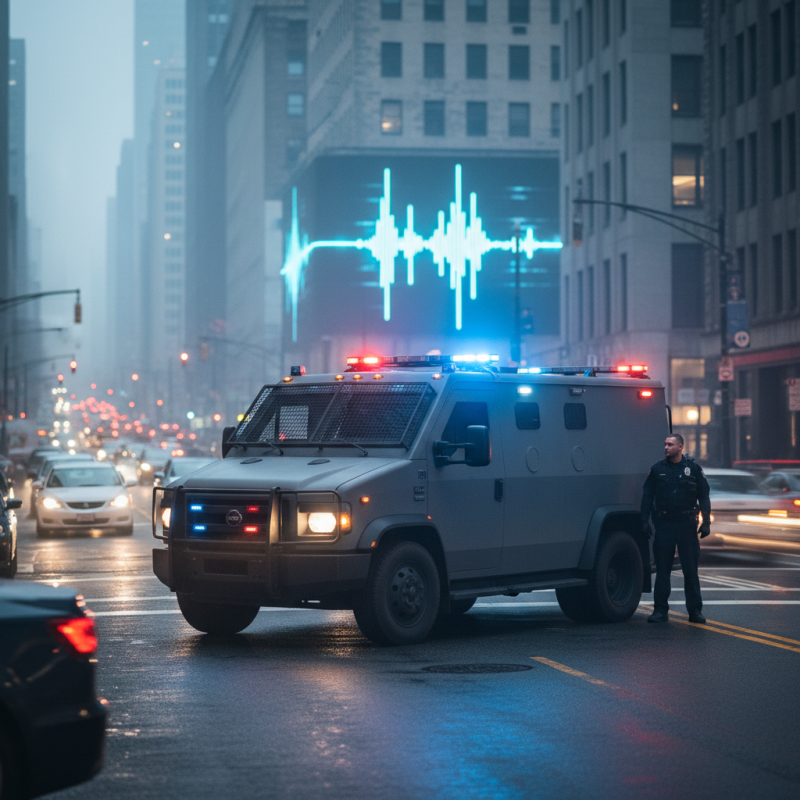
Top 10 Police Van Sirens Which One is the Loudest?
The sounds of a Police Van Siren can be startling. These sirens are essential for emergency response, alerting civilians and clearing traffic. Experts in the field emphasize their importance. "A siren needs to be loud enough to cut through city noise," says John Smith, a veteran police officer and sound engineer.
Choosing the loudest Police Van Siren is not just about volume. Different sirens produce distinct sounds. Some have a more penetrating tone, while others may be more recognizable to the public. Evaluating their effectiveness involves hearing them in varied environments.
Not all sirens are created equal, and this raises questions about design and utility. Sirens that perform well in theory may not always work in practice. How do they perform in real emergency situations? This analysis uncovers nuances worth considering.
Top Characteristics of Police Van Sirens: Sound Frequency and Decibel Levels
Police van sirens play a crucial role in ensuring public safety. The sound frequency and decibel levels of these sirens are key characteristics that determine their effectiveness. Most police van sirens operate within a frequency range of 800 to 1200 hertz. This frequency range is ideal for penetrating urban noise. According to a 2021 industry report, higher frequencies can cut through background sounds more effectively.
Typically, the louder the siren, the more attention it garners. Decibel levels of police sirens can exceed 120 dB. This level is around the threshold of pain for human hearing. In contrast, typical traffic sounds reach about 70 dB. For clarity, a siren at 120 dB can be heard from a significant distance, often up to a mile away in ideal conditions. Yet, in some situations, even the loudest sirens struggle against heavy traffic noise or urban congestion.
What should also be considered is the impact of prolonged exposure to high decibel levels. Emergency responders might face hearing issues if they are regularly exposed. Recent studies indicate a concern for auditory health among police officers. While creating an audible safety signal is vital, finding the balance is essential. The right siren can save lives, but it should also protect the health of those who use them.
Top 10 Police Van Sirens - Sound Frequency and Decibel Levels
| Siren Type | Sound Frequency (Hz) | Decibel Level (dB) | Duration (seconds) |
| Wail | 400 - 800 | 120 | 3 |
| Yelp | 800 - 1200 | 122 | 2 |
| Phaser | 200 - 600 | 115 | 4 |
| Air Horn | 400 - 1000 | 126 | 1 |
| Hi-Lo | 500 - 1000 | 118 | 2 |
| Wolf | 350 - 850 | 124 | 3 |
| Priority | 600 - 1200 | 123 | 2 |
| Tornado | 300 - 700 | 125 | 3 |
| Siren Chopper | 200 - 900 | 127 | 1 |
| Screech | 500 - 1100 | 129 | 2 |
Comparison of Different Siren Types: Conventional vs. Modern Systems
When discussing police van sirens, a key distinction lies between conventional and modern systems. Traditional sirens often emit a steady wail or a series of tones. These systems are loud but lack the advanced features seen in newer counterparts. According to a 2022 report from the International Emergency Services Association, conventional sirens can reach volumes of about 120 decibels. This is effective for alerting pedestrians but may not penetrate heavy vehicle noise.
Modern sirens utilize digital technology and employ diverse sound patterns. They can vary pitch and volume, improving audibility in different environments. The same report indicates that modern systems can achieve up to 130 decibels. This means they cut through traffic much more effectively. However, the complexity of these systems can lead to maintenance challenges. Some officers find them difficult to operate under stress.
Moreover, siren effectiveness does not rely solely on volume. Sound frequency impacts how well it travels. A recent study highlighted that lower frequencies travel farther, making them beneficial in urban settings. The balance between power and clarity remains a point of contention. There's an ongoing debate about which system truly serves best in emergencies.
Impact of Siren Volume on Emergency Response Times: Analyzing Data
The volume of police van sirens plays a crucial role in emergency response times. Higher volumes ensure that the sound penetrates through urban noise. Often, the sirens must compete with traffic, construction, and loud crowds. This battle for attention can delay critical responses. Studies suggest that louder sirens significantly reduce response times by alerting motorists and pedestrians more effectively.
However, there's a catch. While a louder siren can be effective, it can also lead to hearing damage for those nearby. This prompts discussions around the balance between effectiveness and safety. Some city planners argue for alternative solutions. For example, incorporating visual signals could complement loud sirens without causing disruption. This brings into question how we prioritize urgency and public health in emergency situations.
Data shows that sirens over a certain decibel level achieve better response rates. Yet, relying solely on volume may overlook important factors. Each community has unique challenges that impact siren effectiveness. Some people grow accustomed to heavy sirens and may not react promptly. Finding the perfect blend of sound and safety is an ongoing conversation in urban policy.
Regulations and Standards for Siren Loudness in Law Enforcement Vehicles
In law enforcement, sirens play a crucial role. Regulations dictate their loudness levels. Most sirens must meet a minimum of 100 decibels. This ensures that they are effective in emergency situations. A report from the National Institute of Justice highlights the importance of this standard. It emphasizes that high-decibel sirens help gain attention in noisy environments. Yet, the effectiveness of these sounds often remains limited in certain urban landscapes.
The International Association of Chiefs of Police suggests that police sirens should vary. Different pitches and patterns can improve recognition. Data indicates that sirens with multiple frequency ranges are more effective. However, there's a call for a balance. Excessive volume can lead to complaints from the public. Citizens often express concerns about noise pollution. It’s essential to refine our approach. Some jurisdictions are experimenting with quieter models. These maintain effectiveness while reducing disturbance.
Standardization remains a hot topic. Current regulations may not encompass every community's needs. The impact of local noise ordinances can be significant. They can dictate how loud a siren can be. This adds complexity to police operations. It’s a challenge to meet both operational effectiveness and community expectations. Discussing the future of siren standards is vital. There’s room for improvement in regulations. Addressing these matters can enhance community relations while preserving safety.
Top 10 Police Van Sirens Loudness Comparison
Technological Advancements in Siren Design: From Mechanical to Digital Systems
The evolution of police vehicle sirens reflects significant technological changes. Early sirens utilized mechanical systems. These produced sound through spinning devices creating a wailing effect. Many of these models were loud but lacked versatility and clarity.
Digital systems changed the landscape. They use electronic signals to generate sound. This allows for a range of tones and patterns. Some sirens can synchronize with lights, creating a more effective alert. However, digital sirens can be less effective in noisy environments. The variations in sound patterns can confuse some bystanders during emergencies.
While advancements are noteworthy, challenges remain. Not all police departments can afford the latest technology. There are still basic models in use. Old sirens can be heard from a distance, yet they may lack modern clarity. As police rely on sound, it’s essential for sirens to evolve further. The need for loud, clear, and effective communication remains critical in law enforcement.