What Are the Key Factors Influencing Gas Barrier Properties?
Gas Barrier Properties are critical in various industries, particularly in packaging and construction. Effective gas barriers prolong product shelf life and enhance structural integrity. According to a report by Smithers Pira, the global market for gas barrier materials is projected to reach $30 billion by 2025. This underscores the necessity of understanding the key factors that influence these properties.
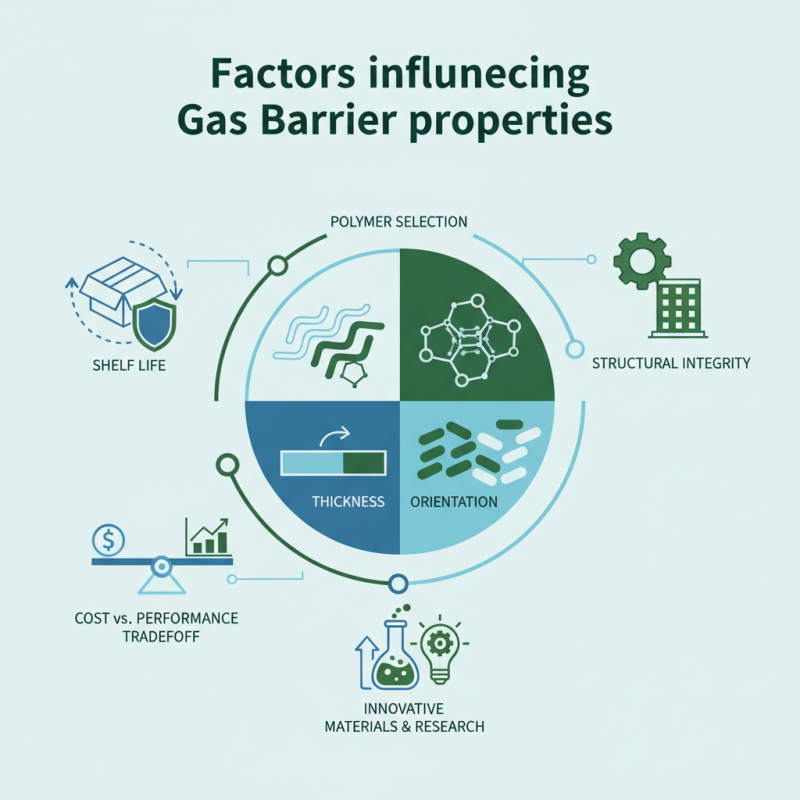
Several elements play a pivotal role in determining gas barrier properties. Polymer selection, thickness, and orientation are just a few variables. For instance, polyethylene has different barrier characteristics compared to nylon. A recent study published in the Journal of Applied Polymer Science highlighted that even minor variations in material composition can lead to significant changes in performance. This complexity implies that the selection process requires careful consideration and expertise.
However, challenges persist in optimizing gas barrier properties. Many manufacturers grapple with cost versus performance trade-offs. Data indicates that enhancing barrier qualities can sometimes lead to increased production costs, making it essential to strike a balance. Ongoing research aims to develop innovative materials that meet both performance and economic demands, ensuring the industry can adapt to evolving needs.
Understanding Gas Barrier Properties in Materials
Understanding gas barrier properties in materials is crucial for various industries. These properties prevent the permeation of gases, aiding in product longevity and quality. Key factors influencing these properties include material composition, thickness, and molecular structure. According to a recent industry report, materials with a high density and layered structures often exhibit superior gas barrier capabilities.
Tips: Selecting the right material is essential. For instance, polymer films with specific additives can significantly enhance barrier performance. Manufacturers should carefully assess these materials for their intended application.
Another significant factor is temperature and humidity. These environmental conditions can alter gas permeability. A study highlights that increasing temperature can lead to a decrease in barrier effectiveness. Ensuring stability under varying conditions is vital.
Tips: Regular testing should be part of product development. This will help identify the ideal environmental conditions for gas barrier materials. It’s essential to consider how variations can impact performance over time.
Key Factors Influencing Gas Barrier Properties
Influence of Polymer Composition on Gas Barrier Performance
The composition of polymers significantly impacts their gas barrier performance. Certain polymers contain specific additives and fillers that enhance their properties. For instance, incorporating particles like clay can create a more effective barrier. This process alters the pathways that gases must navigate, reducing permeability.
Different ratios of polymer blends also influence gas barrier capabilities. A blend of polyethylene and polystyrene may yield better results in certain scenarios than either polymer alone. However, finding the optimal combination is complex. Too much of one component can lead to brittleness, affecting the flexibility of the final product. The balance between strength and flexibility requires careful consideration.
Additionally, polymer processing methods play a crucial role. Techniques like extrusion or injection molding can change the organization of polymer chains, impacting gas diffusion rates. Even small variations in processing conditions may lead to significant differences in performance. The quest for the perfect polymer blend remains an ongoing challenge, inviting further research and innovation.
Role of Thickness and Morphology in Barrier Effectiveness
Gas barrier properties are essential for various applications, especially in packaging and preserving sensitive materials. Thickness and morphology significantly influence these properties. Thicker barriers often provide better protection against gas permeation. However, adding thickness can enhance weight and alter flexibility, which may not suit all applications.
Morphology involves the structure and arrangement of barrier materials. A well-ordered morphology can effectively reduce gas transmission. For example, densely packed layers improve resistance. According to a report from the Plastic Engineering Society, modifying granule size and orientation can result in barriers performing five times better than standard configurations.
**Tip:** Optimize the balance between thickness and morphology for specific applications. A slight adjustment can greatly affect performance.
It’s crucial to remember that not all materials will provide the desired effect. Some combinations may lead to unexpected results, such as increased brittleness or lower performance. Therefore, thorough testing is necessary to achieve ideal barrier effectiveness in real-world situations.
**Tip:** Conduct small-scale tests before full implementation. This can identify potential weaknesses early in the process.
Impact of Environmental Conditions on Gas Permeability
Environmental conditions play a crucial role in influencing gas permeability. Factors like temperature, humidity, and pressure can significantly affect barrier properties. For example, increased temperature often raises molecular activity. This can lead to higher gas diffusion rates through materials.
Humidity also impacts gas permeability. When materials absorb moisture, their structure may change. This increased flexibility can create pathways for gases. In high-humidity environments, even robust barriers may fail to perform as expected. It's essential to evaluate how different materials withstand varying humidity levels.
Temperature fluctuations can introduce challenges too. Materials that are rigid at lower temperatures might become more permeable as they warm. This situation can lead to unexpected results in real-world applications. While design often considers ideal conditions, we must also reflect on the unpredictable nature of the environment. Understanding these variables is vital for improving barrier efficiency and reliability.
Applications of Improved Gas Barrier Materials in Industry
Gas barrier materials play a critical role in various industries, particularly in food packaging and pharmaceuticals. These materials prevent gas exchange and protect sensitive products from spoilage. For example, improved gas barrier films can significantly extend the shelf life of perishable goods. The use of such materials reduces waste, benefiting both the environment and businesses.
Tips: When selecting gas barrier materials, consider the application's specific requirements. Thickness, permeability, and moisture resistance are vital factors to assess. Conducting tests for real-world conditions can lead to better outcomes.
In the pharmaceutical industry, gas barrier properties ensure the stability of sensitive medications. Specialized packaging keeps harmful gases away from drugs, preserving efficacy. This application highlights the importance of developing and improving these materials continuously. Companies are increasingly investing in research to enhance performance.
Tips: Regularly evaluate your packaging solutions. Stay updated on innovations in gas barrier technologies. Collaborating with experts can lead to better product protection and customer satisfaction. Analyzing consumer feedback for packaging can yield insightful data.
What Are the Key Factors Influencing Gas Barrier Properties?
| Material Type | Thickness (µm) | Oxygen Transmission Rate (OTR) (cm³/m²/day) | Water Vapor Transmission Rate (WVTR) (g/m²/day) | Temperature Resistance (°C) | Applications |
| Polyethylene Terephthalate (PET) | 50 | 2.0 | 0.1 | 80 | Food Packaging |
| Polyvinylidene Chloride (PVDC) | 30 | 0.5 | 0.05 | 60 | Pharmaceutical Packaging |
| Ethylene Vinyl Alcohol (EVOH) | 40 | 0.1 | 0.08 | 70 | Meat Packaging |
| Nylon (Polyamide) | 20 | 4.0 | 0.2 | 90 | Snack Food Packaging |