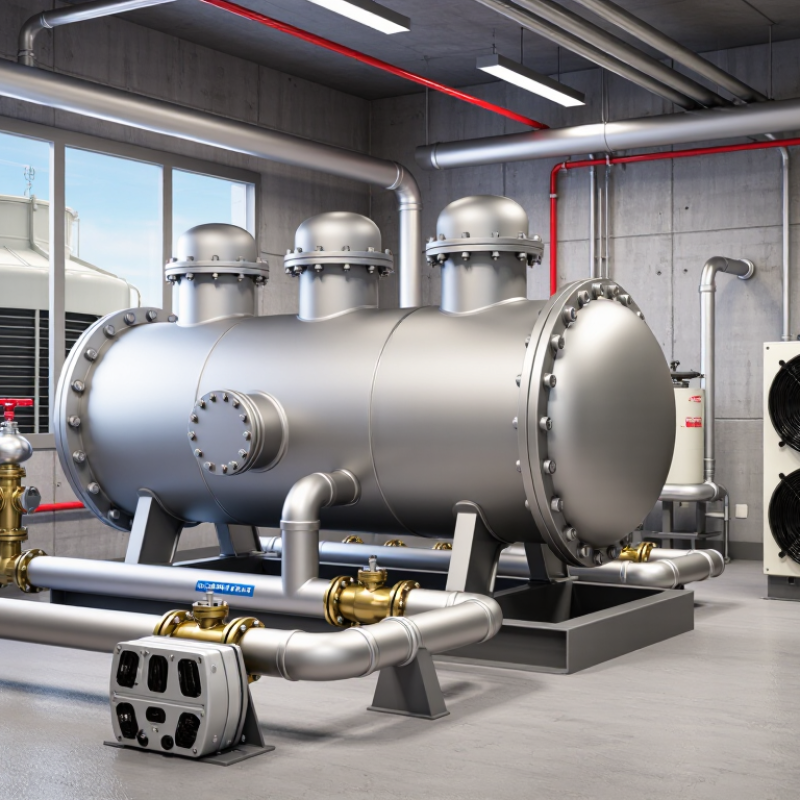
How to Choose a Water Cooled Condenser?

Choosing a Water Cooled Condenser is not simply a matter of selecting the largest model. The right choice depends on heat load, refrigerant type, water quality, operating pressure, and available installation space. A condenser that performs well in a clean laboratory may struggle beside a dusty factory cooling tower. Small details matter. Tube material, water velocity, fouling resistance, and service access can change long-term performance.

Dr. Eckhard Groll, a respected refrigeration researcher and educator, offers a useful principle: “Condenser selection must follow the complete system, not one isolated rating.” This advice deserves attention. A catalog capacity may look attractive at standard conditions, yet actual summer water temperatures can reduce efficiency. Check the entering water temperature, leaving water temperature, pressure drop, and expected fouling level. Then compare performance under realistic conditions. Not perfect conditions.

A reliable selection process also considers maintenance. Can technicians remove the end covers safely? Is chemical cleaning practical? Will the water contain minerals, algae, or suspended particles? These questions affect operating cost more than many buyers expect. Shell-and-tube, brazed-plate, and evaporative designs each offer different benefits. The best Water Cooled Condenser balances efficiency, durability, water consumption, and lifecycle cost.

There is room for judgment. Manufacturer data may not reflect every site condition. Engineers should verify assumptions before approving the purchase. A slightly smaller unit may reduce cost, but insufficient surface area can create unstable head pressure. That mistake is expensive. This guide explains how to compare specifications, identify hidden risks, and choose a condenser that remains dependable beyond the first season.

How to Choose a Water Cooled Condenser?

Water-Cooled Condenser Basics and Operating Principles

How to Choose a Water-Cooled Condenser?

A water-cooled condenser transfers refrigerant heat into circulating water. Hot, high-pressure vapor enters the condenser and releases heat across a metal surface. The vapor then becomes liquid. In many shell-and-tube designs, refrigerant flows around water-filled tubes. That arrangement supports efficient heat transfer and practical cleaning. ASHRAE Handbook—HVAC Systems and Equipment identifies approximately 29.4°C entering condenser water and 35°C leaving water as common design conditions. Actual temperatures vary with climate and cooling-tower performance. They should not be copied blindly.

Start with the required heat-rejection capacity, not only compressor capacity. Include the compressor’s absorbed power. For example, a 100 kW cooling load may require roughly 125–135 kW of condenser rejection. Check water flow, pressure drop, refrigerant compatibility, and allowable approach temperature. The U.S. Department of Energy notes that cooling-tower evaporation depends strongly on circulation rate and temperature range. A typical 10°F range can evaporate about 0.8% of circulating water. Water quality matters. Hardness, suspended solids, and poor treatment can create scale inside narrow tubes. Performance then falls quietly. Very quiet, but expensive.

Select a condenser with accessible tube sheets, suitable materials, and measurable fouling allowances. AHRI Standard 560 provides rating and testing guidance for water-cooled refrigerant condensers. Field experience still matters. A unit that performs well in a laboratory may struggle with seasonal tower water, unstable flow, or neglected cleaning. That weakness deserves attention before purchase.

Identify the Cooling Load and System Requirements

How to Choose a Water Cooled Condenser?

Start with the real cooling load, not the equipment catalogue. Calculate heat from compressors, products, lighting, people, and outdoor air. ASHRAE Handbook—Fundamentals recommends using local design weather and realistic internal heat gains. A small warehouse may need very different capacity at 35°C outdoor air than at 25°C.

Measure the operating conditions carefully. Record refrigerant type, condensing temperature, chilled-water temperature, flow rate, and expected run hours. The condenser must reject both refrigeration load and compressor heat. For water systems, use Q = m × Cp × ΔT to check the required water flow. A five-degree water temperature rise can produce a very different result from a three-degree rise. It matters.

Cooling efficiency deserves attention. The International Energy Agency reported that space cooling used about 10% of global electricity in 2016, while demand could more than triple by 2050. Choose a condenser that performs well at design load and part load. Check the entering water temperature, approach temperature, pressure drop, and fouling allowance. ASHRAE Standard 90.1 also links efficiency requirements to equipment capacity and operating conditions.

Water quality can quietly change the decision. Hard water may increase scale, while poor treatment can accelerate corrosion. Plan filtration, blowdown, inspection access, and seasonal maintenance. A clean laboratory calculation may still fail in a dusty plant room. I have seen selections based on peak load alone; they looked safe, but consumed unnecessary water and lost efficiency during normal operation. Recheck the assumptions.

Compare Condenser Types, Materials, and Water Sources

How to Choose a Water Cooled Condenser?

Choosing a water cooled condenser starts with the heat load, water quality, and available maintenance space. Shell-and-tube condensers suit steady industrial duty and tolerate moderate fouling. Plate condensers are smaller and transfer heat efficiently. However, narrow passages can block quickly when filtration is poor. Plate-and-frame designs offer easier cleaning, but their gaskets need regular inspection. That detail is easy to underestimate.

Material selection should follow the water chemistry, not habit. Copper tubes provide strong heat transfer in compatible freshwater systems. Stainless steel offers better resistance to many contaminants. Titanium is often considered for seawater or aggressive cooling water, although its purchase cost is higher. Check chloride levels, pH, hardness, temperature, and flow before choosing. A local water analysis is more useful than a generic material chart.

Water sources create different operating risks. Municipal water is usually consistent, but consumption costs can become substantial. Cooling-tower water reduces waste, yet it may carry minerals, biological growth, and suspended solids. Seawater requires careful corrosion control and dependable filtration. In commissioning work, a strainer that looks adequate on paper has sometimes caused unexpected pressure loss. I would also leave room for tube cleaning and inspection. A compact installation may appear efficient, but inaccessible service areas can turn a minor fouling problem into extended downtime. Regular monitoring matters.

Evaluate Capacity, Efficiency, Installation, and Maintenance

How to Choose a Water Cooled Condenser?

Selecting a water cooled condenser starts with the real cooling load, not a catalog number. Measure peak demand, refrigerant conditions, and entering water temperature. A unit sized too small may run continuously during hot afternoons. Oversizing can increase cost and reduce operating stability. Allow for fouling, seasonal changes, and future capacity needs. I have found that a modest safety margin works better than guessing generously.

Efficiency depends on heat transfer and pressure drop. Compare the required water flow with the available pump capacity. Lower approach temperatures often improve performance, but they may require more water and energy. Check the condenser’s design pressure and expected operating range. Water quality matters greatly. Hard water can form scale inside tubes, reducing heat transfer and raising compressor discharge pressure. The numbers may look excellent on paper.

Installation planning should include service clearance, lifting access, isolation valves, and drain points. Keep piping short and support it properly to reduce vibration. Confirm that water treatment suits the materials and local requirements. During commissioning, record inlet temperature, outlet temperature, flow rate, and refrigerant pressure. These readings create a useful baseline.

Maintenance should be simple enough for a busy technician to follow. Inspect tubes, strainers, valves, and connections at scheduled intervals. Clean deposits before they become thick layers. Watch for small leaks. They rarely remain small. Keep a service log with dates, measurements, and corrective work. One weakness in this approach is relying too heavily on fixed schedules. Actual water conditions may demand earlier inspection.

How to Choose a Water-Cooled Condenser?

Evaluate capacity, efficiency, installation, and maintenance using a comparative engineering screening score from 1 to 10.

Shell-and-tube condensers generally provide strong capacity and durability for large systems. Plate-and-frame designs offer efficient heat transfer and compact installation, while brazed-plate units are typically easier to install but may require stricter water-quality control. Actual selection should be verified against refrigerant, entering water temperature, flow rate, fouling risk, pressure drop, and service requirements.

Select the Best Condenser for Your Application

How to Choose a Water Cooled Condenser?

Select the best condenser for your application by starting with the real operating load. A laboratory chiller needs different control than a food-processing system. Check cooling capacity, refrigerant compatibility, water temperature, and expected operating hours. The design condensing temperature matters greatly. A small approach temperature can improve efficiency, but it may require more surface area and cleaner water.

Water quality deserves serious attention. Hard water creates scale on tubes, reducing heat transfer and raising compressor power. In field assessments, neglected fouling often explains performance losses better than incorrect equipment sizing. ASHRAE’s HVAC Systems and Equipment Handbook recommends evaluating flow rate, fouling factors, tube materials, and maintenance access during selection. The IEA’s The Future of Cooling report projects global space-cooling electricity demand could more than triple, reaching about 6,200 TWh by 2050. Efficiency choices will matter more.

Tips: Compare full-load and part-load performance. Confirm the cooling tower’s entering-water temperature. Review seasonal wet-bulb conditions, not only design-day data. Choose corrosion-resistant materials for aggressive water. Keep access for brushing, inspection, and chemical treatment. Do not oversize automatically. Oversizing can cause unstable control and unnecessary capital cost. A tidy selection sheet may still miss actual plant conditions. Verify the data with operating measurements.

How to Choose a Water Cooled Condenser? - Select the Best Condenser for Your Application

Selection Dimension Recommended Option or Range Why It Matters Application Notes
Condenser Type Shell-and-tube Provides robust construction, good serviceability, and tolerance for larger refrigerant charges. Suitable for commercial refrigeration, industrial chillers, and systems requiring mechanical tube cleaning.
Condenser Type Brazed-plate heat exchanger Offers a compact footprint and high heat-transfer efficiency because of its corrugated plates and turbulence. Best where space is limited and the water quality is clean and well controlled.
Condenser Type Gasketed-plate heat exchanger Allows opening, inspection, cleaning, and capacity modification by adding or removing plates. A practical choice for facilities with regular maintenance access and variable operating loads.
Condenser Type Tube-in-tube or coaxial Has a simple flow path and can perform reliably in smaller systems. Often used for compact refrigeration units, heat pumps, and smaller water-cooled equipment.
Required Heat-Rejection Capacity Select for the calculated design heat load, not only the evaporator or cooling load. A condenser must reject both the useful evaporator load and the compressor input power. Use the manufacturer’s rating at the actual refrigerant, condensing temperature, water temperature, and flow rate.
Condensing Temperature Common design range: approximately 35–50°C condensing temperature, depending on the system. Lower condensing temperature generally reduces compressor power and improves efficiency. Confirm that the selected condenser can maintain the required temperature during the highest entering-water temperature.
Cooling-Water Inlet Temperature Typically about 20–32°C for many comfort-cooling and industrial water systems. The entering-water temperature directly affects condensing pressure and available heat-transfer capacity. Use the site’s maximum seasonal water temperature for selection and performance verification.
Water Temperature Rise Common design range: approximately 3–8 K across the condenser. A higher water temperature rise reduces water flow but can increase the required heat-transfer surface. The final value should match the cooling tower, chilled-water plant, or process-water design.
Water Flow Rate Calculate from heat rejection, water specific heat, water density, and permitted temperature rise. Insufficient flow reduces heat transfer; excessive flow increases pump energy and erosion risk. Verify the available pump capacity and the condenser’s minimum and maximum flow limits.
Water-Side Pressure Drop A practical preliminary target is approximately 20–70 kPa, subject to the system design. Pressure drop determines pump power and affects the required pipe and control-valve sizing. Compare the condenser pressure drop with the available differential pressure at design flow.
Water Quality Clean, filtered, chemically controlled water is preferred. Scale, corrosion, suspended solids, and biological growth reduce heat transfer and may block passages. For open-loop or poor-quality water, consider filtration, water treatment, sacrificial protection, or an intermediate loop.
Fouling Allowance Include a fouling allowance based on water chemistry, operating hours, and maintenance practice. Fouling adds thermal resistance and gradually increases condensing pressure. Do not rely on a generic allowance when the water contains high hardness, chlorides, or suspended solids.
Refrigerant Compatibility Select materials, pressure ratings, and seals specifically for the refrigerant and oil combination. Different refrigerants operate at different pressures and may require different material or safety specifications. Check design pressure, test pressure, temperature limits, and applicable safety requirements.
Materials of Construction Common choices include copper alloys, stainless steel, carbon steel, and titanium, depending on the fluid. Material selection affects corrosion resistance, service life, cost, and compatibility with water treatment. Consider chloride concentration, seawater exposure, galvanic corrosion, and cleaning chemicals.
Maintenance Requirement Choose cleanable designs where water quality is uncertain or service access is important. Regular inspection and cleaning preserve heat-transfer performance and reduce operating costs. Shell-and-tube and gasketed-plate designs generally provide easier physical access than sealed compact units.
Space and Installation Use a compact plate design where footprint is critical; use a shell-and-tube design where access and durability are priorities. The condenser must fit the plant layout while allowing clearance for piping, inspection, and replacement. Confirm connection orientation, service clearance, mounting method, vibration control, and transport limitations.

Selection rule: Choose the condenser using the actual design heat-rejection load, refrigerant, entering-water temperature, water flow rate, allowable pressure drop, water quality, and maintenance requirements.


This website uses cookies. By continuing to browse this site you are agreeing to our use of cookies. Please review our Privacy Policy for more information.