How to Choose the Right Lithium Polymer Battery for Your Needs?
When it comes to selecting a Lithium Polymer Battery, expertise is essential. Dr. Emily Carter, a leading expert in battery technology, states, "Choosing the right Lithium Polymer Battery can significantly impact performance." Understanding various factors is crucial for anyone looking to make a prudent choice.
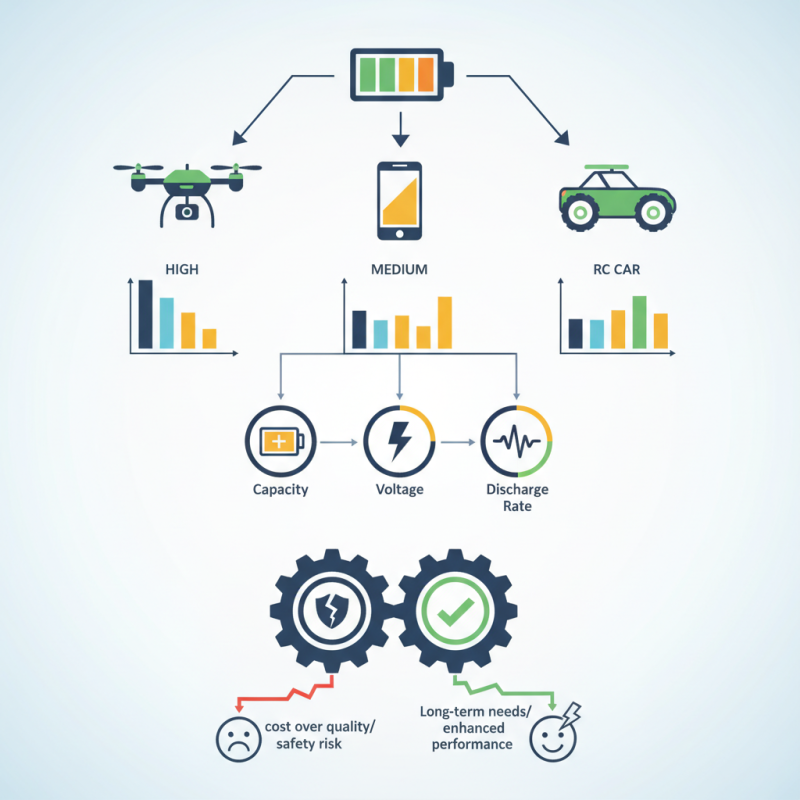
Many users may overlook important details. Battery capacity, voltage, and discharge rate all play pivotal roles. For instance, a high discharge rate might be necessary for drones but could be excessive for smaller devices. Each application demands a tailored approach to battery selection.
Occasionally, consumers prioritize cost over quality. This can lead to unsatisfactory performance and safety risks. It’s vital to reflect on long-term needs versus immediate savings. A well-chosen Lithium Polymer Battery not only enhances device functionality but also ensures safety.
Understanding Lithium Polymer Batteries: Key Features and Benefits
When selecting a lithium polymer (LiPo) battery, understanding its key features is crucial. These batteries are lightweight, making them ideal for drones and RC vehicles. Their energy density is impressive, often reaching 150-200 Wh/kg. This means a smaller battery can deliver more power compared to traditional options. However, this high energy density has its limitations. Users must be mindful of proper charging practices and discharge rates to ensure longevity.
LiPo batteries also offer flexible form factors. They can be shaped into various sizes, fitting perfectly in compact devices. Their discharge rates can exceed 60C, which is significant for high-performance applications. However, this raises safety concerns. A study indicated that improper handling can lead to swelling or even thermal runaway. Therefore, thorough research is vital before purchase. Factors such as capacity, voltage, and intended use must be aligned for optimal performance.
Another notable benefit is their cycle life. While typical LiPo batteries last around 300-500 cycles, conditions like temperature and charge rates can affect this. Yet, users often overlook these factors, leading to premature failure. It's not just about power; customers need to consider maintenance and usage habits. Balancing these aspects will enhance overall satisfaction with your selection of lithium polymer batteries.
Identifying Your Power Needs: Capacity and Discharge Rates Explained
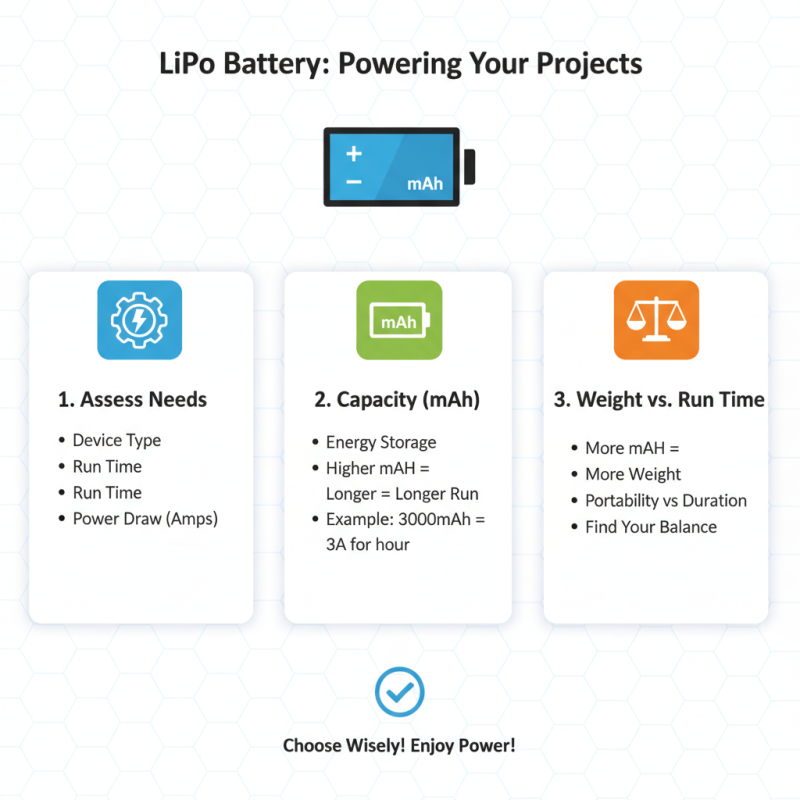
Choosing the right lithium polymer battery starts with understanding your energy needs. Power capacity is a vital factor. It’s measured in milliamp-hours (mAh). For example, a 3000 mAh battery can deliver 3000 milliamps for one hour. Yet, does it meet your requirements? The industry suggests assessing usage patterns. Higher capacity means longer run times, but it may also add weight.
Discharge rates are equally important. They determine how quickly a battery can deliver power. Measured in C-ratings, a battery with a 20C rating can discharge its capacity in three minutes. This is crucial for high-demand devices. Devices needing bursts of power, like drones, require higher discharge rates. Many experts recommend a balance. Combining capacity with the correct discharge rate can optimize performance.
Consider real-world applications for clarity. A racing drone often needs quick bursts of energy. Using a high-discharge battery is essential here. In contrast, low-drain devices can manage with lesser specs. Identifying specific use cases will help limit options. However, this process can feel overwhelming. It’s essential to weigh both capacity and discharge rates for effective energy management.
Evaluating Size and Weight: Selecting the Right Battery Form Factor
When choosing a lithium polymer battery, size and weight are crucial factors. A compact battery may fit perfectly in your device, while a larger one could hinder portability. A lighter battery makes carrying gadgets easier. But sometimes, smaller and lighter batteries may lack the capacity needed for long usage.
Consider the shape of the battery as well. Some devices require specific dimensions. A square battery might work better for one gadget, while a rectangular shape suits another. Always measure your available space before purchasing. A battery that is just slightly too large can lead to issues.
Additionally, weight affects performance. Heavier batteries may provide more power but can make devices clunky. Imagine a drone struggling to lift off due to extra weight. Reflect on what matters most to you: performance or portability? Balancing these aspects isn't always easy. Choose wisely based on your needs.
Safety Considerations: Managing Risks and Ensuring Reliability
When selecting a lithium polymer battery, safety is paramount. Lithium polymer batteries can pose risks, including overheating and swelling. According to industry reports, 30% of battery failures are linked to poor thermal management. Effective heat dissipation is crucial for reliability. A well-designed battery casing can help mitigate these risks.
Users often overlook the charging cycles of lithium polymer batteries. Data indicates that improper charging can reduce lifespan by up to 40%. It's vital to use a compatible charger. Additionally, constant monitoring during charging is essential. This prevents overcharging, which is a common hazard. Many users tend to underestimate the importance of proper storage. Storing batteries at extreme temperatures can lead to performance issues and safety risks.
Finally, consider the quality of materials used in manufacturing the batteries. Cheaper components can compromise safety. An alarming statistic shows that substandard batteries account for nearly 20% of reported incidents. Prioritizing reliable sources and certifications ensures a safer experience. However, even high-quality products are not immune to failure. Continuous learning and awareness can help users make better-informed decisions.
Choosing the Right Lithium Polymer Battery: Key Specifications
This chart illustrates important specifications of Lithium Polymer batteries that are crucial for ensuring safety and reliability. The parameters include Capacity (mAh), Discharge Rate (C), Weight (g), Cycle Life, and Max Voltage (V). These factors should be considered when selecting the appropriate battery for your specific needs.
Comparing Brands and Prices: Finding the Best Value for Your Budget
When looking for the right lithium polymer battery, price and brand can greatly affect your decision. Many consumers get caught up in brand loyalty. It's easy to forget that lesser-known brands can offer excellent quality. These brands may provide competitive performance at a significantly lower price. Consider checking user reviews and performance metrics before making a choice.
Comparing prices is essential. Some vendors may inflate prices during sales. Researching multiple sources can reveal the best deals. Remember to assess the battery's capacity and discharge rates. This information can help you gauge whether a battery is truly worth its asking price.
While costly options can promise higher reliability, they may not always deliver. Ensure that the benefits align with your specific needs. Take the time to weigh options carefully. Rushing into a decision can lead to spending more without a substantial return on investment. Balance quality with affordability for the most value.
How to Choose the Right Lithium Polymer Battery for Your Needs? - Comparing Brands and Prices: Finding the Best Value for Your Budget
| Battery Type |
Voltage (V) |
Capacity (mAh) |
Discharge Rate (C) |
Price (USD) |
| Lithium Polymer A |
3.7 |
3000 |
25 |
30.00 |
| Lithium Polymer B |
3.7 |
5000 |
20 |
45.00 |
| Lithium Polymer C |
3.7 |
4000 |
15 |
35.00 |
| Lithium Polymer D |
3.7 |
2500 |
30 |
25.00 |