
How to Choose Oil Drilling Equipment in 2026?

Choosing Oil Drilling equipment in 2026 is not just a matter of comparing horsepower or purchase prices. The right choice must fit the well plan, geology, operating environment, crew capability, and maintenance support. A rig package that looks efficient on paper may struggle when parts are distant or conditions change. Fit matters.

Market signals make careful selection more important. The International Energy Agency’s Oil 2024 report projects global oil demand reaching 105.6 million barrels per day by 2030, while production capacity could approach 114 million. Its World Energy Investment 2024 report estimates upstream oil and gas investment at about $570 billion in 2024, up 7% from 2023. These figures describe a shifting market, not a guarantee of demand for any one project. Budgets still need field-level evidence.

Power strategy also deserves attention. IEA Executive Director Fatih Birol said, “The age of electricity is here.” For drilling teams, that makes power efficiency, electrification options, and backup capacity worth comparing alongside pressure ratings and drilling speed. Then check service. Ask suppliers for documented uptime, parts lead times, safety features, and support references from comparable wells. Not every choice is obvious. A spreadsheet can miss the noise of a failing pump, the delay of a replacement seal, or the learning curve of a new control system. That is why this guide weighs specifications against operating experience—and leaves room to question assumptions before a purchase is made.
How to Choose Oil Drilling Equipment in 2026?

Define the Drilling Project and Its Operating Requirements

Before comparing rigs or pumps, define the well’s purpose, target depth, trajectory, and expected production interval. Record formation pressure, temperature, rock strength, and known fluid hazards. These inputs shape the casing plan, mud system, and equipment ratings. The IEA’s Oil 2024 report projected global oil demand could reach nearly 106 million barrels per day by 2030. That is market context, not a design target for an individual well.

Translate the plan into measurable operating requirements. Specify maximum hook load, rotary torque, pump pressure and flow, hole sizes, and expected circulation time. Check whether the site can support the rig’s footprint, power demand, water supply, and transport loads. Confirm that solids-control equipment can handle the expected cuttings volume. A mismatch may cause costly delays. A tidy project file can still overlook a muddy access road or limited crane reach; field checks matter.

Tips: Ask the drilling and maintenance teams to review the same equipment schedule. Compare planned operating limits with peak—not average—conditions, and leave a documented margin for uncertainty. Note assumptions that still need verification. Small details matter. Keep the requirements specific enough for suppliers to quote comparable equipment, but revisit them when surveys or pressure data change.

How to Choose Oil Drilling Equipment in 2026? — Define the Drilling Project and Its Operating Requirements

Typical offshore rig water-depth capabilities (feet). Use the project’s water depth as an initial screening requirement, then verify well depth, loads, environmental conditions, and equipment specifications before selection.

Indicative industry ranges only; capabilities vary by rig design and operating conditions. A rig’s water-depth rating is not the same as its drilling-depth capability.

Identify the Equipment Needed for Each Drilling Phase

How to Choose Oil Drilling Equipment in 2026?

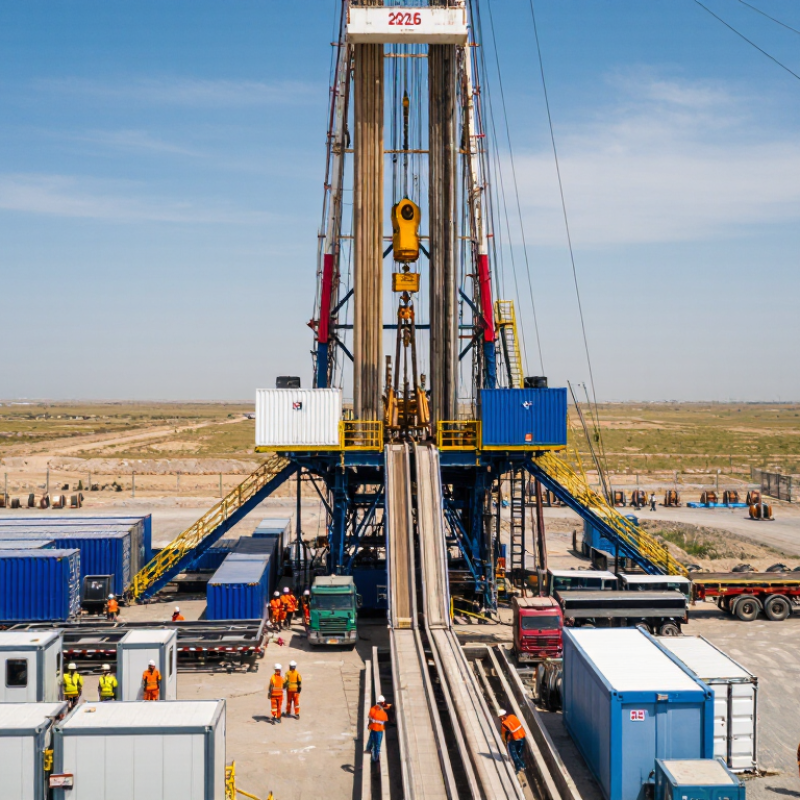
Equipment selection starts with the planned well, not a catalog. Depth, expected rock formations, pressure, temperature, and site access all affect the choice. A rig suitable for a shallow land well may not fit a remote or deeper project. Review the well program with drilling, fluids, and safety specialists before committing to major equipment. Small planning gaps can become expensive delays.

During site preparation, assess the ground, access roads, power supply, and space for storage. The drilling phase typically needs a rig, hoisting system, drill pipe, and bits matched to the formation. Circulation equipment moves drilling fluid through the well and helps carry cuttings back to the surface. Keep spare critical components available. Downtime adds up. Selection is not always obvious; a bit that performs well in one formation may wear quickly in another.

As the well advances, casing and cementing equipment support the borehole and help isolate formations. Well-control equipment must be selected for the planned operating conditions and checked under an established inspection schedule. Logging tools can then help evaluate the formations encountered. Consider transport limits, maintenance skills, and replacement-part access for every phase. A technically capable system may still be a poor fit if crews cannot maintain it reliably on site.

How to Choose Oil Drilling Equipment in 2026? - Identify the Equipment Needed for Each Drilling Phase
Drilling Phase Typical Equipment Primary Purpose Key Selection Considerations
Well planning and site preparation Surveying equipment, access and foundation equipment, conductor-handling tools, and rig-move equipment Prepare the site, confirm the planned well location, and establish a stable foundation and working area. Consider access, ground conditions, rig footprint and load requirements, environmental constraints, and the approved well plan.
Rig-up and initial spud Drilling rig, mast or derrick, drawworks, hoisting system, rotary drive or top drive, drill pipe, and basic mud-circulation equipment Handle the drill string, rotate the bit, and circulate drilling fluid as the well is started. Match the rig’s rated hook load, depth capability, and circulation capacity to the planned well design and expected operating conditions.
Conductor and surface-hole drilling Conductor or surface casing, suitable drill bits, casing-running tools, mud pumps, and a diverter system where required Drill the upper hole sections and install casing to support shallow formations and provide a foundation for subsequent well-control equipment. Choose hole and casing sizes from the casing program; account for shallow geology, groundwater protection requirements, and local regulations.
Intermediate-hole drilling Drill collars, drill pipe, drill bits, bottom-hole assembly, directional tools if planned, mud pumps, and solids-control equipment Drill through deeper formations while maintaining hole stability and, where necessary, controlling formation pressures. Check the anticipated pressure and temperature environment, formation characteristics, hole trajectory, fluid properties, and compatibility of tools with the well plan.
Directional or horizontal section, if required Directional-drilling bottom-hole assembly, measurement-while-drilling tools, logging-while-drilling tools when specified, and steerable motors or rotary-steerable equipment Measure wellbore position and guide the bit along the planned trajectory. Base the tool selection on the required trajectory, formation objectives, hole size, telemetry needs, tool operating limits, and data requirements.
Production or reservoir section Reservoir-appropriate drill bits, drill string and bottom-hole assembly, drilling-fluid system, downhole measurement tools, and well-control equipment Drill the final planned hole section while managing formation exposure and maintaining well control. Consider reservoir sensitivity, expected formation pressures, fluid-loss and hole-cleaning requirements, temperature, and the planned casing or completion design.
Casing running and cementing Casing, casing-running tools, centralizers, cementing unit, mixing equipment, cementing lines, and cement plugs Run casing and place cement in the annulus to support the wellbore and isolate formations as designed. Confirm casing dimensions and ratings against the casing program; select cementing equipment for the planned slurry volumes, pressures, and job procedure.
Well-control monitoring throughout drilling Blowout preventer (BOP) stack as specified, choke manifold, accumulator system, mud-gas separator where required, and pit-volume and flow-monitoring equipment Provide equipment for detecting and responding to well-control events in accordance with the approved well-control plan. Verify pressure ratings, configuration, testing and maintenance status, required certification, and compliance with applicable regulations and well design.
Cuttings handling and drilling-fluid management throughout drilling Shale shakers, desanders, desilters, centrifuges where needed, mud tanks, mixing equipment, and fluid-transfer pumps Separate drilled solids from drilling fluid and support fluid conditioning and reuse. Size and configure the solids-control system for the planned circulation rate, fluid type, expected solids load, and site waste-management requirements.
Logging and handover after drilling Wireline logging tools or logging-while-drilling data, wellbore-cleaning tools, and equipment specified for the next operation Acquire formation or wellbore information and prepare the well for the next planned operation. Select services and tools based on the data objectives, well conditions, access requirements, and the approved completion or suspension program.

Compare Capacity, Compatibility, and Technology Options

When choosing oil drilling equipment in 2026, compare capacity against the actual well plan, not a brochure’s best-case figure. Check rated depth, hook load, torque, and circulation capacity together. A rig may reach the target depth yet struggle with the planned pipe weight or drilling fluid. Small mismatch, big delay.

Compatibility matters across the entire setup. Confirm that the rig, top drive, pumps, control system, and available power supply can work together. Check connection sizes, operating pressures, and the dimensions of tools already used on site. In field reviews, a simple interface mismatch can cost more time than a modest difference in rated capacity. A spreadsheet can miss that detail.

Technology options should solve a specific operating problem. Sensors can track vibration, pressure, and equipment temperature, while automated controls may reduce repetitive manual adjustments. Ask how data is stored, who can access it, and whether technicians can maintain the system locally. I would not choose automation just because it looks modern; training and repair access matter too. Test the workflow under realistic conditions, including poor connectivity. The perfect setup rarely exists. A trial may reveal that one feature adds complexity without improving day-to-day work.

Verify Safety, Environmental, and Regulatory Requirements

Before comparing drilling capacity, confirm that the equipment’s safety case matches the well plan and operating site. Check documented pressure ratings, blowout-preventer test records, emergency shutdown functions, and maintenance history. Ask how alarms and shutdowns behave during a power loss. Small details matter. A certificate alone does not prove that equipment suits the actual pressure, temperature, and fluid conditions.

Environmental controls deserve the same scrutiny. The IEA’s Global Methane Tracker 2024 estimated that fossil fuel operations emitted about 120 million tonnes of methane in 2023. The World Bank’s 2024 Global Gas Flaring Tracker Report recorded 148 billion cubic metres of flaring worldwide that year. These figures make leak detection, closed handling systems, and flare-control capacity practical procurement checks, not paperwork. Verify monitoring methods and service intervals. Also confirm permits, inspection duties, and emissions limits with the relevant regulator before purchase; requirements vary by location. Compare incident and near-miss records for similar work scopes, rather than relying only on broad company averages. I would still question any checklist that looks complete but cannot be tied to the specific rig configuration.

Assess Total Cost, Supplier Support, and Equipment Readiness

How to Choose Oil Drilling Equipment in 2026?

Assessing total cost means looking beyond the purchase price. Include freight, installation, energy use, routine maintenance, spare parts, and crew training. A low bid can become costly when a critical seal or pump component takes weeks to arrive. Downtime is expensive. The International Energy Agency’s World Energy Investment 2024 estimated upstream oil and gas investment at about $570 billion for that year, highlighting the scale of capital competing for reliable performance. Treat that figure as context, not a guarantee of future demand.

Supplier support deserves measurable checks. Ask for typical response times, regional parts availability, technician coverage, and clear warranty exclusions. Request evidence from comparable operating conditions, not only polished case studies. The IEA’s Oil 2024 report projected global oil-demand growth of about 960,000 barrels per day in 2024; forecasts change, so equipment plans should allow for shifts in utilization. A detailed service agreement helps, but it cannot replace a realistic check of local support.

Confirm readiness before equipment reaches the rig. Review inspection records, pressure-test results, maintenance history, and commissioning requirements. Verify that consumables and critical spares match the planned operating environment. Have the supplier demonstrate the controls and shutdown functions with the crew present. Paperwork can look complete while a small interface problem remains. I would still leave time for a final field review; schedules rarely expose every weak point.


This website uses cookies. By continuing to browse this site you are agreeing to our use of cookies. Please review our Privacy Policy for more information.