How to Choose a Reliable Blow Maker Machine?
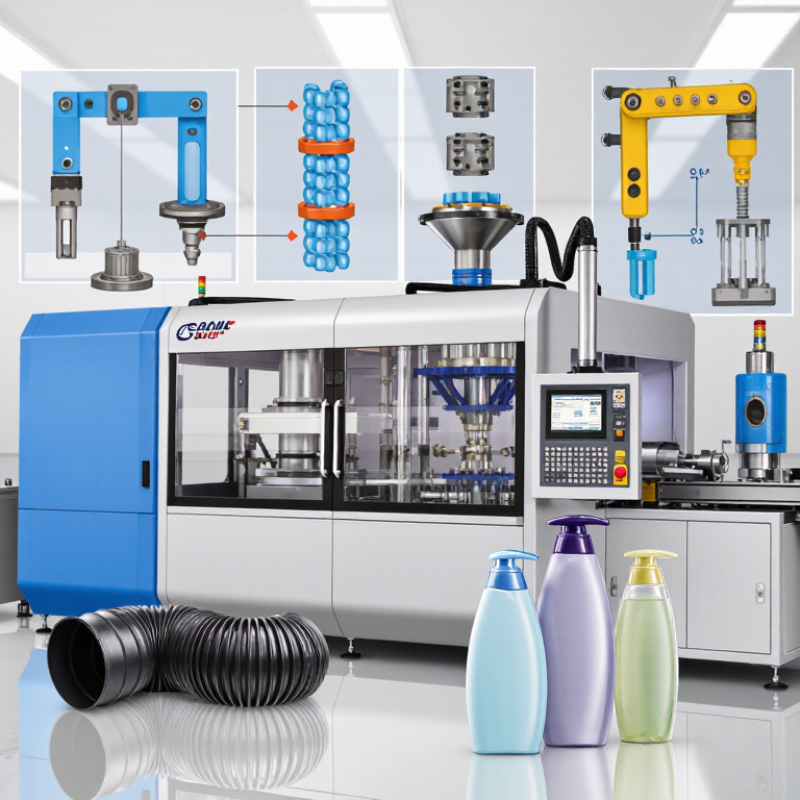
Choosing a reliable Blow Maker begins with the product, not the machine’s advertising claims. A container for shampoo needs different control from a thick automotive duct. Wall thickness, resin type, mold size, output targets, and permitted tolerances should guide every decision. High speed looks impressive. It can also create unstable parison control, uneven walls, and expensive scrap.
Dominick V. Rosato, a respected plastics author and processing specialist, offered a practical principle: “The best machine is matched to the product, not simply the highest-output machine.” That idea remains useful when comparing modern equipment. Check the extrusion system, clamp strength, mold-changing method, cooling design, and control platform. Ask for measured cycle data from a similar application. Sales brochures rarely show the difficult details. They may not show rejected bottles, maintenance delays, or energy consumption during long production runs.
A dependable Blow Maker should also have accessible service support. Spare screws, heaters, sensors, and seals must be available within a reasonable time. Speak with existing users, not only the supplier. Their workshop experience may reveal vibration, software limitations, or cleaning problems. Still, one reference cannot prove everything. Factory conditions differ.
I would inspect a running machine personally. Listen for abnormal noise. Watch the parison. Examine finished parts under consistent lighting. Small defects matter. My own judgment may be incomplete, especially when new automation is involved. Therefore, request a documented trial, clear acceptance criteria, training, warranty coverage, and lifecycle cost estimates. Reliability is not a single feature. It is consistent performance, practical support, and honest evidence over time.
Define Blow Molding Types: PET ISBM, HDPE, and 1–10 L Bottle Ranges
How to Choose a Reliable Blow Maker Machine?
Choosing a reliable blow maker machine starts with identifying the molding process, not comparing machine prices. PET ISBM equipment suits clear, lightweight bottles with precise neck finishes and strong stretch orientation. It usually forms a preform before stretching and blowing it inside a mold. This process demands stable heating, accurate stretch-rod movement, and consistent cooling. Small temperature changes can create cloudy areas or uneven walls.
HDPE bottles commonly use extrusion blow molding. This method works well for opaque containers, wider openings, handles, and practical shapes. Ask how accurately the machine controls parison thickness. Poor control may cause heavy bottoms, thin shoulders, or unstable containers. I have found that sample testing reveals more than a polished specification sheet. Request bottles made with your actual resin, mold, and target weight.
For 1–10 L bottles, capacity changes the selection significantly. A 1 L container may need fast cycling and tight weight control. A 10 L bottle requires stronger clamping, larger extrusion capacity, and reliable handle formation when needed. Check mold dimensions, maximum bottle height, neck range, air pressure, cooling performance, and hourly output. Confirm whether the machine can maintain quality across the full size range. It is easy to trust a stated output figure. Real production conditions can differ. Review test records, maintenance access, spare-part availability, operator training, and service response times. A machine that runs quickly but requires frequent adjustment is not truly reliable.
Evaluate Air Systems: 25–40 Bar Pressure and Compressed-Air Efficiency
Choosing a reliable blow maker machine starts with its air system, not its advertised cycle speed. For PET stretch-blow applications, 25–40 bar pressure is common, but pressure alone proves little. The machine must hold stable pressure during rapid preform stretching and bottle forming. A sharp pressure drop can create thin walls, uneven bases, or rejected necks.
Check the high-pressure compressor, air receiver, valves, and piping as one system. The U.S. Department of Energy reports that compressed-air leaks can waste 20–30% of compressor output in poorly maintained facilities. That loss becomes expensive at 30 or 40 bar. Ask for measured flow, recovery time, and power consumption under production load. Do not rely only on factory test conditions. Real production is less tidy.
Air quality also matters. Moisture and oil can damage valves and affect bottle appearance. The Compressed Air and Gas Institute recommends checking pressure, flow, filtration, and dew point together when evaluating compressed-air performance. I would inspect gauges at the machine inlet, not just the compressor outlet. My earlier checklist focused too much on maximum pressure. That was incomplete. A dependable machine should deliver stable air with reasonable energy use, quiet operation, and accessible maintenance points. Shorter piping can help. So can automatic leak detection. Ask for test records, calibration dates, and actual kWh data per production cycle before making a purchase.
How to Choose a Reliable Blow Maker Machine?
Evaluate the air system by comparing operating pressure with the theoretical compression-work demand. A 25–40 bar range is common for PET blow molding preform applications, while higher pressure generally increases compressed-air energy requirements.
The blue bars show gauge pressure. The orange line shows the relative theoretical compression-work index, calculated from the logarithmic relationship between absolute pressure and atmospheric pressure and normalized to 100 at 25 bar. Actual energy consumption also depends on compressor efficiency, leakage, cooling, air treatment, and machine-specific air demand.
Assess Total Cost: Energy Use, Maintenance, Mold Life, and 5–10-Year ROI
A reliable blow molding machine should be judged by its full ownership cost, not its purchase price. The IEA reported that industry consumed about 37% of global final energy in 2022. Energy efficiency deserves careful attention.
Use EUROMAP 46.1 to compare machine energy measurements consistently. Record kWh per kilogram, heating time, cooling demand, and rejected bottles. The U.S. Department of Energy reports that compressed-air leaks can waste 20–30% of compressor output. A small leak can become an expensive daily habit. Ask for measured data under your actual production conditions, not only laboratory figures.
Maintenance costs need equal weight. Check service intervals, spare-part prices, technician response time, and software support. Mold life depends on resin, clamping accuracy, cooling channels, and cleaning discipline. Request documented mold-cycle records, then calculate replacement cost across five and ten years. Include lost production during repairs. That number is often forgotten.
Build a discounted cash-flow model with electricity, labor, maintenance, molds, downtime, and resale value. Test electricity prices at low, expected, and high levels. The model will be imperfect. That is acceptable. A sensitivity test shows whether the investment survives an uncomfortable assumption, such as 15% higher energy use. A machine with a higher purchase price may deliver stronger five-to-ten-year ROI, but only when its performance is verified on your line.