
Bus Bar Copper is a key component in electrical distribution, where dependable current flow and consistent dimensions matter. Inside a switchboard, copper bars connect equipment across a compact space. Small deviations matter. An uneven edge, rough surface, or poorly controlled bend can complicate installation and inspection. Buyers comparing manufacturers in China should look beyond product photos and headline prices. Ask how suppliers control copper quality, thickness, width, flatness, machining, and surface finishing. Even a well-made bar can be wrong for a specific application.
China has a broad base of copper processors and bus bar suppliers, but capabilities vary. This guide introduces manufacturers and explains practical points for comparing them. It considers product range, production equipment, quality checks, customization, communication, and delivery planning. A supplier’s stated capacity is useful, but it should be supported by current specifications, sample measurements, and clear inspection records. Names alone are not enough. Verify relevant certifications and test documentation directly, and confirm that they match the product and order under review. A polished catalog is not proof of consistent production. That deserves a closer look. The right choice depends on the project’s current requirements, not just a low quotation. Careful questions can reveal where a supplier is strong and where details remain unclear.
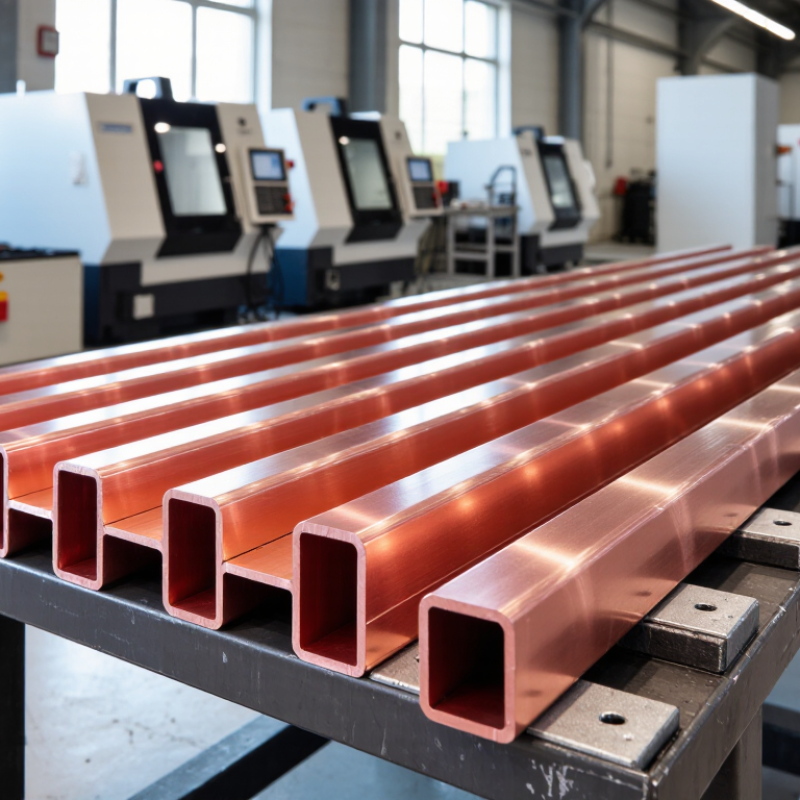
Copper busbars are rigid, flat conductors that distribute electrical power between incoming supplies and outgoing circuits. Inside a switchboard, a copper bar may connect a breaker to several feeders, replacing bundles of thick cables. Its broad surface helps dissipate heat, while copper’s high electrical conductivity supports compact, low-resistance connections. Small details matter: joint pressure, clean contact surfaces, and suitable insulation all affect performance.
Busbars are common in industrial control panels, commercial buildings, substations, battery systems, and electric-vehicle charging equipment. The U.S. Department of Energy’s 2024 United States Data Center Energy Usage Report estimates that U.S. data centers used 176 terawatt-hours of electricity in 2023, about 4.4% of national use. In facilities with dense electrical loads, busbars can distribute power through switchgear and equipment rows. The International Energy Agency’s Global EV Outlook 2024 reports that public charging points grew by about 40% in 2023, expanding the need for robust electrical distribution. Not every installation suits a busbar. Available space, current demand, heat, and access for inspection still shape the design. A tidy layout can hide a poor connection.
Annealed copper is defined as 100% IACS conductivity at 20°C; electrical-grade aluminum is approximately 61% IACS. Copper busbars are used to distribute power in switchgear, panelboards, transformers, battery systems, and data centers. Actual busbar current capacity depends on factors such as dimensions, temperature rise, enclosure, and installation conditions.
China’s Copper Busbar Manufacturing Industry is supported by a large domestic copper-processing base. The International Copper Study Group’s 2024 Factbook puts China’s refined copper production at about 13 million tonnes in 2023. That supply feeds manufacturers producing flat bars for switchgear, transformers, battery systems, and industrial equipment. Yet copper output alone does not measure busbar quality. Thickness consistency, edge finish, conductivity, and hole placement all matter on the factory floor.
Tip: Ask suppliers for material certificates, dimensional tolerances, and conductivity test results. Compare samples under the same specifications; a polished surface does not prove electrical performance.
Manufacturing capacity varies, even within a mature supply chain. Some producers focus on standard sizes, while others handle custom widths, bends, and punched holes. Clear drawings reduce rework, especially when a busbar must fit tightly inside a crowded electrical cabinet. Buyers should also check how suppliers manage oxidation protection and packaging during transport. A small flaw can complicate installation. And production scale is not a substitute for traceable inspection records.
China’s leading copper busbar manufacturers and suppliers serve switchgear, power distribution, and industrial equipment projects. Strong suppliers can explain how they control copper sourcing, cutting, bending, and surface finishing. Ask for material certificates and conductivity or dimensional inspection records. Details matter. A sample should match the specified thickness, width, hole positions, and edge finish. Even a small burr can complicate assembly.
When comparing suppliers, check whether their equipment suits your required tolerances and order volume. Discuss drawings, packaging, lead times, and inspection steps before approving production. Ask for evidence. Clear answers are more useful than broad claims about capacity. For plated busbars, confirm the coating type and how coverage is checked, especially around punched holes and bends. Request a pre-production sample for complex shapes. Not every supplier will flag a design issue early, so invite technical feedback and review it carefully. A dependable partnership grows from traceable specifications, realistic schedules, and consistent communication.
Copper busbar quality begins with controlled copper stock, accurate forming, and clean finishing. Production commonly includes rolling or extrusion, cutting, punching, bending, deburring, and optional tin plating. Each step can affect fit and electrical contact. ASTM B187 specifies requirements for copper bar, rod, and shapes, while manufacturers should document material grade and dimensions for each batch.
Conductivity needs measurement, not guesswork. ASTM B193 describes resistivity testing, and the International Annealed Copper Standard sets 100% IACS at about 58 MS/m at 20°C. This is a reference value, not a pass limit for every copper grade. Quality checks should also cover thickness, flatness, hole position, surface defects, and coating thickness. IEC 61439 addresses assembled low-voltage switchgear, not the chemistry of raw copper. That distinction is easy to miss.
Tips: Ask suppliers for traceable mill certificates and test records. Check a punched edge for burrs; a small defect can weaken a bolted connection. Sample testing helps, but it does not replace consistent process control.
Overview of common copper busbar materials, manufacturing steps, inspection points, and relevant standards. Product requirements and acceptance limits should be agreed in the purchase specification.
| Category | Production Process or Quality Dimension | Typical Practice or Requirement | Quality Control and Relevant Standard |
|---|---|---|---|
| Material selection | Electrical-grade copper | Commonly specified copper includes C11000 (ETP copper) or another grade selected for the required conductivity, fabrication method, and service environment. | Verify grade and condition against the purchase specification and material certificate. ASTM B187 covers copper bar, rod, and shapes for electrical purposes. |
| Incoming inspection | Material identity and traceability | Check the material certificate, dimensions, surface condition, and identification before production. Maintain lot traceability through processing. | Compare documentation and inspection records with the agreed grade, product form, and order requirements. |
| Blank preparation | Cutting and edge preparation | Cut stock to the required length and remove burrs or sharp edges that could affect assembly, safety, or later processing. | Inspect cut length, end condition, and visible defects against the drawing and customer specification. |
| Forming | Rolling, drawing, or extrusion | Use a suitable forming route to produce the specified flat, round, or shaped copper section. The route depends on product geometry and production scale. | Monitor section dimensions and surface condition during production; confirm the finished profile against the approved drawing. |
| Thermal processing | Annealing, when required | Annealing may be used to achieve a specified temper or improve formability. Temperature and time depend on copper grade, section, and required properties. | Record the approved process parameters and verify mechanical properties when they are included in the product specification. |
| Machining | Drilling, punching, and slotting | Produce holes and slots to the drawing, with suitable spacing and edge distances for the intended connection design. | Check hole diameter, location, spacing, and burr condition using calibrated measuring equipment and the approved drawing. |
| Finishing | Deburring and surface preparation | Remove burrs and contaminants. Optional plating or coating may be specified to support connection or environmental requirements. | Inspect finish coverage and appearance where a coating is specified; confirm coating requirements in the purchase specification. |
| Dimensional inspection | Thickness, width, length, flatness, and hole position | Acceptance tolerances vary with product size, manufacturing route, and application; they are not universal across all busbars. | Measure against the drawing and agreed tolerance schedule. Record inspection results by production lot. |
| Electrical testing | Electrical resistivity or conductivity | For reference, 100% IACS conductivity corresponds to a resistivity of approximately 1.7241 μΩ·cm at 20°C. | ASTM B193 describes test methods for resistivity of electrical conductor materials. Compare results with the material grade and order requirements. |
| Mechanical testing | Tensile properties and bend performance | Required values depend on copper grade, temper, thickness, and application. Testing should follow the specified sampling plan. | Use the applicable product specification and agreed test method; report results with the material or production lot identification. |
| Surface inspection | Cracks, inclusions, scratches, and corrosion | Inspect for defects that could impair electrical contact, mechanical strength, or safe installation. | Apply the visual acceptance criteria agreed for the product. Document any rejected or repaired material. |
| Standards and application | Product and assembly requirements | Product standards address the copper material; the requirements for a finished electrical assembly depend on its intended use and design. | ASTM B187 is a copper product standard; IEC 61439 applies to low-voltage switchgear and controlgear assemblies, not as a standalone copper busbar material specification. |
| Final release | Inspection records and shipment documentation | Release product only after required checks are complete and nonconformities have been resolved or dispositioned. | Provide inspection records, material certificates, and test reports when required by the purchase order or quality agreement. |
Note: The stated practices are general industry guidance, not a substitute for an approved drawing, applicable code, or contractual specification. Confirm grade, temper, tolerances, test methods, and acceptance criteria for each order.
Selecting a Chinese copper busbar supplier starts with measurable evidence, not a polished catalogue. The International Copper Study Group’s October 2024 forecast put global refined copper usage at about 26.2 million tonnes for 2024. That scale makes material traceability and consistent processing important. Request mill certificates showing copper grade and chemistry, plus conductivity results tied to the supplied batch. Ask how the factory controls thickness, width, flatness, and edge quality. Details matter. A sample should be measured at several points, not just photographed.
Check whether the supplier can provide test records for plating thickness, bend performance, and electrical resistance, where relevant to your design. Confirm the test method and the instrument’s calibration status. For busbars used inside low-voltage assemblies, ask how the product supports the applicable IEC 61439 design verification; a generic certificate is not enough. Ask for production capacity, lead times, defect handling, and a recent inspection record. Ask for proof. A third-party audit can help, but it cannot replace batch-level checks. I would not treat one polished sample as proof; consistency across production runs matters more, and that is easy to overlook. Request a trial order and compare its measured dimensions and finish against the agreed specification before scaling up.
This website uses cookies. By continuing to browse this site you are agreeing to our use of cookies. Please review our Privacy Policy for more information.
