
Choosing a Wms Warehouse System is rarely a simple software comparison. Global buyers must examine receiving, put-away, picking, packing, replenishment, and inventory visibility. Each function affects daily costs and customer satisfaction. A delayed stock update can leave an online shelf showing products that are already gone.
Warehouse management consultant Dave Piasecki offers a practical warning: “A WMS is only as good as the processes and data behind it.” That principle guides this review. Powerful dashboards cannot repair inaccurate item dimensions, weak barcode discipline, or poorly trained operators. Technology matters. Operational readiness matters more.
This guide evaluates ten leading WMS warehouse systems for international purchasing teams. It considers scalability, cloud deployment, integration, automation support, reporting, implementation effort, and total ownership cost. It also looks at regional usability, including multilingual interfaces, local partner networks, and support across time zones. Those details become visible at 6 a.m., when a scanner fails and outbound orders are waiting.
No platform fits every warehouse. Some systems suit complex, multi-site operations. Others work better for growing companies with smaller budgets. A polished demo can hide difficult configuration work. That deserves attention.
The rankings should therefore support judgment, not replace it. Buyers should test real workflows using their own products, locations, and order patterns. A system that performs well in a presentation may struggle with mixed cartons, lot tracking, or frequent returns. This introduction sets the context for comparing the ten systems with evidence, practical criteria, and a measured view of their strengths and limitations.
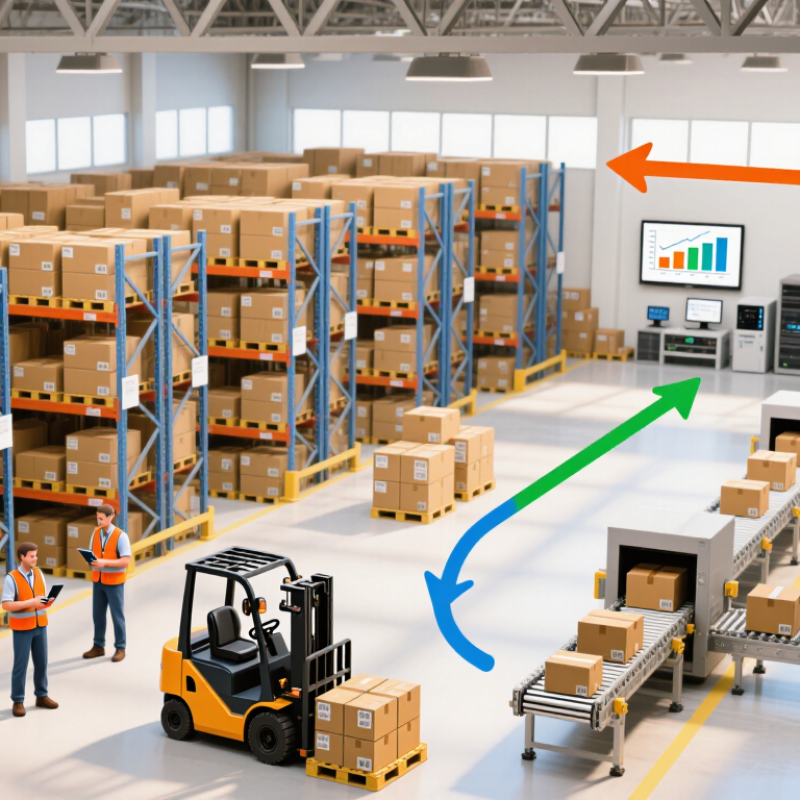
10 Best WMS Warehouse Systems for Global Buyers
WMS fundamentals begin with inventory accuracy, location control, and dependable task execution. A warehouse management system should connect receiving, put-away, picking, packing, and cycle counting. It must also support multiple facilities, currencies, languages, and time zones. In real operations, small data errors become visible quickly. One incorrect carton count can delay a container and trigger expensive manual checks. The system should provide traceable records, role-based access, and clear exception alerts.
The 2024 MHI Annual Industry Report found that 55% of supply chain leaders planned to increase technology and innovation investment. This signals stronger demand for measurable warehouse performance. Useful metrics include inventory accuracy, order cycle time, picking productivity, dock-to-stock time, and perfect-order rate. However, automation alone will not repair weak processes. A poorly designed workflow can simply create faster mistakes. Buyers should test a WMS with real product variations, returns, damaged cartons, and temporary stock locations. These scenarios reveal more than a polished demonstration.
Tips: Start with one warehouse process. Map every handoff. Ask users to test the system on handheld devices and desktop screens. Check whether reports explain the problem, not only display numbers. Leave room for imperfect data; suppliers and warehouse teams will make occasional errors. A practical pilot may expose uncomfortable gaps, but ignoring them costs more later.
Choosing among the 10 best WMS warehouse systems requires more than comparing feature lists. International buyers should test daily workflows with real data. Create sample orders containing multiple currencies, languages, units, and time zones. Test the details.
A strong platform should support receiving, put-away, picking, packing, replenishment, and returns without unnecessary workarounds. Its interface must remain clear for temporary staff and multilingual teams. Check barcode accuracy under poor lighting and unstable network conditions. Errors become expensive. Review integration options for enterprise resource planning, transport systems, marketplaces, and local carriers. Reliable APIs, event logs, and documented data formats reduce integration risk. Security deserves equal attention, including role-based access, encryption, audit trails, backup procedures, and regional data controls.
Scalability should be measured through a realistic peak-season simulation, not a sales demonstration. Ask how the system handles 300 orders per hour, delayed carrier updates, and stock discrepancies across several sites. Review service-level commitments, support hours, training resources, and implementation ownership. Total cost should include configuration, hardware, upgrades, connectors, and internal labor. A perfect scorecard is unrealistic. Early evaluations often overvalue impressive dashboards and undervalue exception handling. Recheck every claim with a reference call, a controlled pilot, and written acceptance criteria. A system that looks efficient on paper may still slow workers at the packing bench.
The ten leading WMS systems for global buyers are not judged by dashboards alone. They must handle multilingual teams, multiple time zones, varied warehouse layouts, and changing order volumes. In practical evaluations, buyers should examine receiving, put-away, picking, packing, cycle counting, and returns. A reliable system records each movement with user, time, and location details. That audit trail supports clearer decisions and reduces costly disputes. Integration also matters. The WMS should exchange accurate data with enterprise platforms, transport tools, scanners, and automation equipment.
Tips: Request a live workflow test. Ask the vendor to process a mixed pallet, a partial shipment, and a return. Watch how quickly exceptions appear and how easily workers correct them. Check offline functions for areas with weak connectivity. Small delays become expensive during peak seasons.
Cost is only one part of the decision. Global buyers should compare implementation effort, training quality, support coverage, security controls, and local data requirements. A cloud system may scale faster, but connectivity and customization deserve careful testing. A highly flexible system can also become difficult to maintain. That is an uncomfortable trade-off. During pilot projects, use real product dimensions, barcode formats, and staffing patterns. Early results may look impressive, yet they can hide manual workarounds. Review those gaps honestly before signing a long-term agreement.
Brand-neutral comparison of leading warehouse management system profiles for international purchasing and operational evaluation
| System Profile | Primary Buyer Segment | Deployment Model | Global Site Support | Multi-Language & Multi-Currency | Automation Integration | ERP & API Connectivity | Inventory Control | Labor Management | Typical Implementation Time | Best-Fit Industries |
|---|---|---|---|---|---|---|---|---|---|---|
| Profile 01 — Global Enterprise Suite | Large multinational organizations with complex distribution networks | Cloud, private cloud, or hybrid | Very High | Advanced support for multiple operating languages, currencies, tax rules, and time zones | Strong support for conveyors, sorters, AS/RS, AMRs, scanners, and robotic workstations | Prebuilt enterprise connectors, REST APIs, EDI, and event-based integration | Real-time lot, serial, expiry, quarantine, ownership, and location control | Advanced labor standards, productivity tracking, workload balancing, and incentive reporting | 9–18 months | Automotive, consumer goods, pharmaceuticals, industrial distribution |
| Profile 02 — Multi-Site Cloud Platform | Regional and international companies operating several warehouses | Public cloud subscription | High | Multi-language and multi-currency configuration with centralized governance | Standard interfaces for material-handling equipment, mobile devices, and AMRs | API-first architecture with ERP, order-management, transportation, and marketplace connectivity | Directed put-away, wave planning, cycle counting, replenishment, and traceability | Task assignment, productivity dashboards, and basic labor forecasting | 4–10 months | Retail, e-commerce, wholesale, third-party logistics |
| Profile 03 — High-Volume Fulfillment System | Businesses processing large numbers of small and fast-moving orders | Cloud or managed hosting | High | Multiple languages, currencies, legal entities, and shipping regions | Optimized for goods-to-person systems, pick-to-light, put walls, and automated sortation | Real-time APIs, webhooks, EDI, and preconfigured e-commerce integrations | Wave, batch, cluster, and zone picking with cartonization and order consolidation | Picker performance, engineered labor standards, and real-time exception alerts | 5–12 months | E-commerce, apparel, direct-to-consumer, omnichannel retail |
| Profile 04 — Regulated Goods WMS | Organizations requiring strict quality, audit, and product-traceability controls | Cloud, on-premises, or hybrid | High | Localized documentation, regional compliance settings, and multi-currency accounting support | Integration with validated scanners, temperature systems, packaging lines, and controlled automation | ERP, laboratory, quality, transport, and serialization-system integration | Batch, lot, serial, expiry, FEFO, quarantine, recall, and chain-of-custody functions | Role-based task control, training records, authorization checks, and audit reporting | 8–16 months | Pharmaceuticals, medical devices, food, chemicals, aerospace |
| Profile 05 — Flexible Mid-Market WMS | Growing companies seeking broad functionality without enterprise complexity | Public cloud or hosted deployment | Medium to High | Common international language and currency configurations | Mobile barcode scanning with standard conveyor and equipment interfaces | REST APIs, file exchange, EDI, and connectors for common ERP platforms | Receiving, directed put-away, replenishment, cycle counting, picking, and shipping | Basic task monitoring, labor reporting, and user productivity analysis | 3–8 months | Wholesale, light manufacturing, retail, regional logistics |
| Profile 06 — 3PL and Contract Logistics Platform | Third-party logistics providers serving multiple customers | Cloud or multi-tenant hosted platform | High | Customer-specific language, currency, billing, and service-rule configuration | Flexible integration with customer automation, scanners, scales, and carrier systems | Multi-client APIs, EDI, portals, billing interfaces, and customer-specific data exchange | Separate ownership, client inventory, value-added services, kitting, and billing events | Task-based labor tracking with customer, shift, and activity-level reporting | 4–12 months | Contract logistics, fulfillment, freight forwarding, spare parts |
| Profile 07 — Manufacturing-Integrated WMS | Manufacturers coordinating plants, warehouses, and production supply | Cloud, on-premises, or hybrid | Medium to High | Multi-site settings with local unit-of-measure and compliance support | Interfaces for production lines, automated storage, forklifts, and shop-floor devices | Deep connectivity with ERP, MES, production planning, quality, and procurement systems | Raw material staging, line-side replenishment, work-in-process, finished goods, and traceability | Material-handler task management and production-support workload reporting | 6–14 months | Industrial manufacturing, electronics, machinery, automotive suppliers |
| Profile 08 — Omnichannel Retail WMS | Retailers combining stores, distribution centers, and online channels | Public cloud or hybrid deployment | High | Regional assortment, currency, language, and sales-channel configuration | Support for sortation, put walls, store-pick operations, scanners, and packing automation | Order-management, point-of-sale, marketplace, carrier, and ERP integration | Available-to-promise inventory, store replenishment, returns, cross-docking, and allocation | Store and warehouse task planning with productivity and service-level reporting | 4–10 months | Apparel, consumer electronics, home goods, grocery, specialty retail |
| Profile 09 — Automation-First Warehouse Platform | Operators with highly automated facilities and demanding throughput targets | Cloud, private cloud, or on-premises edge deployment | High | International configuration with centralized operational monitoring | Very strong orchestration for AS/RS, shuttle systems, AMRs, robotic picking, and sortation | Equipment-control, ERP, order-management, digital-twin, and analytics integration | Real-time inventory synchronization across automated and manual storage zones | Exception-focused labor management with equipment utilization and throughput metrics | 8–20 months | High-volume retail, parcel, e-commerce, manufacturing, distribution hubs |
| Profile 10 — Modular SME Warehouse System | Small and medium-sized businesses modernizing manual warehouse operations | Software-as-a-service cloud deployment | Standard | Core language and currency options for cross-border operations | Mobile barcode scanning, printers, scales, and selected third-party automation interfaces | Standard APIs, spreadsheets, file exchange, and common accounting or ERP connectors | Receiving, bin management, barcode picking, stock adjustments, counting, and shipping | Basic user activity, task completion, and operational performance reporting | 1–4 months | Small distribution, online retail, spare parts, light wholesale |
Evaluation dimensions reflect commonly used WMS selection criteria, including deployment, internationalization, automation, integration, inventory control, labor management, implementation effort, and industry fit. Implementation timing varies by site complexity, data quality, integration scope, automation level, and change-management requirements.
Choosing the ten best WMS warehouse systems for global buyers requires more than counting features. A practical comparison should score inventory accuracy, barcode execution, wave planning, slotting, labor management, and real-time dashboards. Mobile workflows matter on the warehouse floor. A slow screen can disrupt a fast operation.
Integration deserves equal weight. Each system should connect with ERP, OMS, TMS, marketplace, carrier, and automation platforms through documented APIs. In the 2024 Annual Industry Report, the Material Handling Institute reported that 55% of supply chain leaders were increasing technology investment. That investment needs measurable results, not attractive demonstrations. Test order creation, stock adjustment, returns, and shipment confirmation using real transaction volumes.
Regional capability can separate a useful platform from an expensive complication. UNCTAD’s Review of Maritime Transport 2024 states that ships carry over 80% of global merchandise trade by volume. Therefore, buyers should examine multi-warehouse allocation, time zones, currencies, units of measure, local tax fields, customs data, and language support. Data residency and regional hosting also require careful review. Our scorecard is not perfect. A system may rank highly in integration but struggle with local workflows. Pilot testing in two contrasting sites, such as a high-volume export hub and a smaller regional warehouse, exposes those gaps. Availability, support coverage, implementation partners, and upgrade practices should influence the final ranking as much as feature depth.
Choosing among the 10 best WMS warehouse systems requires more than comparing dashboards and subscription prices. Implementation fit matters more. The 2024 Annual Industry Report found that 55% of supply-chain organizations increased technology investment, showing strong pressure to modernize. Yet a system can fail when product codes, warehouse locations, or receiving procedures remain inconsistent.
Buyers should calculate the full cost. Include licenses, configuration, data migration, integrations, scanners, training, support, and future upgrades. A practical pilot might track 500 stock-keeping units across receiving, put-away, picking, and cycle counting. Test offline operation too. A weak wireless signal can stop a busy dock.
According to a 2024 global warehouse technology survey, 73% of decision-makers expected to deploy artificial intelligence by 2029. That forecast should not encourage rushed purchasing. Start with accurate inventory visibility and reliable order rules. Cloud deployment may reduce hardware spending, but integration charges can become substantial. Request a three-year total-cost model, not only a monthly fee. Ask for measurable targets, such as 98% inventory accuracy and shorter picking time. These targets remain assumptions until tested with real orders. A successful implementation also needs trained supervisors, clear escalation procedures, and a realistic changeover schedule. One overlooked detail can become an expensive daily problem.
This website uses cookies. By continuing to browse this site you are agreeing to our use of cookies. Please review our Privacy Policy for more information.
