7 Tips for Buying Strontiumnitrat Safely Worldwide
Buying Strontiumnitrat safely requires more than comparing prices and delivery times. This material demands careful supplier screening, accurate documentation, and sensible storage planning. A professional buyer should confirm the chemical grade, purity, batch number, and intended legal use before placing an order. The supplier should provide a current Safety Data Sheet and a verifiable Certificate of Analysis. Clear labeling matters. So does intact packaging.
Process-safety expert Dr. Trevor Kletz offered a useful warning: “If you think safety is expensive, try ignorance.” His principle fits international chemical purchasing well. A low-cost offer may hide weak documentation, unsuitable transport, or unclear responsibility after delivery. Check the supplier’s business identity, contact details, export experience, and compliance procedures. Ask how Strontiumnitrat is classified, packed, shipped, and received in your location. Never rely on a marketplace listing alone.
Small details reveal professional standards. Look for sealed containers, readable labels, dry storage instructions, and emergency contact information. Confirm that the carrier accepts the material under applicable transport rules. Local regulations can differ. Verify them before payment.
No checklist is perfect. That deserves honest attention. Even experienced buyers can overlook a damaged seal or an outdated document. A second-person review may catch what one buyer misses. These seven practical tips will help readers evaluate suppliers carefully, reduce avoidable risk, and make better-informed decisions worldwide. Safety should remain the deciding factor, not speed or convenience.
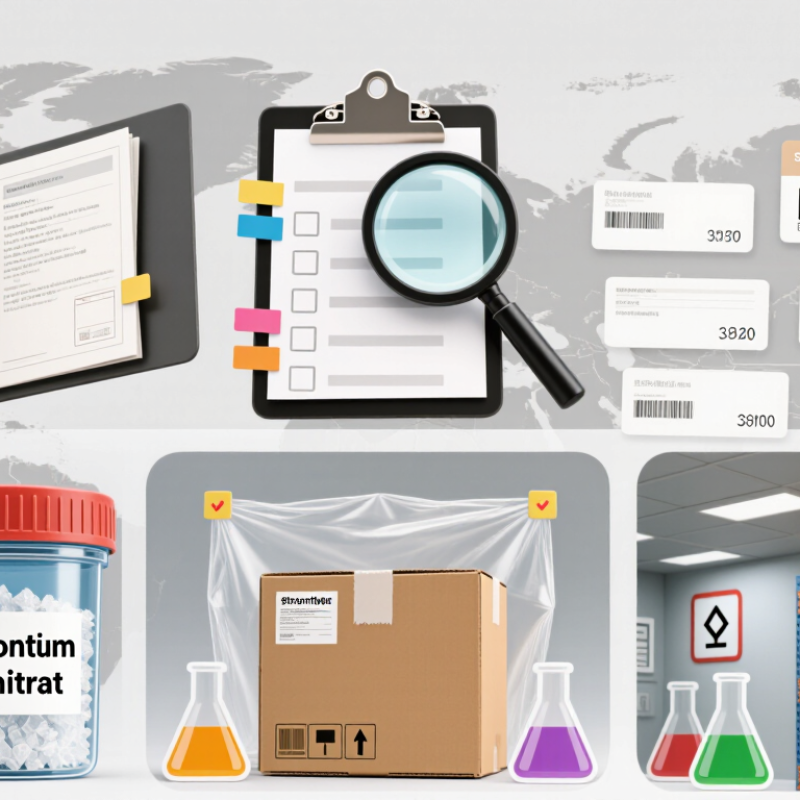
Understand Strontium Nitrate’s Properties, Uses, and Hazards
Strontium nitrate is an inorganic nitrate salt with the formula Sr(NO3)2 and a molar mass of 211.63 g/mol. PubChem describes it as a water-soluble compound and an oxidizing material. This distinction matters during worldwide purchasing. It can intensify combustion when exposed to combustible substances. The European Chemicals Agency classification and labelling inventory identifies oxidizing hazards that require careful handling. Keep it away from fuels, reducing agents, organic powders, heat, and open flames. Do not rely on appearance. White crystals can still present serious chemical risks.
Its common legitimate uses include laboratory reagents, ceramic processing, and controlled industrial formulations. A current Safety Data Sheet should state hazard classes, storage conditions, first-aid measures, and transport information. Check the revision date. Confirm the CAS number, purity, moisture content, and batch number on the Certificate of Analysis. OECD chemical safety guidance supports using exposure controls, suitable gloves, eye protection, and local ventilation. The U.S. Department of Transportation and UN dangerous-goods frameworks may affect packaging and shipping requirements, depending on concentration and jurisdiction. Ask the supplier for compliant packaging and traceable documentation before payment. A practical mistake is treating a low price as proof of quality. It is not. Inspect damaged containers, unclear labels, and missing emergency contacts carefully. Requirements can differ between origin, transit, and destination countries. That part is easy to underestimate. Recheck the documents with a qualified safety professional before importing, storing, or using the material.
Check International Laws, Permits, and Buyer Responsibilities
Buying strontium nitrate internationally requires more than comparing prices. Laws differ by country, state, and sometimes by industrial sector. Confirm its legal classification with your local chemical authority before placing an order. Review import rules, customs requirements, workplace regulations, and any required permits. Do not rely on a supplier’s general statement that shipment is allowed.
Tip 1: Define the intended use clearly. A legitimate end-use statement should match your company records and technical needs. Tip 2: Request the current safety data sheet, certificate of analysis, and transport classification. Check the product name, concentration, packaging, and hazard symbols against your order. Small discrepancies can delay customs clearance. They can also create safety risks.
Buyer responsibilities continue after purchase. Verify the supplier’s legal registration and export authorization where applicable. Ask whether the carrier accepts this material and whether special labels, packaging, or documentation are required. Keep invoices, permits, SDS records, and delivery details in an organized file. Storage should follow the safety data sheet, local fire codes, and trained staff procedures. Keep incompatible materials separated. This sounds obvious, yet busy workplaces sometimes overlook it. If rules remain unclear, consult a licensed customs professional or chemical-safety adviser before payment. Laws change, and older guidance may no longer be reliable.
Evaluate Suppliers, Product Quality, and Safety Documentation
Buying strontium nitrate safely starts with supplier verification. Check the company’s legal registration, export experience, and traceable warehouse address. Request a recent certificate of analysis for the exact lot. Ask whether testing is performed in-house or by an independent laboratory. A low price is not evidence of quality.
Review assay, moisture, insoluble matter, and particle-size results. Compare them with your technical specification, not only the supplier’s marketing sheet. Inspect sealed, moisture-resistant packaging and clear lot markings. Confirm that the product description matches the invoice and shipping documents. I would also request a retained sample, although many buyers overlook this practical safeguard.
Safety documentation deserves equal attention. The UNECE Globally Harmonized System, Revision 10, specifies a 16-section safety data sheet structure. Verify hazard classification, first-aid measures, firefighting guidance, storage conditions, and disposal advice. Check that the SDS revision is current and consistent with the label. Cross-reference chemical information through OECD eChemPortal and applicable national authorities. Confirm transport classification with a qualified dangerous-goods specialist before shipment. Strontium nitrate is an oxidizing material, so keep it away from incompatible combustibles and reducing agents. Supplier answers should be specific. Vague documents are a warning. I still recheck every file, because a polished certificate can hide an outdated test method.
Verify Packaging, Labeling, and Cross-Border Shipping Procedures
7 Tips for Buying Strontium Nitrate Safely Worldwide
Tip: Inspect the packaging before payment. Strontium nitrate should arrive in a sealed, undamaged container with clean outer packaging. Look for moisture, torn seams, bulging, or powder residue. The product name, net weight, lot number, and hazard information should remain readable. Do not accept vague containers or handwritten labels.
Tip: Request current documentation. Ask for the Safety Data Sheet, certificate of analysis, and transport classification before shipment. Check that the documents match the material, concentration, lot number, and declared quantity. A small mismatch can cause customs delays or safety concerns. It is easy to overlook this step.
Tip: Confirm cross-border procedures in writing. The seller and carrier should identify the applicable dangerous-goods rules, export documents, import permits, and customs requirements. Verify whether your destination allows this chemical for your intended, lawful use. Never ask a seller to disguise the contents or remove hazard markings. That creates serious legal and safety risks.
Tip: Choose a carrier experienced with regulated chemical shipments. The package should use suitable containment, correct hazard labels, and secure handling instructions. Ask for tracking and delivery-contact details. On arrival, photograph the package before opening it. If the seal is broken, isolate the container and contact the supplier and carrier. Local authorities or a qualified safety professional may also need to be consulted. Requirements can change, so older advice may be wrong.
7 Tips for Buying Strontium Nitrate Safely Worldwide - Verify Packaging, Labeling, and Cross-Border Shipping Procedures
Strontium nitrate, Sr(NO3)2, has a relative molecular mass of approximately 211.63 g/mol. Its composition is about 41.4% strontium, 13.2% nitrogen, and 45.4% oxygen by mass. Because it is an oxidizing substance, buyers should verify the safety data sheet, hazard labeling, UN transport classification, compliant packaging, import requirements, and carrier acceptance before arranging cross-border shipment. Requirements may vary by destination and transport mode.